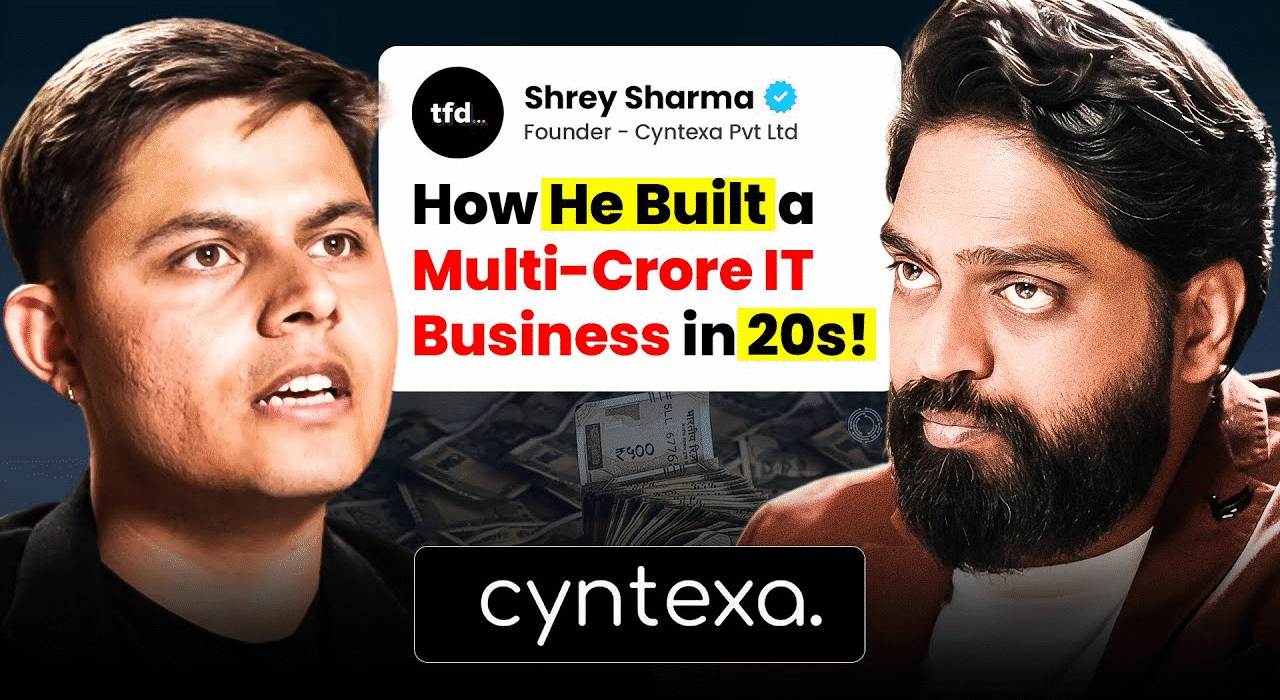
shrey sharma podcast reveals one of the most inspiring young founder journeys in India’s startup ecosystem. In this episode of The Founder’s Dream business podcast, Shrey Sharma, founder of Cyntexa, shares how he went from financial crisis to building one of Jaipur’s fastest-growing IT companies.
This is not a story of overnight success. It is a story of resilience, smart decisions, and believing in skills over circumstances.
From ₹3 Lakh Loan to Leading Tech Startups in India
At just 21 years old, Shrey Sharma found himself trapped under a ₹3 lakh loan taken from loan sharks. The pressure was intense, and failure seemed close. Instead of giving up, Shrey discovered Salesforce technology and saw an opportunity to change his life.
In the shrey sharma podcast, he explains how learning a high-demand skill helped him escape debt and build a future. That decision later led to the founding of Cyntexa, a company that now employs more than 450 people and works with global clients.

What Makes Cyntexa Different?
One of the most interesting parts of the shrey sharma podcast is Cyntexa’s hiring philosophy. Unlike many tech companies, Cyntexa focuses on freshers rather than experienced professionals.
Shrey believes attitude matters more than degrees. Cyntexa hires young talent, trains them in Salesforce, and turns them into industry-ready professionals. Offering packages starting from ₹5 lakh to freshers, the company proves that tier-2 cities can create world-class opportunities.
Bootstrapping vs Funding: How to Grow Without VC Money
A major highlight of the shrey sharma podcast is how Cyntexa scaled without external funding. Shrey chose bootstrapping over venture capital to maintain control and stability.
He shares how early cashflow management, reinvesting profits, and disciplined spending helped Cyntexa grow steadily. Instead of chasing investors, the company focused on clients, delivery quality, and long-term relationships. This approach helped Cyntexa expand internationally while staying financially healthy.
Why Jaipur Could Be India’s Next IT Hub
Shrey Sharma strongly believes that India’s next wave of tech startups will come from tier-2 cities. In the shrey sharma podcast, he explains why Jaipur offers huge advantages—lower costs, loyal talent, and a growing startup ecosystem.
Remote work has changed hiring forever. Companies no longer need to operate only from metro cities. According to Shrey, cities like Jaipur have untapped potential and skilled professionals who simply need the right platform.
Lessons for Young Entrepreneurs
The shrey sharma podcast offers practical lessons for anyone wanting to build a startup. Shrey emphasizes learning in-demand skills, staying consistent, and focusing on execution rather than hype.
He also talks about building strong company culture, being transparent with teams, and creating long-term value instead of short-term success. His journey shows that where you start matters less than how you grow.
Listen to Amit Kumar share their entrepreneurial journey in this podcast episode.
Who Should Listen to This Business Podcast?
This episode is ideal for students exploring careers in tech, founders interested in bootstrapped growth, and entrepreneurs from non-metro cities looking for real inspiration. Anyone tired of filtered startup stories will find this conversation refreshing and honest.
Listen to Gs Kumar share their entrepreneurial journey in this podcast episode.
Conclusion
The shrey sharma podcast proves that determination and skill can overcome even the toughest beginnings. From debt and uncertainty to building a 450+ employee IT company in Jaipur, Shrey Sharma’s journey is a powerful reminder that success does not depend on location or funding.
If you are passionate about tech startups, bootstrapping, or building something meaningful from scratch, this episode of The Founder’s Dream is a must-watch.
🚀 Join us on The Founders Dream YouTube channel—where entrepreneurs turn visions into reality, and futures get built today.
Yes. Many businesses start with skills and time, not big money. This blog explains how founders did it. Start by solving one real problem. Learn the needed skill, take action, and improve step by step. This blog explains how founders did it. The first step is finding a problem people want to pay to solve. This blog explains how founders did it.