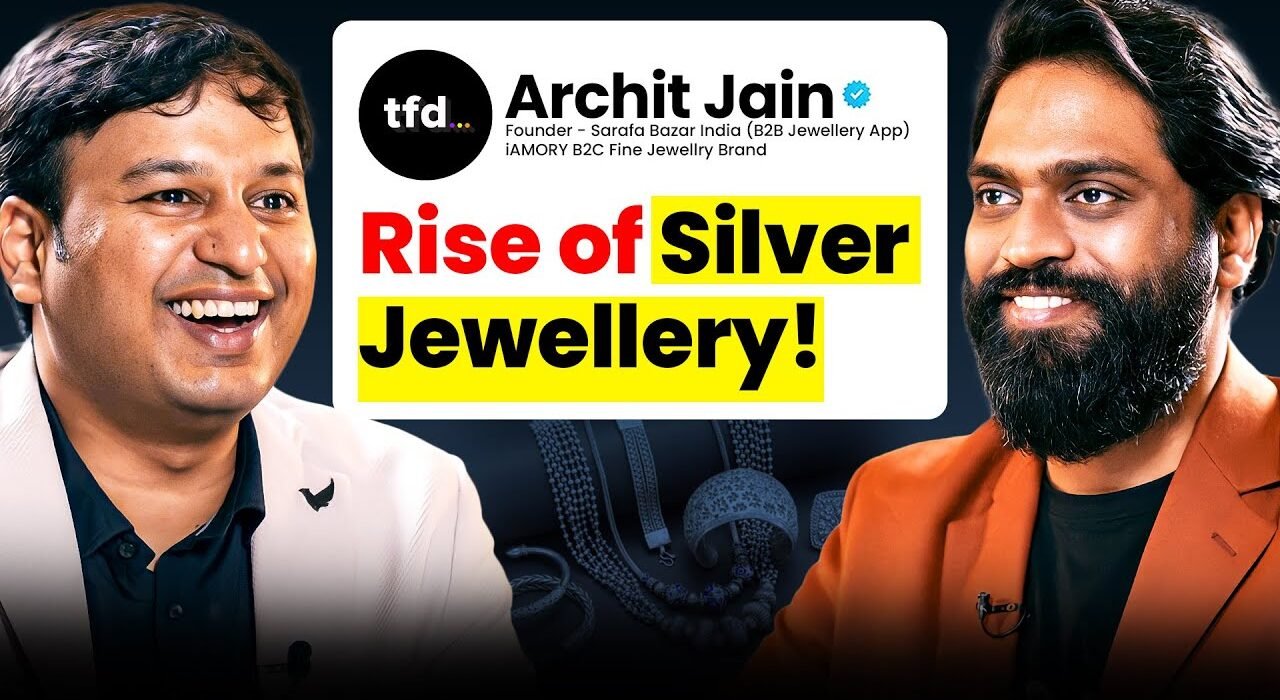
The jewellery industry in India has traditionally been dominated by experience, legacy, and deeply rooted family businesses. It is often said that the older the jeweller, the stronger the trust. But what happens when a young entrepreneur challenges this decades-old mindset? In this episode of The Founder’s Dream, the Archit Jain podcast reveals how innovation, technology, and bold pivots can reshape even the most traditional industries.
Breaking the “Uncle-Run Business” Mindset
One of the most striking conversations in the Archit Jain podcast revolves around the fixed mindset within the jewellery industry. Many established jewellers believe that since they built wealth following traditional methods, those same methods will continue to work forever. Even leading Mumbai jewellers once believed jewellery could never be sold online.
Archit Jain proved otherwise.
Coming from a Tier-2 city, Saharanpur, with an 80-year-old family jewellery background, Archit could have comfortably continued the legacy business. Instead, he identified a major gap — jewellers in smaller cities had limited access to manufacturers from hubs like Mumbai and Rajkot. This realization led to the birth of Sarafa Bazaar, a B2B platform connecting retailers and manufacturers digitally.
Starting During Covid: Turning Crisis into Opportunity
The Archit Jain podcast highlights a crucial lesson for founders: timing matters, but courage matters more. When Covid hit, exhibitions stopped, markets closed, and uncertainty was everywhere. But while others paused, Archit started.
With no major resources, a borrowed laptop with screen issues, and just ₹10,000 to open a current account, he launched Sarafa Bazaar using Shopify’s free trial period. Revenue started coming in just as subscription payments were due. That cash flow was reinvested, and the platform grew organically.
This bootstrap story from the Archit Jain podcast is a reminder that founders don’t need perfect conditions — they need conviction.
From B2B to B2C: A Bold Pivot into Silver
Sarafa Bazaar initially focused on B2B connections. However, Archit noticed a structural problem: Minimum Order Quantities (MOQs) limited smaller retailers. Meanwhile, gold prices surged to record highs.
During the Archit Jain podcast, Archit shares how he made a dramatic pivot — shifting focus toward B2C and entering the silver jewellery market.
Many investors and traditional gold manufacturers couldn’t understand the move. Why move from gold to silver? Isn’t that a downgrade?
Archit saw it differently. Silver offered:
Daily-wear affordability
Fashion-forward designs
Precious metal value
Repeat purchase potential
Consumers were shifting from locker-heavy bridal jewellery toward lighter, wearable, fashionable pieces. The Archit Jain podcast clearly explains how consumer behavior is evolving faster than traditional jewellers realize.
The Hallmark Shift: Organized vs Unorganized Market
Another powerful insight from the Archit Jain podcast is about HUID hallmarking. While hallmarking existed earlier, HUID introduced a unique traceable code for every jewellery piece.
This change is slowly pushing the industry from black-and-white practices toward a fully organized structure. Archit emphasizes that jewellers who upgrade, adopt transparency, and align with compliance are growing. Those resisting change are slowly declining.
The jewellery industry is no longer just about gold weight — it’s about trust, branding, and compliance.
Competing with Big Brands
When asked about competing with giants like Tanishq and Malabar, Archit shared a refreshing perspective in the Archit Jain podcast:
Consumers don’t only buy price — they buy perception and value.
Local jewellers often compete on lower making charges (5–10%), while brands charge 18–30%. Yet brands thrive because they offer:
Transparency
Hallmarking assurance
Store experience
Strong branding
The real problem isn’t competition — it’s mindset.
Three Strategies Every Founder Should Follow
One of the most practical segments of the Archit Jain podcast was when Archit shared three strategies for customer acquisition:
1. Value for Money
Customers must feel they are getting more than what they paid for.
2. Lifestyle Upgrade
The product should genuinely upgrade the customer’s life — not just promise it.
3. Referral-Worthy Service
If your service delights customers, referrals become automatic.
These principles apply across industries — not just jewellery.
The Silver vs Imitation Debate
The Archit Jain podcast also explores whether consumers can differentiate between silver and imitation jewellery. The answer? Often, visually no.
But silver offers intrinsic value. For fashion-forward consumers who want precious jewellery without gold-level investment, silver becomes the perfect middle ground.
This shift toward lightweight, repeat-purchase jewellery signals a broader industry transformation.
Why Founders Should Work Before Starting Up
A powerful lesson from the Archit Jain podcast is Archit’s advice to young entrepreneurs: work a job before starting your business.
He credits his two years of job experience for teaching him:
Digital marketing
Startup systems
Company structuring
Professional operations
Running a “lalaji shop” and running a structured company are completely different. Without job exposure, this mindset shift may never happen.
The Future of Bridal Jewellery
Will heavy bridal jewellery disappear?
According to insights shared in the Archit Jain podcast, not immediately.
Parents still drive bridal jewellery purchases due to social perception. However, younger couples prefer lighter, practical jewellery. Over time, demand may shift gradually toward elegance over extravagance.
The Bigger Lesson: Adapt or Be Left Behind
The biggest takeaway from the Archit Jain podcast is not about jewellery — it’s about evolution.
Industries don’t die. Mindsets do.
From launching during a pandemic to pivoting from gold to silver, from B2B search to B2C fashion retail — Archit Jain demonstrates that legacy industries can be disrupted when technology meets courage.
For aspiring founders, the message is clear:
You don’t need perfect resources.
You don’t need legacy connections.
You don’t need investor backing from day one.
You need hunger, clarity, and the willingness to adapt.
As emphasized repeatedly in the Archit Jain podcast, success belongs to those who upgrade themselves before upgrading their business.
Read more: https://thefoundersdream.in/podcast/ayush-bajaj-podcast-featuring-fashion-brand-obsesh/
Watch now: https://www.youtube.com/watch?v=EUAc5_oCZJY&t=334s