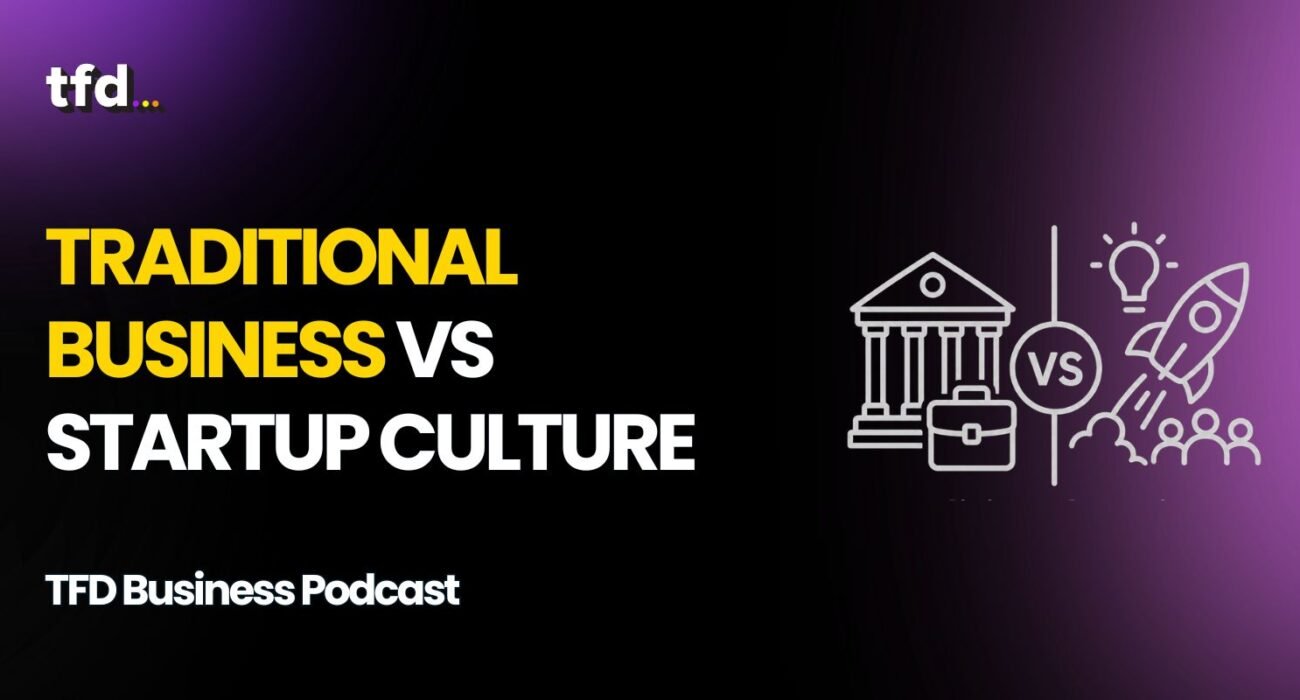
In today’s rapidly evolving business landscape, one debate continues to dominate conversations — Traditional business vs startup culture. For decades, traditional businesses built India’s economy with stability, discipline, and long-term thinking. But in the last 10–15 years, startups have disrupted industries with speed, innovation, and bold risk-taking. Understanding Traditional business vs startup culture is no longer optional. Whether you are a founder, entrepreneur, or business enthusiast, this comparison defines how you think, operate, and grow.
The Foundation of Traditional Business
Traditional businesses are built on consistency, patience, and generational knowledge. In the discussion of Traditional business vs startup culture, traditional models focus on:
- Profitability over valuation
- Long-term sustainability
- Strong customer relationships
- Controlled growth
These businesses are often family-driven and rely on proven systems rather than experimentation. Many insights around Traditional business vs startup culture are now being explored deeply in every hindi business podcast, where real founders share how old-school thinking still holds power.
The Rise of Startup Culture
Startup culture, on the other hand, is driven by speed, scalability, and disruption. In the debate of Traditional business vs startup culture, startups prioritize:
- Rapid growth
- Innovation
- Funding and valuation
- Market capture
Startups are built to scale fast, often with external funding and aggressive strategies. This shift has been widely discussed in the hindi business podcast ecosystem, where founders break down the realities behind startup success and failure.
Stability vs Speed
One of the biggest differences in Traditional business vs startup culture is stability versus speed. Traditional businesses grow slowly but steadily. They survive market cycles because they are built on strong fundamentals. Startups, however, move fast. They experiment, pivot, and scale quickly — but they also face higher risks. In many hindi business podcast conversations, founders highlight that speed without direction often leads to failure, making this aspect of Traditional business vs startup culture critical to understand.
Profit vs Valuation Mindset
Another major contrast in Traditional business vs startup culture is the focus on profit versus valuation. Traditional businesses aim to generate profit from day one. Cash flow is king. Startups, however, often focus on valuation — growing big first, monetizing later. This difference is one of the most debated topics in every hindi business podcast, where experienced entrepreneurs question whether valuation-driven growth is sustainable. Understanding this aspect of Traditional business vs startup culture can change how you approach your own business.
Risk vs Discipline
Risk-taking is celebrated in startup culture, while discipline is valued in traditional business. In Traditional business vs startup culture, traditional businesses avoid unnecessary risks. They expand only when they are ready. Startups, on the other hand, take bold bets. They are comfortable with uncertainty and failure. But as discussed in many hindi business podcast episodes, not all risks are smart risks. The balance between risk and discipline is what separates successful founders from failed ones.
Decision-Making Approach
Decision-making also differs significantly in Traditional business vs startup culture. Traditional businesses rely on experience and intuition built over years. Startups rely on data, experimentation, and fast iterations. Both approaches have their strengths. The key is knowing when to trust experience and when to rely on data. This is why discussions around Traditional business vs startup culture are becoming increasingly popular in every hindi business podcast today.
Long-Term Thinking vs Short-Term Growth
Traditional businesses think in decades. Startups often think in quarters. In Traditional business vs startup culture, this difference defines how decisions are made. Traditional businesses build slowly but create lasting impact. Startups aim for rapid growth, sometimes sacrificing long-term stability. Many founders now realize — through insights shared in hindi business podcast platforms — that long-term thinking is what truly builds wealth.
The Reality: It’s Not Either-Or
The truth is, Traditional business vs startup culture is not about choosing one over the other. The best founders combine both:
- Discipline of traditional business
- Speed of startups
- Profit mindset with innovation
- Risk-taking with control
This hybrid approach is what modern entrepreneurship looks like. And this is exactly what we explore on The Founder’s Dream.
The Founder’s Dream: Where Real Business Stories Are Told
At The Founder’s Dream, we go beyond theory and hype. We bring real founders who have experienced both sides of Traditional business vs startup culture. Through this hindi business podcast, you will hear:
- Founders who built without funding
- Entrepreneurs who scaled with investors
- Business owners who survived decades
- Startups that grew fast — and those that failed
Every episode becomes a learning experience, helping you understand Traditional business vs startup culture from real-world perspectives.
Why You Should Be Part of This Conversation
If you are building a business today, you cannot ignore the debate of Traditional business vs startup culture. You need to understand:
- When to move fast
- When to stay patient
- When to take risks
- When to stay disciplined
And there’s no better place to learn this than from real conversations. That’s what makes a hindi business podcast like The Founder’s Dream powerful — it brings clarity in a world full of noise.
Come Share Your Story on TFD
Whether you come from a traditional business background or a startup ecosystem — your story matters. At The Founder’s Dream, we believe every journey has lessons. If you have experienced Traditional business vs startup culture, we invite you to come and share your insights. Your story could inspire thousands of founders who are trying to figure out their own path.
Final Thoughts
The future of business is not traditional or startup — it’s a combination of both. Understanding Traditional business vs startup culture will give you an edge that most people don’t have. Because at the end of the day:
- Businesses don’t fail because of models
- They fail because of mindset
And the right mindset comes from learning, observing, and listening. So if you truly want to understand business — start listening, start learning, and maybe even start speaking. Because in today’s world, your ideas and your journey are your biggest assets. And platforms like The Founder’s Dream are where those stories come alive.
Watch now: https://www.youtube.com/@thefoundersdream/videos
Read more: https://thefoundersdream.in/podcasts-the-new-business-card/