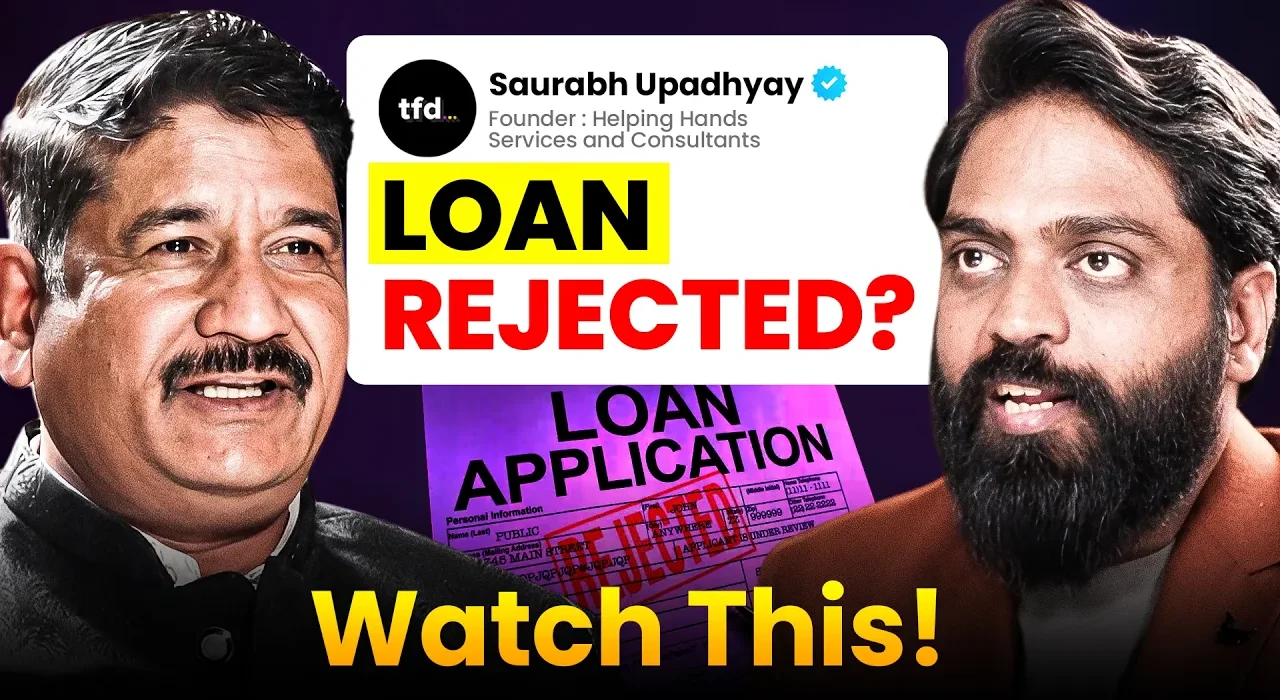
Starting a business is a dream shared by millions of Indians. However, turning that dream into reality often requires one critical ingredient—funding. Many aspiring entrepreneurs have innovative ideas, strong business models, and ambitious growth plans, yet they struggle to secure financing. Why does this happen? Why do banks reject startup loans, and what can founders do differently?
In a recent episode of the Saurabh Upadhyay podcast, founder and funding expert Saurabh Upadhyay shared valuable insights into startup financing, government schemes, MSME support, and the financial mistakes that hold entrepreneurs back. This episode of the hindi business podcast provides practical guidance for founders looking to secure funding and build sustainable businesses.
The Biggest Myth About Startup Funding
Many entrepreneurs believe that having a great business idea is enough to secure funding. Unfortunately, banks and financial institutions think differently.
According to insights shared on the Saurabh Upadhyay podcast, banks do not lend money based solely on ideas. They evaluate risk, repayment capability, business viability, financial projections, and documentation. A brilliant idea without proper planning often appears risky to lenders. This is one reason why many first-time founders face rejection despite having innovative concepts. Banks need evidence that a business can generate revenue and repay the loan within the agreed timeframe.
Why Banks Reject Startup Loans
One of the most discussed topics on the Saurabh Upadhyay podcast was the reasons behind loan rejection. Some of the most common reasons include:
Incomplete Documentation
Many entrepreneurs submit loan applications without providing complete financial records, business registrations, or supporting documents. Missing information creates doubts about credibility.
Poor Project Reports
A detailed project report is essential. Banks want to understand:
- Business objectives
- Revenue model
- Market opportunity
- Operational strategy
- Financial projections
Without a strong DPR (Detailed Project Report), lenders often reject applications.
Lack of Financial Planning
Many founders underestimate expenses and overestimate revenues. Unrealistic projections reduce lender confidence.
Weak Compliance Structure
Businesses that fail to maintain proper legal and regulatory compliance appear risky. Compliance plays a major role in funding approvals. The Saurabh Upadhyay podcast emphasizes that preparation is often the difference between approval and rejection.
Understanding MSME Funding Opportunities
India’s MSME sector contributes significantly to employment and economic growth. Recognizing this importance, the government has introduced multiple funding initiatives. In this hindi business podcast, Saurabh Upadhyay explained how MSME owners can leverage available schemes to secure funding and scale operations. MSME registration offers several advantages:
- Easier access to loans
- Lower interest rates
- Government incentives
- Subsidy opportunities
- Priority sector lending benefits
However, many entrepreneurs fail to utilize these benefits simply because they are unaware of available schemes.
Are Government Subsidies Really Available?
A common question among entrepreneurs is whether government subsidies are real or just marketing promises. The answer is yes—many government subsidy programs genuinely exist. The Saurabh Upadhyay podcast highlights how different industries can benefit from subsidy schemes related to:
- Manufacturing
- Technology
- Agriculture
- Renewable energy
- Women entrepreneurship
- Skill development
- Export promotion
However, accessing these subsidies requires proper documentation, eligibility compliance, and professional guidance. Many founders miss opportunities because they either apply incorrectly or are unaware of available programs.
The Importance of Detailed Project Reports
One of the most valuable lessons from the Saurabh Upadhyay podcast is the importance of project reports. A detailed project report serves as the business blueprint that lenders use to evaluate funding requests. A strong DPR should include:
Market Analysis
Founders must demonstrate understanding of market demand, competition, and customer needs.
Financial Forecasting
Revenue projections should be realistic and backed by assumptions.
Operational Strategy
Banks want clarity on how the business will function and generate income.
Risk Assessment
Identifying potential risks and mitigation strategies improves credibility. In many cases, a professionally prepared DPR significantly increases funding approval chances.
Startup Sustainability Matters More Than Funding
Many entrepreneurs focus entirely on obtaining funding. However, funding alone does not guarantee success. As discussed in the Saurabh Upadhyay podcast, sustainability is often more important than capital. Businesses fail for reasons such as:
- Poor cash flow management
- Weak customer acquisition strategies
- Lack of operational discipline
- Excessive spending
- Inadequate planning
A sustainable business model attracts funding more easily because it demonstrates long-term viability. This is a recurring lesson highlighted throughout the hindi business podcast conversation.
The Role of Compliance in Business Growth
Compliance is often viewed as an administrative burden. However, it directly impacts funding opportunities. Financial institutions assess whether businesses comply with:
- Tax regulations
- GST requirements
- Business registrations
- Corporate filings
- Industry-specific regulations
The Saurabh Upadhyay podcast explains that businesses with strong compliance records often receive faster approvals and better financing options. Compliance also builds trust among investors, partners, and lenders.
Loan Restructuring and NPA Challenges
Economic uncertainty can create repayment challenges for businesses. Many entrepreneurs fear that financial difficulties automatically mean failure. However, loan restructuring options may provide relief. During the Saurabh Upadhyay podcast, the discussion covered how businesses can work with financial institutions to restructure loans when facing temporary cash flow problems.
The key is proactive communication rather than waiting until the situation becomes critical. Understanding NPA (Non-Performing Asset) risks and maintaining financial discipline can help founders avoid major setbacks.
Opportunities for Women Entrepreneurs
Women entrepreneurship is growing rapidly across India. Government initiatives specifically support women-led businesses through:
- Subsidized loans
- Special funding programs
- Skill development initiatives
- Mentorship opportunities
The Saurabh Upadhyay podcast highlights how women entrepreneurs can leverage these programs to build successful ventures. Access to information and proper guidance remains the biggest challenge for many aspiring women founders.
EV Business Funding: A Growing Opportunity
The electric vehicle sector is emerging as one of India’s most promising industries. Government incentives, environmental concerns, and consumer demand are driving rapid growth. According to insights shared on the Saurabh Upadhyay podcast, entrepreneurs entering the EV ecosystem may benefit from:
- Subsidies
- Infrastructure support
- Manufacturing incentives
- Financing programs
As India transitions toward sustainable mobility, EV-related businesses may continue to attract significant funding opportunities.
The Power of Mentorship
Funding is important, but mentorship can be equally valuable. Experienced mentors help founders:
- Avoid costly mistakes
- Improve business planning
- Build stronger networks
- Access funding opportunities
- Scale operations effectively
Throughout the Saurabh Upadhyay podcast, the importance of mentorship was repeatedly emphasized as a critical success factor. Many successful businesses achieve growth not just because of capital but because of strategic guidance.
Final Thoughts
The journey of entrepreneurship is challenging, but understanding the funding landscape can dramatically improve success rates. The Saurabh Upadhyay podcast offers valuable insights into startup loans, MSME funding, government subsidies, compliance, project reports, and sustainable business growth.
For founders struggling to secure funding, the solution is rarely a lack of opportunity. More often, it is a lack of preparation, planning, documentation, and strategic execution. This episode of the hindi business podcast demonstrates that successful fundraising begins long before submitting a loan application. Entrepreneurs who understand financial systems, maintain compliance, create strong project reports, and focus on sustainability are far more likely to secure funding and build lasting businesses. If you’re serious about entrepreneurship, the lessons shared in the Saurabh Upadhyay podcast can help you navigate the complex world of startup funding and create a stronger foundation for long-term success.