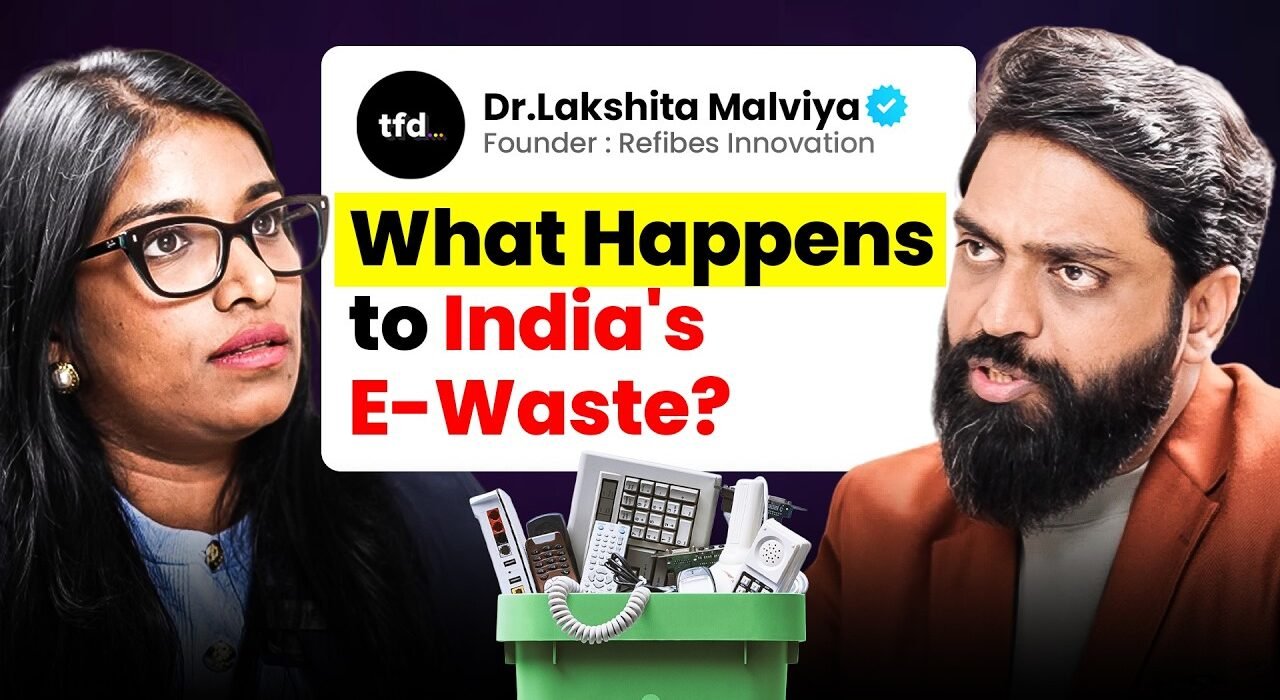
Electronic waste is one of the fastest-growing environmental problems in the world. Smartphones, laptops, batteries, and electronic gadgets are replaced faster than ever before. But what happens to the old devices once we discard them? In a powerful discussion on The Founder’s Dream, the Lakshita Malviya podcast explores the reality behind India’s growing e-waste crisis and the business opportunities hidden within it.
In this eye-opening conversation, Dr. Lakshita Malviya, Founder of Refibes Innovation, shares how she left a stable dental career to build a clean-tech company focused on ethical e-waste recycling. The Lakshita Malviya podcast goes far beyond environmental awareness—it dives into the economics, policies, and ground realities of recycling in India.
India’s Growing E-Waste Problem
The scale of the e-waste crisis is staggering. Globally, nearly 62 million tonnes of electronic waste were generated in 2022. India alone ranks among the top producers of electronic waste in the world.
However, as explained in the Lakshita Malviya podcast, only around 20% of this waste is formally recycled through authorized recycling channels.
So where does the remaining 80% go?
According to the Lakshita Malviya podcast, most of it enters the informal recycling ecosystem. Scrap collectors and small-scale dismantlers often process electronics without proper safety equipment, environmental protection, or compliance with regulations.
This not only harms the environment but also creates serious health risks for workers involved in the process.

From Dentistry to Waste Management
Dr. Lakshita’s journey into waste management is anything but conventional. As discussed in the Lakshita Malviya podcast, she initially trained and worked as a dentist.
However, her interest in public health and environmental sustainability led her to explore broader social issues. During her work with government health programs, she began noticing the growing problem of unmanaged electronic waste.
The Lakshita Malviya podcast explains how this realization became a turning point in her career.
Instead of continuing in dentistry, she decided to build a business focused on solving the e-waste problem through ethical recycling and sustainable processes.
What Happens to Your Old Electronics?
One of the most shocking revelations from the Lakshita Malviya podcast is what actually happens to discarded devices like smartphones, laptops, and tablets.
Many people believe that once electronics are thrown away or sold to scrap dealers, they are properly recycled.
But the Lakshita Malviya podcast reveals that this is rarely the case.
Old electronics often end up being dismantled manually in unsafe environments. Valuable components are extracted, while the remaining toxic materials are discarded improperly.
This leads to contamination of soil, water, and air.
The Hidden Risk of Data Theft
Another critical issue discussed in the Lakshita Malviya podcast is the risk of data theft from discarded electronics.
When people sell old devices without properly wiping data, sensitive information such as personal photos, documents, passwords, and financial records can still remain on the device.
Informal recyclers may access this data, creating potential privacy and cybersecurity risks.
The Lakshita Malviya podcast highlights why secure data destruction must become a standard practice in the recycling industry.
The Truth About Precious Metals in E-Waste
Electronic devices contain valuable metals such as gold, silver, and copper. Many people assume that recycling electronics generates large profits due to these materials.
However, the Lakshita Malviya podcast explains a surprising reality.
Only 2–3% of precious metals can actually be recovered from electronic waste in most cases. Extracting these metals requires advanced technology and controlled processes.
This makes ethical recycling more complex and expensive than most people realize.
Informal Sector vs Formal Recycling
India’s recycling industry operates through two major systems: the informal scrap sector and licensed recycling facilities.
The Lakshita Malviya podcast explains that the informal sector dominates the industry because it operates with lower costs and fewer regulations.
However, these operations often ignore environmental safety and worker protection.
Formal recycling companies, on the other hand, must comply with environmental laws, safety standards, and waste management regulations.
The Lakshita Malviya podcast highlights the challenge ethical recycling businesses face when competing with informal networks that operate without such restrictions.
Understanding Extended Producer Responsibility (EPR)
One important policy discussed in the Lakshita Malviya podcast is Extended Producer Responsibility (EPR).
EPR requires electronics manufacturers to take responsibility for managing the waste generated by their products.
This means companies must ensure that their products are collected and recycled properly once they reach the end of their life cycle.
While the policy exists on paper, the Lakshita Malviya podcast explains that implementation remains inconsistent across India.
The Decline of Repair Culture
Another fascinating topic explored in the Lakshita Malviya podcast is the decline of repair culture.
In earlier generations, people repaired electronics rather than discarding them. Today, however, the culture has shifted toward replacement rather than repair.
Fast product cycles, aggressive marketing, and limited repair infrastructure have accelerated this trend.
The Lakshita Malviya podcast emphasizes a simple but powerful message:
Repair first. Recycle next. Dump never.
Encouraging repair culture could significantly reduce the volume of electronic waste produced every year.
Sustainability vs Marketing
In recent years, sustainability has become a popular buzzword in marketing campaigns.
However, the Lakshita Malviya podcast questions whether many sustainability claims are truly genuine.
Companies often promote “eco-friendly” or “100% recycled” labels without transparent verification.
The Lakshita Malviya podcast highlights the importance of distinguishing between real environmental responsibility and marketing-driven sustainability claims.
Building Refibes Innovation
Dr. Lakshita’s company, Refibes Innovation, aims to build a structured and ethical recycling ecosystem.
As discussed in the Lakshita Malviya podcast, the company is developing a licensed zero-effluent recycling plant that focuses on environmentally safe processing of electronic waste.
The goal is to ensure that harmful chemicals and materials do not contaminate water or soil during recycling operations.
In addition, the Lakshita Malviya podcast reveals that the company plans to expand into lithium battery and electric vehicle waste recycling by 2026.
With the rapid growth of electric vehicles and battery technology, this sector is expected to become one of the most critical areas of recycling in the coming decade.
Clean-Tech Opportunities in India
The Lakshita Malviya podcast also highlights the enormous business opportunities emerging within the clean-tech sector.
As environmental regulations become stricter and sustainability awareness increases, demand for responsible recycling solutions will continue to grow.
Entrepreneurs who focus on ethical practices, technology, and compliance can build scalable businesses in this space.
The Lakshita Malviya podcast encourages investors and entrepreneurs to view sustainability not just as an environmental cause, but also as a powerful business opportunity.
Final Thoughts
The Lakshita Malviya podcast delivers an important message about the future of sustainability and entrepreneurship.
India’s e-waste crisis is both a challenge and an opportunity. While millions of tonnes of electronic waste are generated every year, responsible recycling systems remain underdeveloped.
Entrepreneurs like Dr. Lakshita Malviya are proving that ethical businesses can address environmental problems while creating long-term economic value.
For anyone interested in sustainability, climate change, clean technology, or innovative startups, the Lakshita Malviya podcast offers a compelling look at how environmental responsibility and entrepreneurship can work together to shape a better future.
Watch now: https://www.youtube.com/watch?v=HqHNnHK977s
Read more: https://thefoundersdream.in/podcast/azam-syed-podcast/