
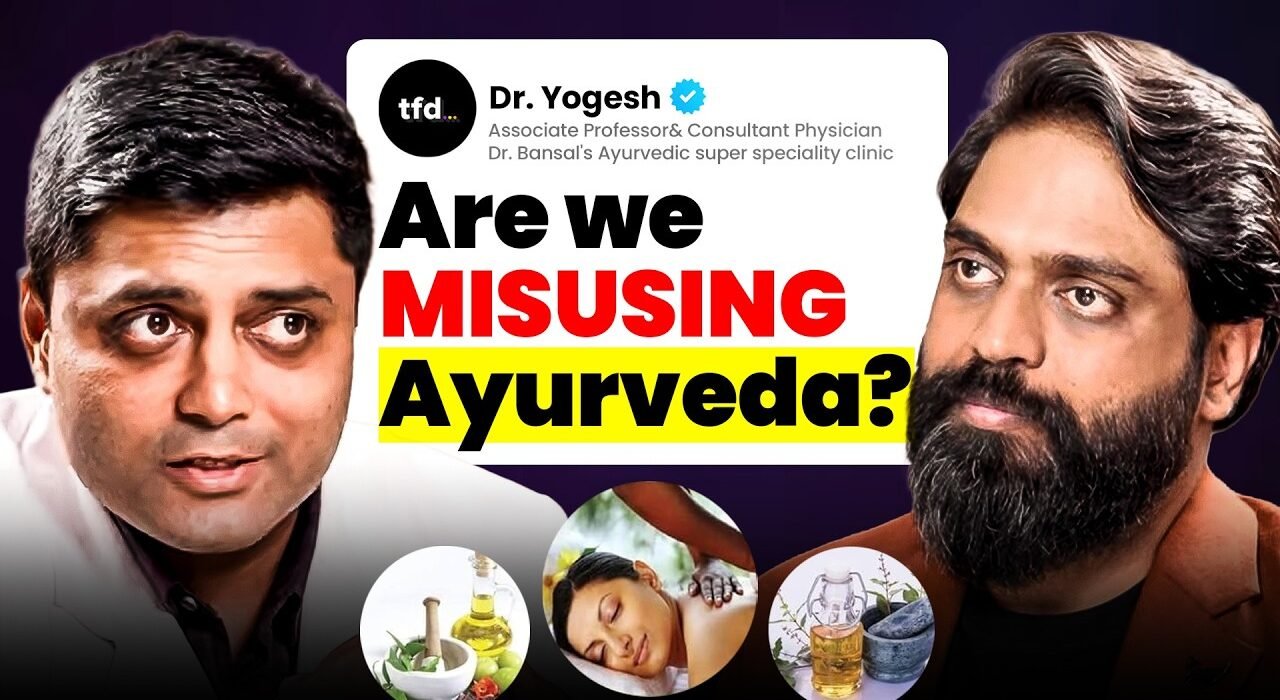
Most people only find out their kidneys are failing when a doctor says the word “dialysis.” In this Dr. Yogesh Bansal interview on The Founder’s Dream, an indian business podcast, host Abhishek Vyas sits down with the Ayurvedic physician and chronic care specialist to understand why that happens so often — and what Ayurveda can and cannot actually do about it. Dr. Bansal runs Bansal’s Ayurveda, teaches as an associate professor at a medical college, and has treated patients from 120 countries for conditions ranging from kidney and liver disease to ADHD and autism.
Who Is Dr. Yogesh Bansal — And Why This Interview Matters
Dr. Bansal is BAMS, MD and PhD qualified in Ayurveda, with his MD specialisation in nephrology — the study of kidney disease — and his PhD research titled “Comprehensive Approach of Chronic Kidney Disorder.” He has over 19 years of clinical practice, more than 20 published research papers in international and European journals, and runs a nursing home that has operated for 15 years alongside a super-specialist Ayurvedic clinic treating patients across Punjab, North India, and internationally.
He also trains over 100 MD students annually as an associate professor at a medical college. That academic grounding is central to how he frames his practice — not as folk remedies, but as a documented clinical methodology.
Dr. Yogesh Bansal Interview: Why Ayurveda vs Modern Medicine Isn’t a Fight
Asked directly how a listener can trust that his claims are scientifically backed, Dr. Bansal doesn’t dodge the question. He points to his published research and draws a sharp line between authentic Ayurvedic practice and what passes for it on social media.
Authenticity doesn’t mean handing pills, toffees and capsules to whoever walks in — that’s what’s happening everywhere. Authenticity means following what’s actually described in the Ayurvedic scriptures: what to examine in a patient, what to ask them, what pathogenesis to build, and treating them accordingly.
He is equally clear that Ayurveda is not a cure-all. Some diseases, he says, are curable, some can only be managed, and some — like advanced cancer — cannot be reversed. In those cases, he offers palliative and conservative care so patients can live out their remaining time with better quality of life, rather than abandoning treatment altogether.
His larger argument is that both systems should work together. He is not against allopathic medicine — he insists surgical treatment, when needed, is the best option available — but believes Ayurveda should be added alongside it for nutrition, detoxification and long-term reversal support rather than treated as a replacement.
The Fake “MD” Problem in Ayurveda
One of the more pointed parts of the conversation is Dr. Bansal’s warning about unqualified practitioners writing “MD” after their names on social media.
Out of 100 people in Ayurveda who write MD after their name, 99 of them don’t write “Ayurveda” next to it — because if they did, people would find out. It’s written as Doctor, MD — but MD there means Managing Director, not Doctor of Medicine. Check the qualification before you trust someone with your body.
His point is practical: before starting any treatment, verify the practitioner’s actual degree. He also cautions that dosage, not the system of medicine itself, is usually what causes harm — whether allopathic or Ayurvedic. He gives the example of ghee and honey taken in equal quantities, which he says can be dangerous, versus the same combination taken in unequal, prescribed proportions, which he uses safely in formulations for children with cerebral palsy and autism.
For readers wanting a broader view of health-focused conversations like this one, more entries in this space can be found in the self-growth section of The Founder’s Dream.
Kidney Disease: The Silent Killer Hiding in Plain Sight
Kidney disease is where Dr. Bansal spends the most time in the conversation, and the numbers he shares are stark.
Eighty to ninety percent of the cases that come to my OPD — out of 100 patients I see in a day, most of the kidney patients have no idea they already have the disease. When I tell them it’s stage four, they ask me where stages one, two and three went.
He explains the mechanics simply: creatinine is a waste product formed when protein metabolizes in muscle tissue. When kidneys stop filtering it out properly, creatinine and other toxins build up in the blood. A GFR (glomerular filtration rate) below 15 marks Stage 5 kidney failure, also called End Stage Renal Disease — at that point, the actual creatinine number (5, 7, 9, or higher) no longer matters; it’s classified the same way.
The two most common root causes, he says, are uncontrolled diabetes and uncontrolled hypertension — both of which can silently damage kidneys for years with no obvious symptoms. He lists the warning signs people usually ignore:
- Swelling under the eyes, especially noticeable in the morning
- Puffiness in the face and a feeling of heaviness on waking
- Swelling around the ankles
- Foamy or frothy urine — a sign of protein in the urine (proteinuria)
He recommends two simple blood tests — RFT (Renal Function Test) and ACR (Albumin Creatinine Ratio) — and says if either comes back positive, a doctor visit shouldn’t be delayed. Stage 3 kidney disease, he notes, can often be reversed if caught early; Stage 1 and 2 usually go unnoticed because there are no symptoms at all.
Fatty Liver, Insulin Resistance and the Three White Poisons
Dr. Bansal says fatty liver has become alarmingly common — in Punjab specifically, he claims 99 out of 100 ultrasounds come back showing fatty liver, and people dismiss it as normal. He disagrees strongly, calling it one of the biggest drivers of liver failure cases in India today, and pushes back on the idea that only alcohol causes liver damage — non-alcoholic fatty liver disease, driven by diet and inactivity, is rising fast.
This is the actual root of every disease. If the insulin in your body isn’t delivering energy to the cells or isn’t getting glucose into the cells, that’s called insulin resistance. It’s what causes fatty liver, it’s what causes diabetes, and eventually it leads to liver cirrhosis, liver failure, even liver cancer.
His prescription is refreshingly unglamorous: eat only as much as you can digest, cut down pickles and chutneys, reduce junk food, exercise morning and evening, and do strength training three to four days a week regardless of age — he says this applies to patients in their 20s and their 80s alike. He also names what he calls the “three white poisons” — sugar, refined flour (maida), and white salt — and claims cutting them out addresses roughly 80% of lifestyle diseases. Swapping wheat flour for a multi-grain mix of jowar, bajra, makki and barley, he says, can push that further.
On liver cirrhosis, he distinguishes between compensated and decompensated cirrhosis — the former can often be managed long-term without a transplant using what he calls the “DNA technique”: Detoxification, Nutrition and Activation. He is candid that damaged liver tissue cannot regenerate itself back, but the remaining functioning portion can be preserved and supported for years.
ADHD and Autism: A Behavioural Disorder, Not a Brain Disease
The conversation shifts toward childhood development, where Dr. Bansal makes one of his most direct claims of the episode.
ADHD is not a disease at all. It’s not a mental disorder and it’s not a neurological disorder either — there’s nothing wrong in the child’s brain. Run an MRI, a CT scan, an EEG, nothing will show up. It’s purely a behavioural developmental disorder. The way a child is treated is how the child turns out.
He describes it as a pattern shaped by environment: children who spend excessive time alone or on mobile screens, without real interaction, start showing hyperactivity, reduced attention, and difficulty following instructions. He flags specific red flags for parents — avoiding eye contact, hand-flapping, not playing with other children, and delayed speech — and stresses early evaluation over waiting it out.
For treatment, he mentions two Ayurvedic interventions: Shirodhara (a continuous stream of oil poured over the forehead, meant to improve focus) and Panchakarma. For children too restless to sit through a full session, he offers a simpler alternative called Shiropichu — a cotton pad soaked in warm desi cow ghee placed on the head for 5-10 minutes — which he says shows measurable improvement in hyperactivity.
Dr. Bansal’s broader philosophy — treating causes rather than managing symptoms — echoes themes explored elsewhere on the channel; readers interested in Ayurveda-rooted entrepreneurship can also explore the entrepreneurial journey section of The Founder’s Dream.
The Bigger Takeaway From This Conversation
What comes through across this Dr. Yogesh Bansal interview is a consistent insistence on verification — of qualifications, of dosage, of root cause — before trusting any treatment, Ayurvedic or otherwise. His core message to patients is to get tested early, question practitioners’ credentials, and treat lifestyle changes as non-negotiable rather than optional add-ons to medication.
- Get an RFT and ACR test if you notice swelling or foamy urine — don’t wait for symptoms to worsen
- Verify any practitioner’s actual medical degree before starting treatment
- Cut sugar, refined flour and excess salt to address the bulk of common lifestyle diseases
- Strength train three to four times a week, regardless of age
- Evaluate a child early if they avoid eye contact, don’t engage with peers, or show delayed speech
Watch the full conversation with host Abhishek Vyas on The Founder’s Dream YouTube channel — the same TFD podcast feed where this episode was recorded — and subscribe for new founder interviews every week.
Frequently asked questions
Who is Dr. Yogesh Bansal?
Dr. Yogesh Bansal is an Ayurvedic physician, researcher and chronic care specialist at Bansal’s Ayurveda, holding BAMS, MD and PhD degrees in Ayurveda with over 19 years of clinical experience, primarily focused on nephrology and chronic kidney disorders.
What does the Dr. Yogesh Bansal interview on The Founder's Dream cover?
The conversation covers Ayurveda versus modern medicine, early detection of kidney disease, fatty liver and insulin resistance, liver cirrhosis, and Ayurveda’s approach to ADHD and autism in children.
What tests can detect early kidney disease according to Dr. Bansal?
He recommends a Renal Function Test (RFT) and an Albumin Creatinine Ratio (ACR) test; if either comes back positive, a doctor should be consulted immediately.
Is ADHD a neurological disorder?
Dr. Bansal states that ADHD is not a disease, mental illness or neurological disorder but a behavioural developmental disorder shaped by how much attention and interaction a child receives at home.
Can fatty liver be reversed?
According to Dr. Bansal, Grade 2 and Grade 3 fatty liver are 100% reversible through diet changes, exercise and reducing insulin resistance.
1 Comment