
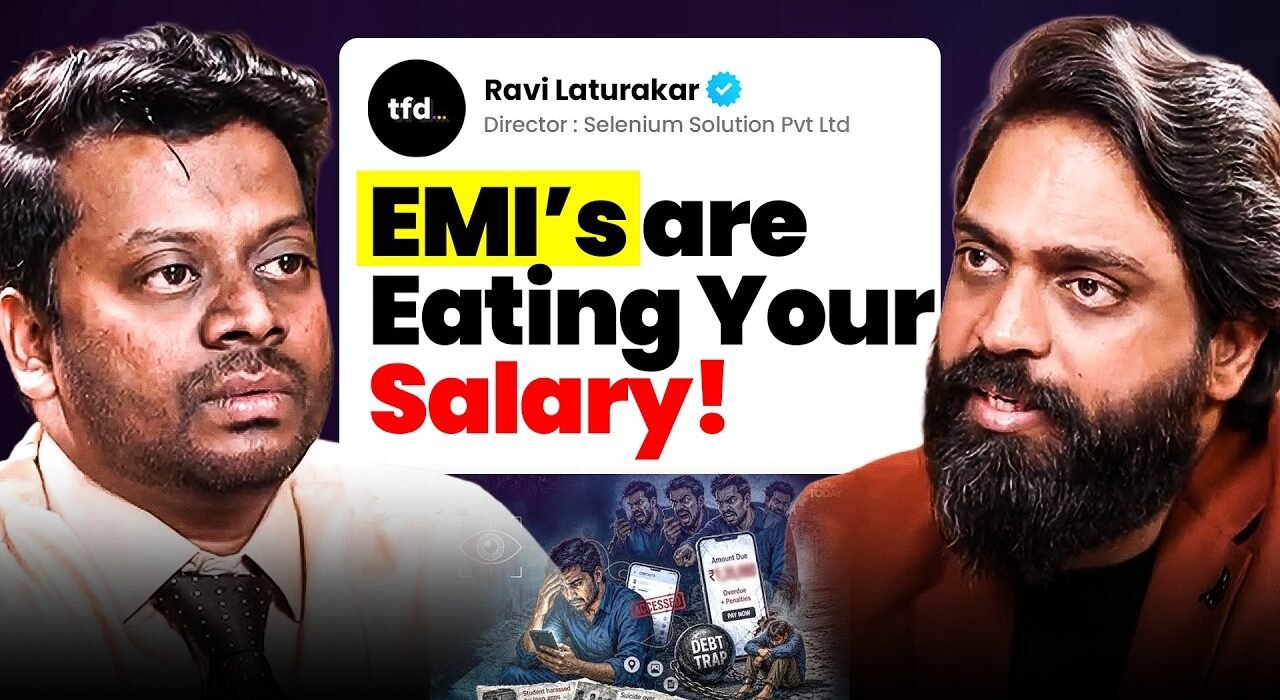
A salary of one lakh rupees and EMIs of one and a half lakh rupees a month. It sounds impossible, but it is a pattern host Abhishek Vyas and his guest kept returning to in this episode of The Founder’s Dream. The guest is Ravi Laturkar, founder of Selenium Solutions, and the Ravi Laturkar success story is built on a simple observation from his banking years: good salaries and bad debt can exist in the same household at the same time.
Ravi spent years working inside the banking system before starting Selenium Solutions, a company that helps customers consolidate existing loans, credit card dues and EMIs. What follows is a breakdown of the practical advice he shared on the show, grounded in the actual cases he described.
The Ravi Laturkar Success Story Behind Selenium Solutions
Ravi did not set out to build a lending company. While working in banking, he noticed something during the post-lockdown period that changed his direction entirely.
After the lockdown I saw many customers taking multiple loans — spending more before their salary even arrived, and because their account balance kept running low, they kept taking small loans and using credit cards more.
What struck him wasn’t the number of applications, it was what sat behind each one.
When a customer applied for a loan, it was never just a loan application for us. That customer’s whole family depended on it, their entire financial planning depended on it, and all their problems traced back to income-related issues.
That realisation is why Selenium Solutions does not simply issue more loans. The model is to look at a customer’s existing EMIs, credit card dues and home loan together, then merge them into a single, lower monthly payment. It is a story with parallels to other founders who spotted a gap inside a system they knew from the inside — readers who enjoyed Ravi Chaudhary’s entrepreneur success story on this podcast will recognise the same pattern of building a business around a problem the founder lived through firsthand.
Why Salaried Professionals Fall Into the EMI Trap
Abhishek asked Ravi directly whether Indians are taking on more loan than their salaries can support. Ravi’s answer was blunt: it happens, and it is not unique to India.
Generally in corporate jobs, what happens is that before the salary even comes in, the EMI obligations are already too high. So after salary day and EMI payment, for the expenses that follow, the customer ends up taking small EMIs or using the credit card more.
Using a credit card is not the problem by itself, he said. The problem starts when the full bill is not paid and the customer shifts to the credit card minimum due instead.
If you spent 50,000 rupees, why are you paying the minimum due? When you pay the minimum due, your 50,000 rupees worth of debt just gets carried forward to next month. You think you survived by paying 5,000, but your debt is still pending.
He broke down the real cost of this habit with numbers: the monthly minimum due on a credit card is typically around 5 percent, but once interest and charges are added, a customer who keeps rolling over dues can end up paying close to 60 percent annually on that balance. None of it reduces the original 50,000 rupees spent — it is pure cost on top.
The 30% Rule: Credit Limits and Savings Discipline
Ravi’s most repeated number on the show was 30 percent — in two different contexts. First, on savings:
As per RBI norms, if your salary is one lakh rupees, you should not spend more than 70,000. You should have at least 30,000 in savings, in case of a medical emergency or any other situation. Banks themselves will not give you an EMI that eats more than 70 percent of your income.
Second, on credit card usage: never cross 30 percent of your available limit — what’s commonly known as the 30% credit utilisation rule. A one-lakh-rupee credit limit should mean spending around 30,000, not using it up to 90,000 just because the bank allowed it. Ravi was clear that the bank raising your limit is not permission to spend it all — the bank is reacting to your repayment history and income profile, not your actual monthly expenses, which it has no way of knowing.
This discipline matters even more for young earners who assume spending everything is fine as long as nothing bounces.
If someone earns one lakh rupees and spends all of it without saving anything, is that a problem? There’s no problem right now, sir — the problem will show up later. If the salary is one lakh, spend 70,000 and save at least 30,000, whether that goes into an SIP, an FD, an RD, or shares.
Readers who want to go deeper on where that saved 30 percent should actually go — SIPs, mutual funds, or insurance-linked products — will find a useful companion discussion in this site’s LIC vs Mutual Funds conversation with Ajay Dhavane, which covers wealth-building choices in more detail.
How Debt Consolidation Actually Works
Ravi shared one recent case to show what consolidation looks like in practice. A husband and wife earned a combined 1,20,000 rupees a month and were already paying 70,000 rupees in EMIs — more than half their income — mostly on a personal loan carrying a high interest rate and a long tenure. They wanted a home loan for a property worth close to 93 lakh rupees, which was not realistic given their existing obligations.
Selenium Solutions structured the property agreement at 90 lakh rupees. The customer already had 30 lakh rupees arranged separately, which was used to close the existing personal loan, with the balance adjusted against funds from the property buyer. The existing loan was effectively taken over inside the new home loan.
Where the customer was paying 70,000 on a loan of 1,50,000, we converted it directly into a home loan EMI of 93,000. The customer has saved close to 50,000 rupees.
That is the core of the model: instead of five or six separate payments — credit card, personal loan, app loans, home loan — Selenium Solutions evaluates the customer’s profile, income, company category and repayment history, then merges everything into one EMI that fits within roughly 70 percent of income. Ravi says the company aims to deliver this assessment within 24 hours, compared to the week or more traditional banks typically take, because a dedicated credit manager and team work only on reading a customer’s CIBIL and loan history.
Personal Loan vs Home Loan, and the CIBIL Score Myths
Asked which type of loan is best for managing debt, Ravi did not hesitate: personal loan. His reasoning comes down to how home loan interest is front-loaded.
If I take a home loan of one crore rupees today at 7.10 percent, the EMI comes to around 70,000. But in the first five years, almost all of that EMI is going purely toward interest — roughly 40 to 50 lakh rupees over five years can go just into interest, and most customers don’t realise this.
His advice for anyone already holding a home loan: start part-payments as early as cash flow allows, since that directly reduces the interest burden, even though banks charge a small part-payment fee (around 2 percent) separate from foreclosure charges.
On CIBIL score, Ravi corrected a common misconception. Applying to multiple banks at once can lower your score, but what actually damages it is repeatedly bouncing EMIs — not occasional loan shopping. He also warned against two newer habits: using one credit card to pay off another (arrange cash and pay the actual bill instead), and relying on instant loan apps, where a 1 lakh rupee requirement that would cost 2,500 rupees in EMI from a bank can balloon to 10,000 rupees a month through an app loan with a one-year tenure.
On loan settlement specifically, his stance was firm:
Why would a bank ever want your loan settled? Settlement involves a middleman. I feel settling a loan is wrong — if you’ve taken a loan, at least try to pay it. If there’s a genuine problem, go to the bank first; they can restructure the loan, reduce the EMI, extend the tenure, and at least help you survive it.
He confirmed banks do offer EMI relief — typically three to six months of buffer — in situations like a medical emergency or relocating abroad, provided the customer requests it formally rather than defaulting silently.
Building Financial Discipline Before It’s a Crisis
Ravi’s closing advice was less about products and more about habits, something he says applies heavily to a younger cohort — by his estimate, 70 percent of the people his company helps are GenZ, a shift from earlier generations who typically bought a home only after retirement.
- Pay 100 percent of your credit card bill, not the minimum due
- Stay within 30 percent of your credit limit
- Never take a new loan to repay an existing one
- Save at least 30 percent of your salary, regardless of lifestyle pressure
- If you’re already struggling, hold your current EMIs steady for six months before consolidating rather than adding new debt
He was candid about where some of the overspending comes from too — social comparison on platforms like Instagram, where seeing a friend upgrade their car pushes others to do the same regardless of what their income can actually support. It is a quieter, less discussed driver of the debt problem than interest rates or bank policy, but Ravi treats it as just as real.
Watch the full conversation with host Abhishek Vyas on The Founder’s Dream YouTube channel and subscribe for new founder interviews every week. For more on building businesses and ideas worth watching in the year ahead, this site’s roundup of top business ideas for 2026 is a good next read.
Frequently asked questions
What is the Ravi Laturkar success story about?
It is the story of a former banker who founded Selenium Solutions to help salaried professionals in India consolidate multiple loans, credit card dues and EMIs into one manageable payment, reportedly assisting over 20,000 customers.
Why is paying only the credit card minimum due dangerous?
Ravi Laturkar explains that paying the minimum due does not clear your debt, it only carries it forward to next month while interest and charges keep adding up, which he estimates can total around 60 percent a year.
What is the 30% credit utilisation rule?
Ravi recommends never spending more than 30 percent of your available credit card limit, so on a limit of 1 lakh rupees, spending should be capped at around 30,000 rupees.
Is a personal loan better than a home loan for consolidating debt?
Ravi says a personal loan is often better because home loan tenures of 20 to 25 years mean the first five years go almost entirely toward interest, while a personal loan has a shorter, more predictable cost.
Does settling a loan instead of repaying it affect your future borrowing?
Yes, Ravi Laturkar says loan settlement is not something banks want and it is generally a bad move for the borrower too, advising customers to request a bank restructuring instead of settling.

1 Comment