
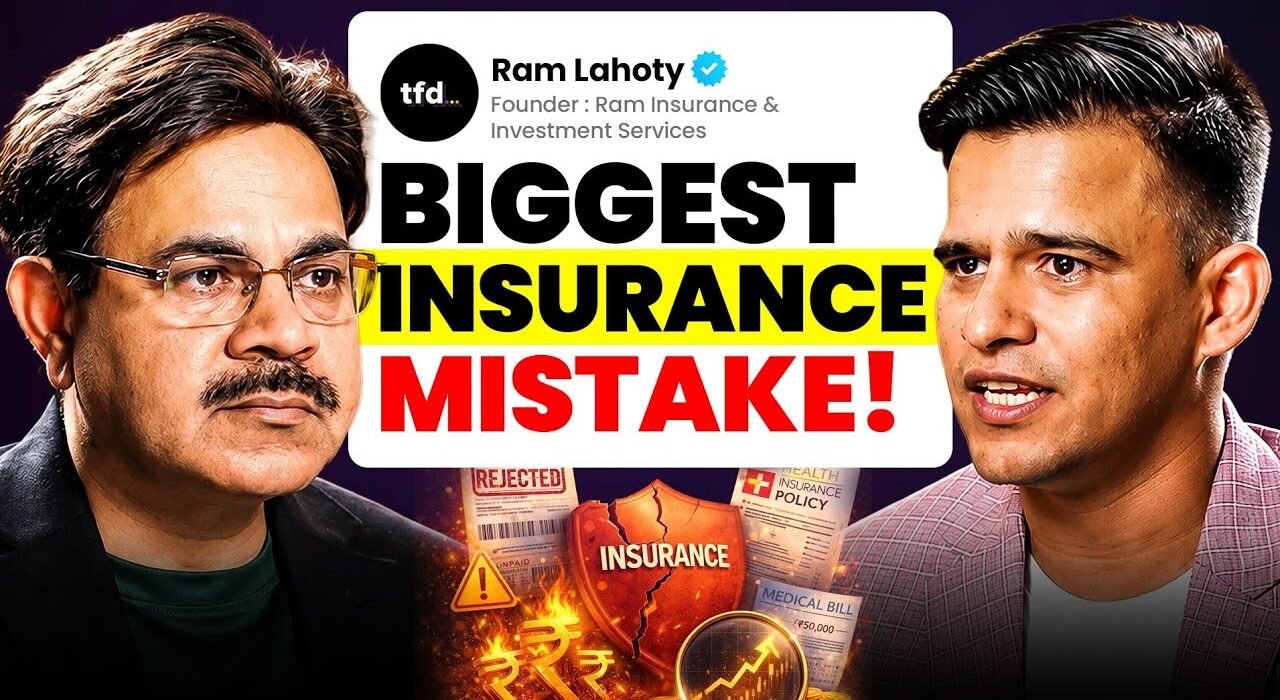
Most people research a phone for weeks before buying it, then hand over their savings to an investment plan after a single phone call. That gap between how carefully we shop and how carelessly we invest is the starting point of this episode of The Founder’s Dream, where host Abhishek Vyas sits down with insurance expert and financial planning strategist Ram Lahoty. This indian business podcast conversation covers insurance claim rejections, IPO red flags, and the honest difference between looking rich and being financially secure.
Why This Indian Business Podcast Episode Matters for Your Money
Ram Lahoty has spent years fielding the same question in different forms: which health insurance should I buy, what term cover do I need, is this IPO worth it. His answer format on the show stays practical rather than theoretical, built from claim files and policy documents he has actually seen rejected or approved.
The episode opens with a diagnosis of the core mistake Indian investors make: confusing insurance vs investment, treating every financial product, including insurance, as a wealth-creation tool. As Ram puts it:
People believe they are investing when they buy an insurance plan, but basically an insurance plan is not for investment — insurance is for protection, and investment is a separate matter.
He traces this confusion to a cultural discomfort with discussing death, which pushes families toward plans that mix insurance with investment and end up doing neither job well. If you want a broader map of the mindset behind sound money decisions, the site’s self-growth section pairs well with this episode’s warnings.
Guaranteed vs Non-Guaranteed Returns: The One-Line Check
A recurring complaint on the show is that insurance documents are long, dense, and printed in fonts small enough to need a magnifier — and agents often just point to where to sign. Ram offers a shortcut that does not require reading the whole document.
If your plan has both non-participating and non-linked written on the first page of the illustration, your plan is guaranteed. If anywhere it says participating or linked, your plan is not guaranteed.
He is blunt about what it means when a guaranteed number is promised without those two words present: the seller is misguiding the buyer, sometimes trained to do so by the company itself. This single check, he says, takes seconds and prevents years of misplaced expectations about a policy’s payout.
Health Insurance Claim Rejections: The Practical Reasons
Abhishek Vyas raises a problem many families discover only during a hospital emergency: health insurance claims getting rejected despite years of paying premiums. Ram lists the practical, everyday causes he has personally seen in claim files.
- A date of birth entered with a wrong month, year, or a small typo that does not match other identity documents.
- Pre-existing conditions not disclosed at the time of buying the policy, which surface only when a claim is filed.
- Contradictions during hospital admission — a patient may have declared a condition existed for three years while porting a policy, but a relative tells the treating doctor it has been present for ten.
- Congenital conditions that insurers exclude from coverage entirely, regardless of how genuine the medical need is.
- Treatment taken at a hospital that the insurer has blacklisted for past fraudulent claims, even if the hospital is otherwise functioning normally.
His framing of why term and health insurance exist side by side is one of the more quotable lines of the episode:
Health insurance does not let you go poor while you are alive, and term insurance does not let your family go poor after you are gone.
On sizing your cover, Ram recommends a minimum of 10 to 20 lakh in health insurance, and points to super top-up plans as a cheaper way to raise coverage: a base policy of 10 lakh combined with a super top-up activates only once claims cross that base amount, keeping the extra premium far lower than buying a full 1 crore policy outright. For term insurance, his thumb rule is to multiply your annual income by 20, or alternatively add your current liabilities — home loan, education costs, yearly expenses — plus a surplus on top.
Motor Insurance and the Claim Fight Nobody Warns You About
The conversation also covers a smaller but common frustration: motor insurance claims getting cut because of depreciation. Ram explains that a zero-depreciation add-on can take a claim payout from around 50% up to 95-96%, using his own example of a burst tyre claim where a surveyor initially offered only half the amount until the zero-depreciation clause was pointed out. His larger point is that claims departments have an implicit target to minimise payouts, so knowing your own coverage terms is the only real defence.
IPO Investing: Separating Business Growth from Hype
Abhishek Vyas steers the discussion toward IPOs, noting how often news of a company “launching an IPO” gets treated as guaranteed good news. Ram separates IPOs into two broad categories: profit-making companies with an established track record, like the examples of Bajaj Housing Finance and Tata Technologies that he mentions as easier to trust, versus loss-making companies that raise money on the strength of a large valuation built through aggressive market expansion rather than profit.
He walks through the mechanics plainly: a company might justify a valuation of 1 lakh crore and offer 10% equity, raising 10,000 crore from the public, even while running consistent quarterly losses. Not every loss-making IPO is a bad bet — he cites Zomato, which was loss-making at its IPO but became profitable after acquiring Blinkit — but he warns against blind entry.
An IPO does not mean you will definitely make money. If you are putting money into an IPO, you need to apply some knowledge of your own — you cannot invest blindly.
His checklist before applying: verify whether the grey market premium being quoted online is genuine, check if the company is profit-making or still burning cash, and remember that listing losses do happen — he references Paytm’s IPO, where shares priced at 2100 fell to around 1500 on listing, and an earlier case with R Power where investors also lost money.
For readers who enjoy this kind of grounded, no-hype breakdown of financial decisions, the site’s entrepreneurial journey stories are a useful next stop for more conversations in the same vein.
Rich vs Wealthy, and Why Trading Is Not a Career
One of the sharper distinctions in the episode is between looking rich and being wealthy. Ram frames it around EMIs:
The one who wants to look rich runs on EMI. The one who actually is rich runs without EMI.
The exception, he notes, is someone with enough surplus cash that financing a purchase and rotating that money into income-generating avenues makes financial sense — that person can afford to look rich because the numbers work in their favour.
On the popular idea of trading as a career, Ram is direct: not one of India’s wealthiest individuals built their fortune through trading. He backs this with a SEBI case involving a trader named Avadhoot Sathe, who earned roughly 600 crore selling trading courses while a SEBI investigation found he personally carried a loss of around 60 crore. His advice for new investors who do want stock market exposure without deep expertise borrows from Warren Buffett:
If you are completely new to the market and want to invest in stocks, invest in the companies you can see with your own eyes — you will never be cheated.
That means buying shares of a bank you already use, an IT company whose services you rely on, or a consumer brand whose products sit in your home, rather than chasing tips from unknown callers or influencers.
Building the Habit of Financial Research
The throughline of the entire episode is self-awareness before self-correction. Ram’s suggested order for someone starting out — term insurance first, health insurance second, then a mix of SIPs, IPO entries, and fixed deposits with whatever surplus remains — is less important than the underlying discipline: read the first page before signing, question a promised return above 7-8%, and treat every cold call offering 10-12% guaranteed returns as a clear warning sign, since no such guaranteed product exists in India today.
Watch the full conversation with host Abhishek Vyas on The Founder’s Dream YouTube channel and subscribe for new founder interviews every week.
Frequently asked questions
Why do so many health insurance claims get rejected in India?
Ram Lahoty explains that most rejections come from practical mismatches such as an incorrect date of birth on the policy, undisclosed pre-existing conditions, contradictory medical history given during hospitalisation, or treatment taken at a hospital that has been blacklisted by the insurer for fraudulent claims.
How can I tell if an insurance plan offers guaranteed returns?
Check the first page of the illustration document for the words participating or non-participating and linked or non-linked. If both non-participating and non-linked are mentioned, the plan is guaranteed; if either participating or linked appears, the returns are not guaranteed.
How much health and term insurance coverage do I need?
Ram Lahoty suggests a minimum health cover of 10 to 20 lakh, paired with an affordable super top-up plan, and a term insurance thumb rule of roughly 20 times your annual income or your current liabilities plus a surplus.
What should I check before investing in an IPO?
Look at whether the company is profit-making or still loss-making, check if the valuation is justified by real business growth, and verify the grey market premium through genuine research or a trusted broker before assuming an IPO will automatically give returns.
Can trading in the stock market be a full-time career?
Ram Lahoty calls this a myth, pointing out that none of India’s richest individuals built their wealth through trading, and cites a SEBI case where a trading coach earned crores selling courses while personally running a loss.
1 Comment