
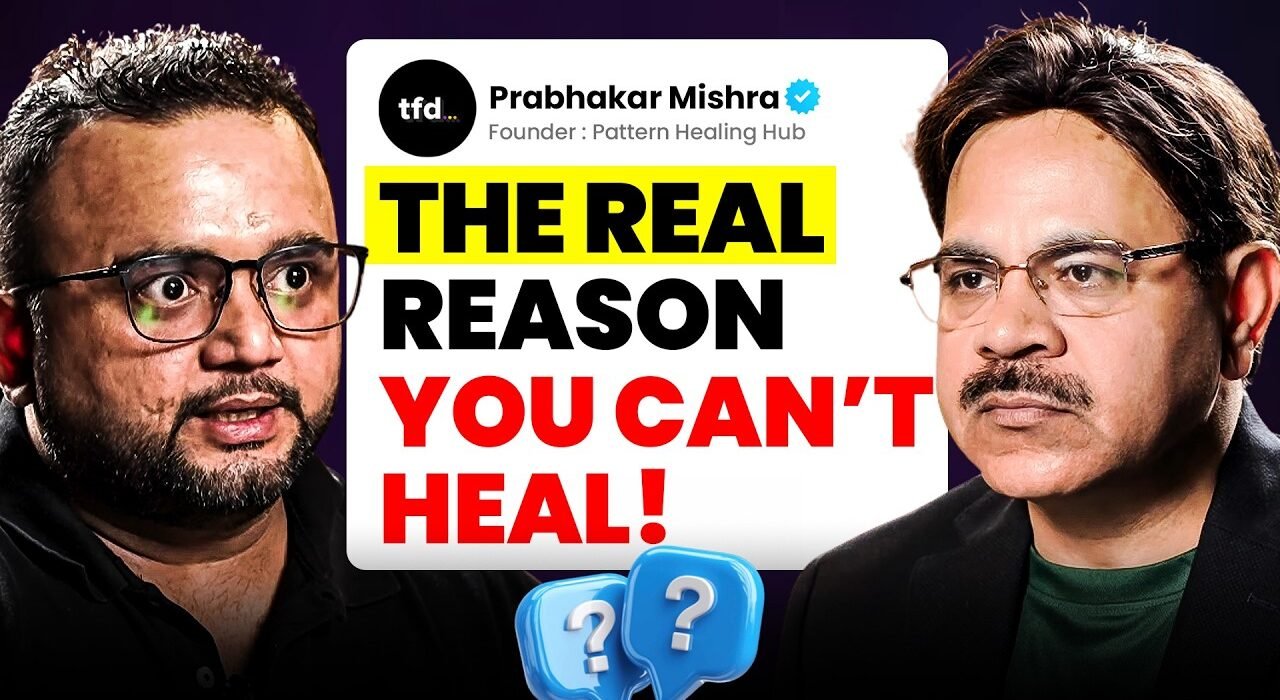
Most people blame bad luck, bad bosses or bad markets when the same problem shows up again — in relationships, in money, in career. On this episode of The Founder’s Dream, host Abhishek Vyas sits down with life coach and Ho’oponopono practitioner Prabhakar Mishra to make a different, uncomfortable case: the repeat problem usually isn’t circumstance, it’s a pattern formed in childhood that quietly runs your entrepreneur mindset, your money decisions, and your relationships without you noticing. It’s the kind of conversation the TFD podcast keeps returning to — not tactics, but the inner wiring behind them.
What Is Ho’oponopono, And Why It Shapes Your Entrepreneur Mindset
Prabhakar traces Ho’oponopono back to a mental asylum in Hawaii in 1986, where a psychologist named Dr. Hew Len was assigned to a ward full of patients labelled criminally insane. Instead of meeting the patients, he read their case files and cleaned his own reactions to what he read using four phrases: I’m sorry, please forgive me, thank you, I love you.
Within the next six months, the patients who were extremely aggressive became normal. Their problems started responding. They began accepting medication, and the staff stopped running away.
Within four years all patients were sent home, and within five years the hospital shut down because it was no longer needed. Prabhakar’s larger point is that any memory you’re still carrying — a rejection, a comparison, a childhood wound — keeps hurting you for as long as you hold it, whether or not you’re conscious of it.
How Childhood Patterns Quietly Build Your Entrepreneur Mindset
Prabhakar says patterns typically start forming once a child’s prefrontal cortex begins developing logical reasoning, around age 8 to 10. A child who is constantly corrected — “why did you break the pencil,” “why isn’t your drawing perfect” — learns to fear imperfection rather than pursue growth.
He describes a 25-year-old who wouldn’t upload a video until it was flawless, wouldn’t start a business until conditions were perfect: the same child who once hid an imperfect drawing, now an adult afraid to ship anything imperfect. This is where perfectionism in professional life often begins, and why an entrepreneur mindset built on childhood fear of judgment can stall real-world execution for years.
He also gives the example of a woman who left a Big Four job and sat unemployed for a year while carrying 25 years of resentment toward her mother for favoring her sister. That resentment, he says, wasn’t staying in the family — it was leaking into her career.
Whatever hatred she felt toward her mother, she was bringing the same hatred everywhere — into her work, into her studies.
Money Beliefs Formed In Childhood, And Why Wealth Feels Dangerous
One of the clearest patterns Prabhakar sees involves money. A child who watches parents argue over school fees, or hears an uncle’s new car dismissed as “black money,” absorbs a quiet lesson: wealth invites judgment. Left unexamined, that lesson hardens into an adult money mindset that fears the very success it’s chasing.
If I become rich, people will call me greedy. If I earn more money, I will get spoiled. This pattern has been running since childhood — so a person wants to become rich, but there’s fear inside. That fear is the pattern, and that’s what we need to dilute and remove.
He extends this into a broader point about the nervous system: your body’s only job is to keep you safe, so if wealth or visibility was ever coded as dangerous in childhood, your system will subtly resist it even while you consciously chase it. This is a core reason many people talk about wanting a stronger entrepreneur mindset but keep sabotaging their own growth without realizing why.
Law of Attraction: Clarity, Cleaning, Then Action
Asked directly how much the Law of Attraction actually works, Prabhakar doesn’t dismiss it — but he’s blunt about why most people fail with it.
You don’t attract what you want. You attract what you are.
He shares the case of a client who kept ending up with the same type of partner across different relationships, tracing it to her mother’s divorce and remarriage when she was 13. The client kept repeating “I don’t want a husband like this,” which — under the Law of Attraction — only sharpens focus on what she didn’t want. Prabhakar’s process had three steps: get real clarity on what you actually want (not what you don’t), clean the underlying emotional pattern through inner child work, then take aligned action — behaving as if you already have what you’re seeking. The client later married someone she met while consciously practicing this, after testing him against the “red flags” they had discussed in sessions.
He’s equally direct about why journaling, chanting or repetitive writing techniques alone often fail people trying to build a stronger entrepreneur mindset or manifest a goal.
So much video content exists today that people try the 369 technique, the water technique, write it 10 times, 15 times, chant it — none of that works if your inner state doesn’t accept it. You have to change the pattern first.
Inner Child Healing In Practice: Relationships, Addiction, Career Fear
Beyond theory, Prabhakar walks through real cases. A man smoking since his twenties turned out to be chasing a specific memory — a woman he knew at 21 who smoked the same brand — and once that memory’s emotional charge was diluted through inner child healing, he tried a cigarette again and found no pleasure in it, then quit. A senior financial-services executive using tobacco to manage loneliness during his commute is currently going through the same process.
In another case, a woman whose husband had become abusive after 22 years of marriage was told, counterintuitively, not to demand an apology from him but to apologize to her own past self for enduring the abuse for years. Within months, without any direct confrontation, her husband’s drinking stopped and he began apologizing to her — which Prabhakar attributes to a shift in her own energy and thought patterns rather than any conversation with him.
He’s currently working two case categories he says are producing his best results: relationship patterns and career blocks — including a laid-off director targeting a higher role, and a vice president who reached AVP level but freezes in front of the board because of old beliefs about “not speaking polished English” formed back in college.
Where These Patterns Show Up Most
- Money — fear of wealth, scarcity thinking, guilt around earning more
- Relationships — repeating the same partner “type,” people-pleasing to earn love
- Career — perfectionism, confidence gaps in front of leadership, fear of visibility
- Health — Prabhakar is careful to note he is not a doctor, but references documented accounts, including one from Dr. Joe Vitale’s book “Zero Limits,” of cancer cells reportedly disappearing after months of visualization and Ho’oponopono practice
Practical Takeaways For Anyone Stuck In A Loop
Prabhakar’s process — get clarity, clean the pattern, then act — is less mystical than it first sounds. It’s closer to naming the actual fear behind a stuck goal before trying to force the goal itself.
- Notice what you keep repeating — in partners, in jobs, in money decisions — before blaming the outside situation
- Ask where the belief was first formed, often between the ages of 8 and 10
- Get specific about what you want instead of only naming what you’re avoiding
- Treat visualization and journaling as one part of a longer process, not a shortcut
Conversations like this one sit alongside other reflective, belief-driven episodes on the channel — including the Ramesh Karandhikar interview on the real meaning of Brahm Vidya — that push founders and professionals to examine the inner assumptions behind their outer decisions. If you want to see the range of guests Abhishek Vyas has hosted on business, mindset and personal growth, the full guest list for The Founder’s Dream is a good place to start.
Watch the full conversation with host Abhishek Vyas on The Founder’s Dream YouTube channel and subscribe for new founder interviews every week.
Frequently asked questions
What is Ho'oponopono?
Ho’oponopono is a healing practice built around four phrases — I’m sorry, please forgive me, thank you, I love you — used to clean emotional memories that sit in the subconscious mind, as explained by Prabhakar Mishra on The Founder’s Dream.
How do childhood experiences affect an entrepreneur mindset?
According to Prabhakar Mishra, patterns around money, relationships and self-worth form as early as age 8 to 10, and they later drive how adults judge risk, react to failure and make business decisions.
Can Ho'oponopono help with money beliefs?
Prabhakar Mishra says money-related fear is one of the four areas where subconscious patterns show up most, often traced back to childhood comments about wealth, greed or scarcity.
Does the Law of Attraction actually work?
Prabhakar Mishra says it works, but only with clarity, cleaning old patterns and taking aligned action — not visualization or journaling alone.
Who is Prabhakar Mishra?
Prabhakar Mishra is a Life Coach, Ho’oponopono Practitioner and Pattern Healing Expert who works on subconscious patterns, inner child healing and nervous system regulation.
1 Comment