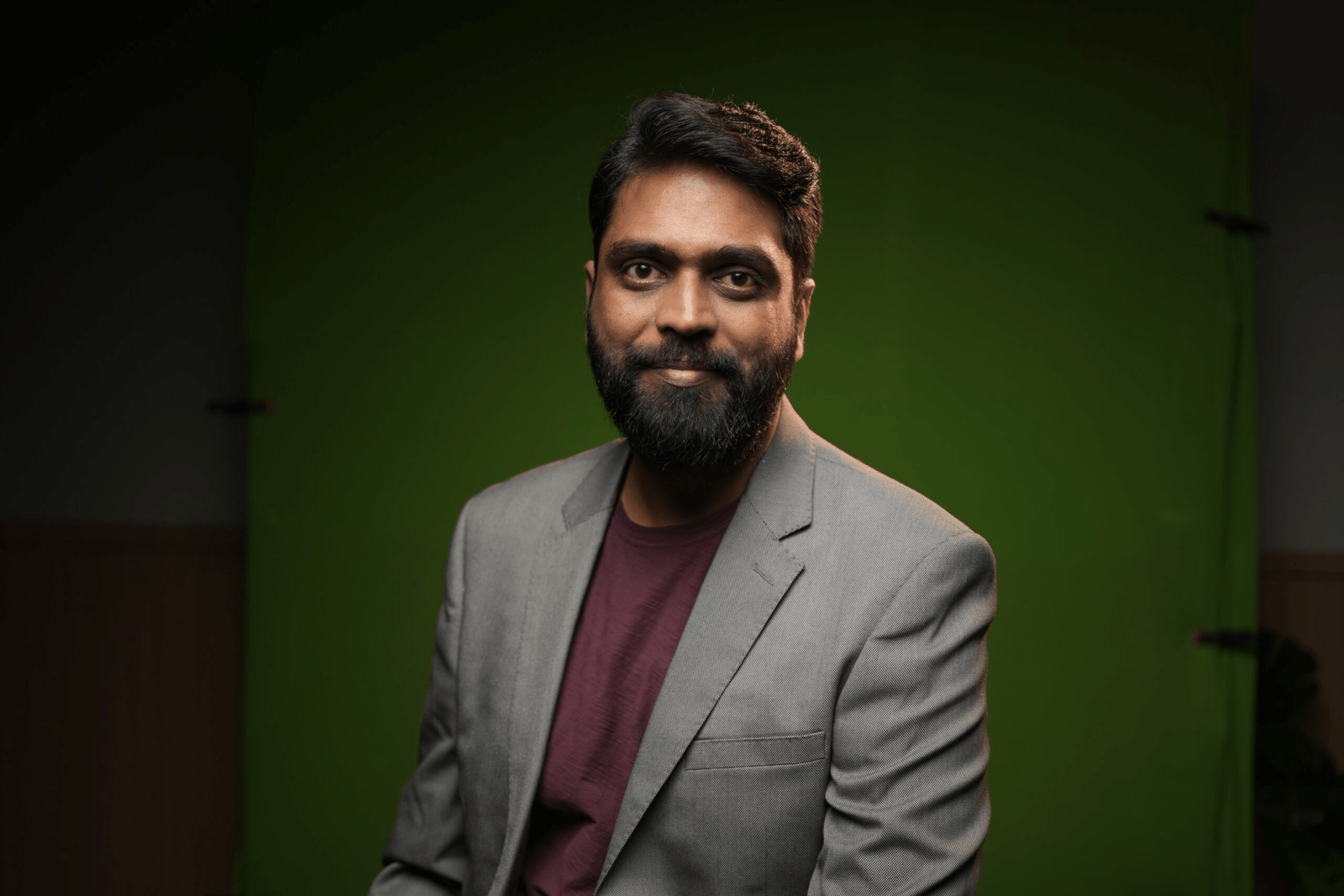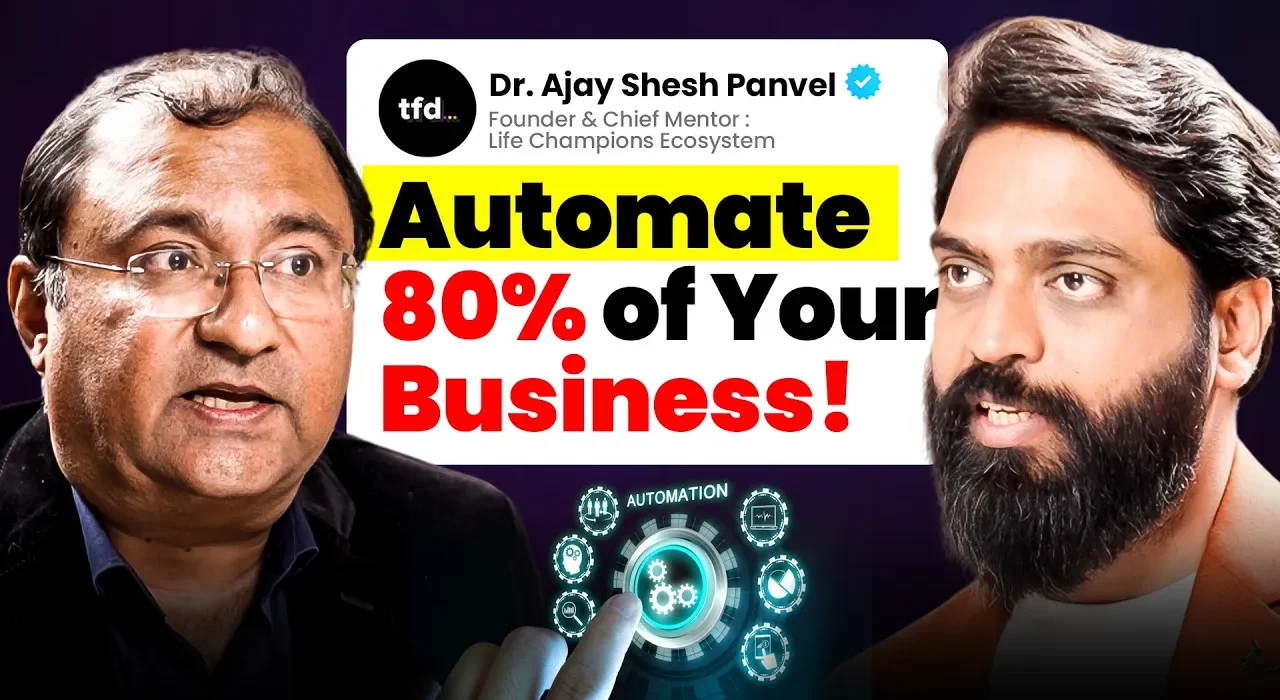
The answer is a resounding yes, and that’s exactly what you’ll discover in the Ajay Shesh Panvel podcast, where host Abhishek Vyas speaks with Dr. Ajay Shesh Panvel, Founder & Chief Mentor of Life Champions Ecosystem, on The Founder’s Dream, a top hindi podcast dedicated to helping entrepreneurs build successful businesses. The Ajay Shesh Panvel podcast explores why businesses become founder-dependent, how systems transform companies, and what entrepreneurs must do to build organizations that grow without requiring their constant involvement.
Why Most Businesses Cannot Function Without the Founder
One of the biggest insights from the Ajay Shesh Panvel podcast is that founders often become the biggest bottleneck in their own businesses. In the early stages, this is natural. Entrepreneurs wear multiple hats because resources are limited. However, as the business grows, many founders continue making every decision themselves. Every customer complaint. Every hiring decision. Every payment approval. Every marketing campaign. Eventually, the company stops growing because everything depends on one person. The Ajay Shesh Panvel podcast explains that true business success begins when the business no longer depends entirely on the founder.
Business Owner vs Business Operator
A powerful concept discussed in the Ajay Shesh Panvel podcast is the difference between operating a business and owning one. Business operators spend their day solving immediate problems. Strategic business owners spend their time designing systems that prevent problems from happening repeatedly. This mindset shift changes everything. Instead of asking, “How can I solve this today?” Founders should ask, “How can I ensure this never becomes a problem again?” That simple shift creates scalable businesses.
Systems Are the Foundation of Growth
Many entrepreneurs believe systems are only for large corporations. The Ajay Shesh Panvel podcast completely challenges that assumption. According to Dr. Ajay, systems should be built from the very beginning. Clear Standard Operating Procedures (SOPs), documented workflows, defined responsibilities, and measurable processes allow businesses to operate consistently even as teams expand. Without systems, every employee performs tasks differently. With systems, businesses become predictable, efficient, and scalable.
Why Indian SMEs Struggle to Scale
One of the most valuable discussions in the Ajay Shesh Panvel podcast focuses on why many small and medium businesses remain stuck for years. The common reasons include:
- Founder dependency
- Lack of documented processes
- Poor delegation
- Weak leadership
- Inconsistent marketing
- Hiring without proper systems
- Reactive decision-making
These challenges aren’t unique to one industry. Whether it’s manufacturing, retail, healthcare, technology, or consulting, businesses face similar scaling issues. The Ajay Shesh Panvel podcast explains practical ways entrepreneurs can overcome these obstacles.
Automation Is More Than Technology
When people hear automation, they immediately think of software and artificial intelligence. The Ajay Shesh Panvel podcast offers a much broader perspective. Automation begins with clarity. Before software can automate a task, founders must first define the correct process. If the process itself is broken, automation simply makes mistakes happen faster. Successful entrepreneurs first build systems. Technology then helps execute those systems more efficiently. This distinction is one of the most important lessons from the episode.
Why Marketing Can Never Be Ignored
Many founders believe their product alone will generate growth. The Ajay Shesh Panvel podcast strongly disagrees. Dr. Ajay explains that even exceptional businesses fail if customers never discover them. Marketing is not an optional activity. It is a business necessity. Entrepreneurs must continuously build awareness, educate customers, strengthen their brand, and communicate value. Businesses that stop marketing eventually stop growing.
Build a Brand, Not a Founder
One of the most thought-provoking moments in the Ajay Shesh Panvel podcast revolves around personal branding versus business branding. Many founders become the face of every customer interaction. Initially, this helps build trust. However, over time, customers begin trusting only the founder rather than the company. This creates dependency. Instead, entrepreneurs should build brands that customers trust regardless of who is leading daily operations. Strong brands survive leadership changes. Founder-dependent businesses struggle when the founder steps away.
Delegation Is a Leadership Skill
Many entrepreneurs hesitate to delegate because they fear employees won’t perform as well as they do. The Ajay Shesh Panvel podcast explains why this mindset limits growth. Delegation doesn’t mean abandoning responsibility. It means creating processes, training people, defining expectations, and monitoring outcomes. Great leaders don’t do everything themselves. They build capable teams that consistently deliver results. This allows founders to focus on innovation, expansion, partnerships, and long-term strategy.
Customer Journey Matters More Than Ever
Another fascinating lesson from the Ajay Shesh Panvel podcast is the importance of customer journey mapping. Successful businesses carefully analyze every interaction customers have with the company. From discovering the brand to making a purchase and receiving after-sales support, every step influences customer satisfaction. Businesses that improve customer experience create stronger loyalty, more referrals, and predictable growth. Customer journey mapping is no longer a luxury. It has become a competitive advantage.
Mentorship Can Accelerate Business Growth
Dr. Ajay also explains why entrepreneurs often struggle alone when guidance could dramatically shorten their learning curve. The Ajay Shesh Panvel podcast highlights how experienced mentors help founders identify blind spots, improve decision-making, and avoid costly mistakes. A mentor doesn’t necessarily need industry-specific expertise. They need proven frameworks for business growth, leadership, execution, and strategy. Learning from someone who has already solved similar challenges can significantly accelerate business success.
The Mindset Required to Build a Scalable Company
Building systems is not only about processes. It begins with mindset. Throughout the Ajay Shesh Panvel podcast, Dr. Ajay emphasizes that entrepreneurs must stop thinking like technicians and start thinking like business architects. Instead of solving today’s problems repeatedly, founders should design businesses capable of solving tomorrow’s challenges independently. This transformation separates small businesses from scalable organizations.
Final Thoughts
If you’ve ever felt overwhelmed by daily operations, struggled to delegate responsibilities, or wondered why your business cannot function without you, the Ajay Shesh Panvel podcast provides practical answers backed by real entrepreneurial experience. From automation and SOPs to leadership, branding, customer journey mapping, and business systems, every lesson is immediately applicable for founders looking to scale sustainably. Whether you’re running a startup, an SME, a family business, or planning your entrepreneurial journey, this conversation offers timeless insights that can completely change how you build your company.
Watch the Ajay Shesh Panvel podcast on The Founder’s Dream, a top hindi podcast where successful entrepreneurs, business leaders, and industry experts share practical strategies for business growth. If you’re serious about building a company that creates freedom instead of dependency, this episode deserves your attention. With actionable frameworks, real-world case studies, and proven leadership principles, the Ajay Shesh Panvel podcast delivers everything a founder needs to move from working in the business to building a business that truly works without them. It’s another reason why The Founder’s Dream continues to be recognized as a top hindi podcast for entrepreneurs who want to build scalable, profitable, and system-driven businesses.