

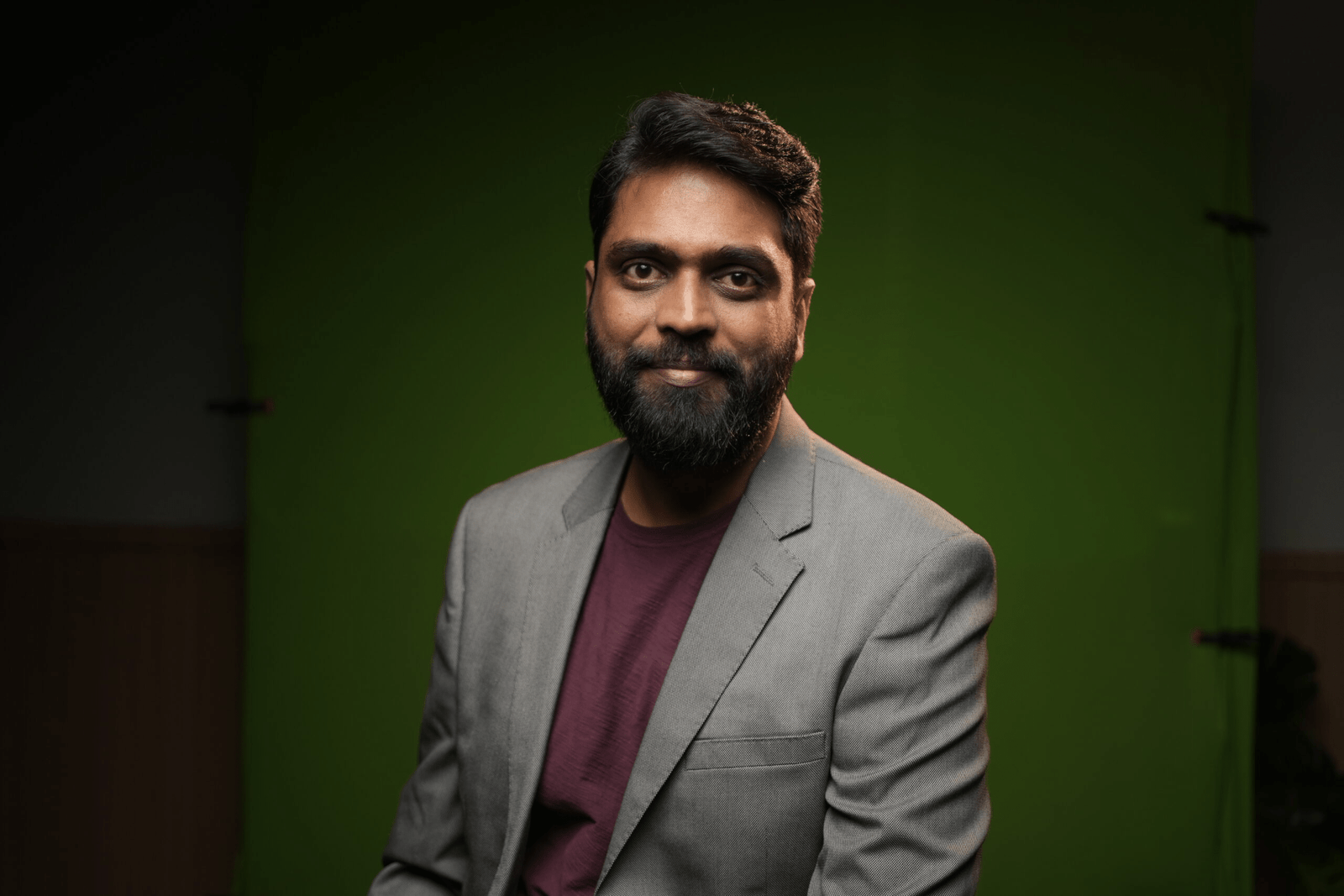
Every year, thousands of Indian students scroll past Instagram reels promising a UK degree under ₹15 lakhs or a guaranteed job abroad — and most of them have no way to tell if that advice is real. In this Soupal Roy interview with host Abhishek Vyas on The Founder’s Dream podcast — also known among listeners simply as the TFD podcast — the Mindverse co-founder explains exactly why so many Gen Z students end up confused, rejected or stuck with loans they didn’t understand.
Soupal studied in Scotland himself, worked in accounting and portfolio management in Mumbai till 2017, and later built Mindverse Research Academy with his sister Sanjana. His frustration with the consultants he met on his own journey is what eventually shaped the company.
Inside the Soupal Roy Interview: Consultant vs Agent
The first distinction Soupal makes is blunt. He separates what he does from what most of the industry does.
I am working as a consultant, not an agent. I am not a dalal.
He says the difference shows up the moment a student asks a real question. An agent already has a shortlist of universities they push because of commissions. A consultant, he argues, should be able to explain why a specific country, university and course fits a specific student — not just hand over a list.
How Soupal Roy Built Mindverse After His Own Bad Experience
The origin story of Mindverse is personal. When Soupal decided to go abroad, he did what every student does — searched online, found a flashy-looking study abroad consultancy, and walked in expecting guidance.
What he found instead was consultants who couldn’t answer basic questions about his own profile, despite him having a graduation degree, a PG diploma in management, a bank-sponsored NISM diploma, and a year of work experience — a genuinely strong academic background.
They are telling me go here, go there, but they are not telling me exactly what I should be doing with my background — which country matches, which university matches, which course matches.
That gap between confident advice and actual research is the exact problem Mindverse was built to fix. Soupal started Mindverse Research Academy three years ago, in 2022, after carrying this experience for years. It is one of those entrepreneurial journey stories that begins not with ambition, but with being badly let down as a customer first.
Why Gen Z Gets Confused by Instagram Advice
Soupal doesn’t blame students entirely for the confusion. He points at how information is being served to them — short, alarming, context-free.
Too much information has made these people go nuts, go crazy. They are not saying the reason why — they are just listing that there are no jobs.
A reel saying “no jobs abroad” without explaining which course, which country, or which year it applies to is close to useless, in his view. His advice to every student considering international education is simple: do a thorough research, and more importantly, ask the person advising you direct questions instead of accepting a list of universities at face value.
The SWOT Analysis Before You Pick a Country
A recurring theme in the conversation is that country, university and course selection has to start with the student’s own profile — not with what’s trending. Soupal’s own case is the example he returns to: a strong accounting and finance background should lead to a program with the right mix of technical teaching and case studies, not a random pick.
He breaks down what students actually need clarity on before applying anywhere:
- What subject genuinely matches their academic strengths, not just what sounds prestigious
- Which university and course combination will mean something on their resume for life — university and course matter because, as he puts it, that becomes a lifetime stamp
- Whether the goal is a specific country for cultural or career reasons, or purely the best-fit course
- What their finances and loan eligibility actually allow
This is also where he addresses one of the biggest myths around studying abroad — that it is always unaffordable. He points to arrangements Mindverse has with accommodation partners, including government-backed student housing in Europe that can cost around 260 euros against 400 to 600 euros for private options, as one concrete way costs come down.
SOPs, Blacklisting and the Loan Maze
Some of the sharpest parts of the conversation are about what goes wrong after a student is accepted. Soupal talks about his sister Sanjana, who studied AI Engineering at the University of Strathclyde in the UK, and references a case of twin sisters where one ran into serious document and fraud-related trouble with a UK university, while the other is currently studying at TUM Berlin in Germany.
He also walks through a loan case close to him — a student he connected with on LinkedIn, whose CIBIL score was a problem. Soupal still pointed him toward loan-providing B-schools and worked with him through the application and interview process. The loan was initially rejected during third-party verification because the photo submitted of the family home only showed the back courtyard instead of the full house. Once the student resubmitted complete photos from every angle, the loan was verified and approved. He mentions another case where a loan was sanctioned using the parents’ bank account instead of the student’s own.
Loan amounts, he says, completely depend on which university, country and course the student is targeting, and Mindverse breaks the process into three parts to work through it with the student rather than leaving them to figure it out alone.
What the Soupal Roy Success Story Says About Picking Students Over Numbers
In three years, Mindverse has helped more than 50 students go abroad. What stands out is Soupal’s comfort with small numbers per intake — one, two, three, or four students — as long as each of them has a solid background and a full roadmap before they leave. This willingness to stay small by choice is really the core of the Mindverse business model: profile-first consulting over volume-driven enrollment.
He is also willing to tell a student the uncomfortable truth that it isn’t the right time for them to go abroad yet, even though it looks bad for business in the short term. That honesty, more than any marketing claim, is the real thread running through this Soupal Roy success story — building trust by saying no when it matters, not by promising everything.
His rapid-fire answers at the end of the episode sum up his philosophy: skill over degree, course quality over university brand, low debt over high salary, and student choice over parents’ choice, 100%. On prestige versus ROI, he refuses to pick one, arguing that real prestige eventually brings the ROI with it.
For anyone evaluating the self growth lessons buried in this episode, the bigger takeaway isn’t about study abroad alone — it’s about refusing to hand people a plate of answers they haven’t earned the context for, whether that’s a university list or a career plan.
Watch the full conversation with host Abhishek Vyas on The Founder’s Dream YouTube channel and subscribe for new founder interviews every week.
Frequently asked questions
What is the difference between a study abroad consultant and an agent?
According to Soupal Roy, an agent simply pushes students toward universities that pay commissions, while a genuine consultant studies the student’s academic background, career goals and finances before recommending a country, university or course.
Why do UK universities blacklist Indian students?
Soupal Roy explains that blacklisting usually follows fraud or verification mismatches in documents, such as a case he handled involving twin sisters where one student faced serious consequences after an issue was flagged.
Can students with a poor CIBIL score still get an education loan?
Yes, Soupal Roy shared a case where a student with CIBIL score issues was still guided toward loan-providing B-schools and eventually got the loan approved after fixing document verification problems.
Is studying abroad really expensive, according to Soupal Roy?
Soupal Roy calls the idea that study abroad is always unaffordable a myth, pointing to options like government-backed student accommodation that can cost a fraction of private housing.
How many students has Mindverse helped study abroad?
Soupal Roy says Mindverse has helped more than 50 students go abroad in three years, and he is comfortable even if only one or two students go per intake as long as their profiles are solid.
1 Comment