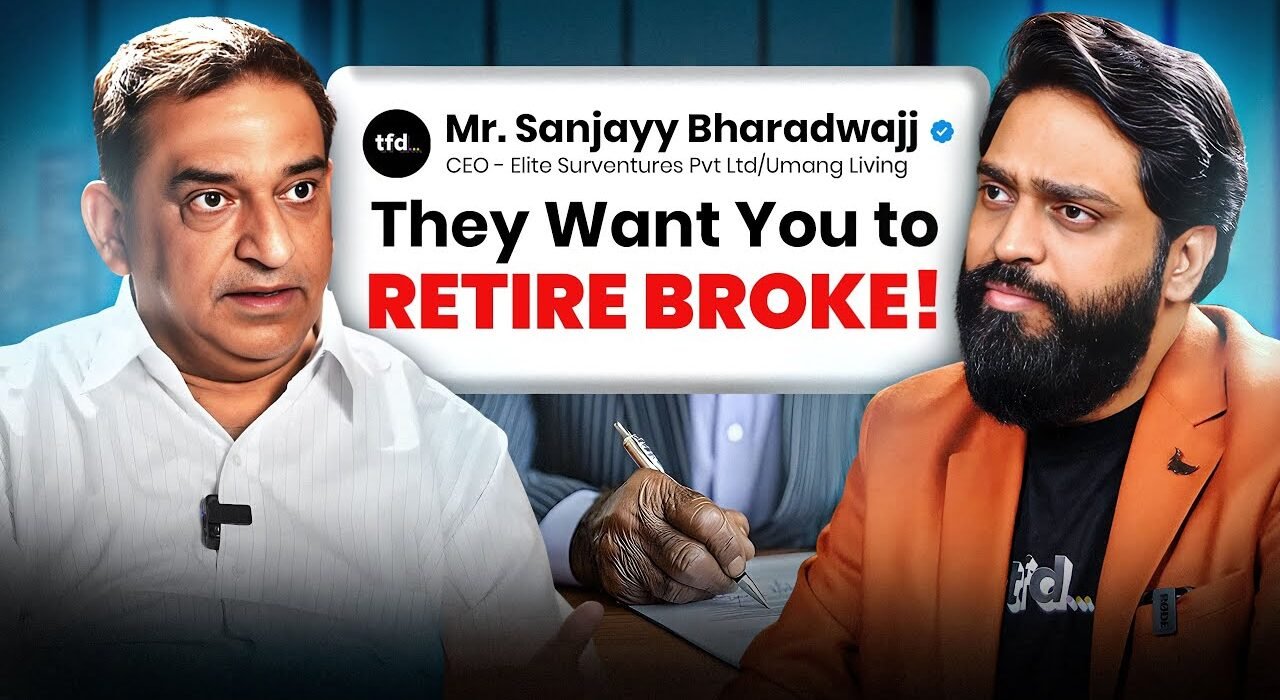
Most conversations about senior living in India start with guilt and end with a flat in a gated society. Sanjayy Bharadwajj, CEO of Elite Surventures Pvt Ltd and Umang Living, thinks that is exactly where the country gets it wrong. In this episode of The Founder’s Dream, an Indian business podcast hosted by Abhishek Vyas, he lays out why moving a parent into a bigger city without a community is not really solving anything.
The Retirement Myth: Why Middle India Never Really Retires
Bharadwajj opens with a sharp observation about who actually “retires” in India. Businessmen, he says, almost never stop working, and neither does the upper class — he points to top business leaders in India and globally who keep working into their seventies and eighties. The idea of a hard stop at 58 or 60, he argues, is really a government-service construct that got applied to everyone else by default.
He shares a personal story to make the point concrete: his uncle, a businessman, threw himself a grand retirement party after being moved by the atmosphere at someone else’s government retirement event, even though nothing required him to stop working.
I asked him, why would you retire? You’re a businessman — retirement is only for people in government service. I have never seen anyone retire from a private job and throw a party for two thousand people the way government employees do. Otherwise, this word doesn’t really exist.
The group that actually gets forced into sudden inactivity, he says, is the middle class — the person who worked 8 to 9 hours a day for decades and one day is handed a bouquet and sent home, with colleagues who stop calling them “sir” the very next day.
From a Father’s Routine to Umang Living’s Idea
The spark for Umang Living came partly from watching his own father after retirement. His father used to leave for work at 8 am and return by 8 or 9 pm every day — a routine the whole family could set their clock by. When that routine stopped, Bharadwajj watched the same pattern repeat across many families: a year or two of restlessness, half-hearted attempts at stock markets or mutual funds, and eventually a day that shrinks down to “buying vegetables in the morning.”
When a man has been running like a machine for twelve hours a day and you suddenly switch him off, rust is going to set in. That’s where the medical problems start too — everything is connected.
He is clear that this isn’t a flaw in the person — it’s the absence of a plan. Nobody plans their life after 55 the way they planned their career at 25, simply because society never told them they needed to.
Community by the Community, for the Community, Run by the Community
Bharadwajj distills Umang Living’s philosophy into three phrases that structure the entire model.
Umang Living is a community — by the community, for the community, run by the community.
- By the community: there are already hundreds of senior citizen clubs in cities — he estimates at least 100 in Bengaluru alone — but each stays confined to its own society, playing cards for a couple of hours without connecting to the club next door. Umang Living is trying to become the single platform that links these existing clubs, with free membership and no fees to join.
- For the community: the project isn’t only about building housing. It’s meant to give people in their 50s and 60s a reason to walk into a new society and find a hundred people their own age already there to welcome them, instead of sitting through isolated afternoons in someone else’s home.
- Run by the community: Bharadwajj wants to actively involve retirees who still want to contribute — inviting those with professional experience to join and work within the ecosystem, on terms that reflect what they need at that stage, which he says is often companionship and purpose rather than salary alone.
He is also candid that building trust in this space is harder than in regular real estate, because buyers aren’t just purchasing a flat — they’re trusting a developer to run the facility reliably for decades, something few real estate companies are structured to guarantee.
What a Genuine Senior Living Project Should Actually Offer
Much of the conversation pushes back on the old stigma around “old age homes” — small two- or three-room flats housing 18–20 people with no facilities, a perception Bharadwajj says is roughly 20–25 years old and still shapes how people react when the topic comes up. The modern version, he argues, needs to look entirely different.
His checklist for a real senior living community includes a proper garden for morning walks, a swimming pool, a satsang or prayer hall for those who become more devotional with age, a community hall for festivals, and a clubhouse where residents can simply spend the day together. On top of this, wellness has to be built in — tie-ups with hospitals, an on-site OPD-style setup with a couple of resident doctors, an ambulance on standby, and a cafeteria that cooks according to residents’ health requirements rather than a generic menu, the kind of community-driven wellness he believes every senior living project should be built around.
He is also candid that many existing real estate developers in this sector still pitch non-slip tiles and railings instead of the life a resident will actually lead there — a sales-first approach he thinks undersells what the format is meant to deliver.
The Math Behind India’s Senior Living Gap
Bharadwajj backs his argument with numbers he has tracked through market research. Roughly 10% of India’s population is currently 60-plus, a share he expects to climb to around 18% within a decade. With an estimated 14–15 crore people already above 60, even a conservative 2% annual growth adds about 30 lakh new entrants into this age bracket every year.
Against that, he counts only 5 to 10 companies seriously building senior living projects in the country, producing maybe a couple of thousand units a year between them against a real addressable market he puts at over 50 lakh people. His conclusion is that this gap can’t be closed by any single company working alone — it needs the roughly 5,000 real estate developers already active in India to start treating this as a mainstream category rather than a niche one, a shift he sees as central to solving the real estate challenges for middle-class India that keep senior housing out of reach for most families.
South India’s Lead and the NRI Paradox — Lessons for This Indian Business Podcast Audience
One data point Bharadwajj found striking in his research: around 60% of senior living projects in India are running in South India. Rather than reading this as southern families being less caring, he attributes it to higher literacy levels and a cultural adoption of Western-style planning, where children actively buy or co-fund flats for their parents and gift them outright.
He contrasts this with what his team found studying NRI families — parents of children settled abroad often live alone in large ancestral houses with only domestic help for company, unwilling to relocate because their own life, friends, and routines are rooted at home. It’s a pattern he’s seen repeat across both North and South India wherever children have moved overseas, and it reinforces his core argument that a bigger house solves nothing without a community around it.
For founders listening to this Indian business podcast conversation as a case study in spotting an underserved category — one of many business ideas India has yet to fully tap — the lesson he offers is less about real estate and more about timing: dozens of people may have had the same idea, but someone has to be the one who starts walking with it.
Where people’s thinking stops, you’re offering a new way of thinking — a new mindset. That in itself is a big thing, because it isn’t easy, and we’re trying to make it possible.
Readers who want more founder conversations in this format can find a wider roundup in 10 Best Hindi Podcast in India | TFD Business Podcast, which maps out where this kind of grounded, practical storytelling fits among India’s growing podcast landscape — the same list that would include this very Indian business podcast episode with Sanjayy Bharadwajj.
What This Means If You’re Planning for Your Own Parents — or Yourself
Bharadwajj’s closing argument is less about a product and more about a mindset shift he wants every listener to sit with: planning for life after 55 isn’t a luxury reserved for the wealthy, it’s a basic act of self-respect that most people skip because no one tells them they need to start.
- Don’t wait until retirement day to think about what comes next — start planning the way you planned your career.
- A bigger house or a move to a bigger city means little without a community of peers around it.
- Facilities matter less than the people — wellness, clubhouses, and gardens only work if there’s a community using them together.
- Membership-based models mean you don’t need to buy property to test whether this life suits you.
- Children doing well by their parents isn’t only about providing money or a house — it includes helping them build a social life after 55.
Watch the full conversation with host Abhishek Vyas on The Founder’s Dream YouTube channel and subscribe for new founder interviews every week.
Frequently asked questions
What is Umang Living?
Umang Living is a senior living initiative founded by Sanjayy Bharadwajj, built as a community-driven platform where elderly members connect, share facilities, and plan life after 55 together, rather than a pure real estate project.
Why does Sanjayy Bharadwajj say only government employees really retire in India?
He explains that private-sector employees and businessmen rarely hold formal retirement parties or stop working, while government service created the whole cultural idea of a fixed retirement age, which then got wrongly applied to everyone.
Do you have to buy a flat to join Umang Living?
No. Sanjayy Bharadwajj says membership is free and anyone can join as a community member, and the platform is also building short-stay and leasing options for people who want to experience senior living without purchasing a house.
Why are most senior living projects concentrated in South India?
He attributes this to higher literacy levels and children adopting Western-style planning for their parents’ comfort, with many families gifting or jointly buying flats for parents instead of leaving them in old family homes.
What facilities should a genuine senior living community offer?
According to Sanjayy Bharadwajj, essentials include a clubhouse, a community hall, a garden for morning walks, a satsang or prayer space, wellness tie-ups with hospitals, on-site doctors, and a cafeteria that cooks according to residents’ health needs.