
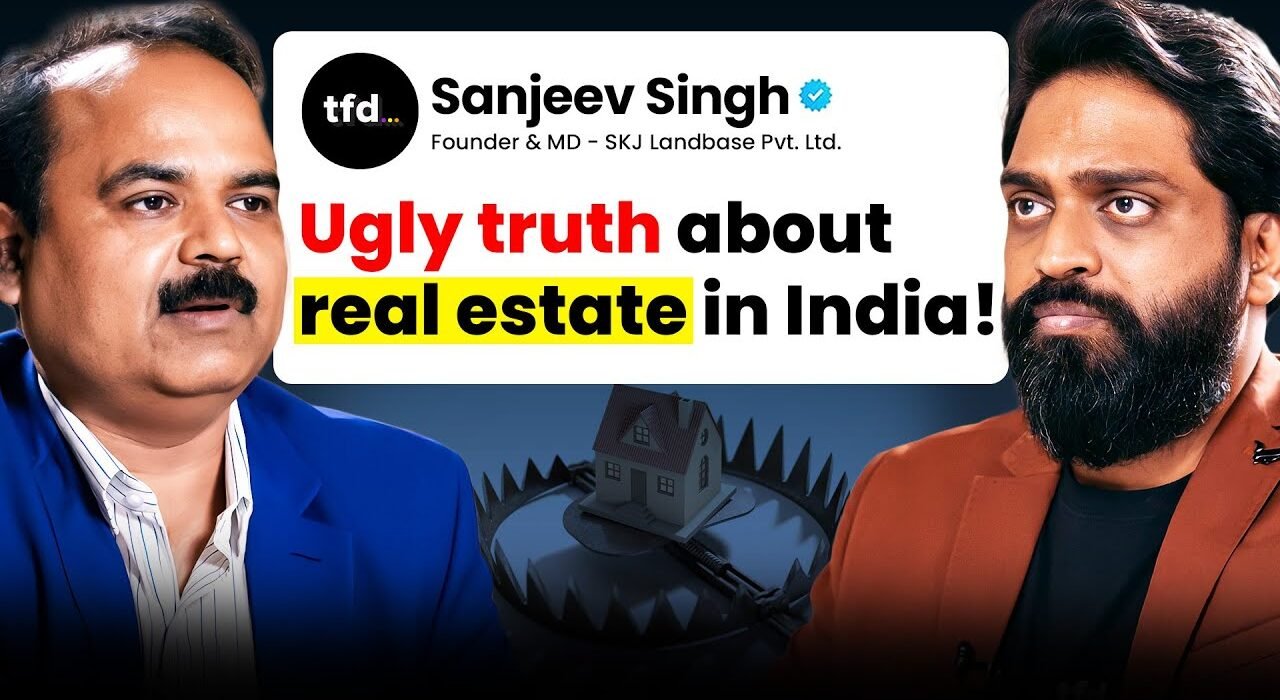
Buying a house is usually the biggest financial decision a person makes in their life, and most people walk into it with zero experience and a lot of trust in the wrong places. In this Sanjeev Singh interview on The Founder’s Dream, host Abhishek Vyas sits down with the Founder & MD of SKJ Landbase Pvt Ltd to unpack the most common property buying mistakes Indian buyers make, why some developers can charge a premium without blinking, and what a middle-class buyer with a 35-40 lakh budget should actually do before signing anything.
Sanjeev Singh has been in real estate since 2016-17, when SKJ Landbase was incorporated, though by his own account he has been close to the trade for 25 years. His core argument through the conversation is simple: most of the fraud, delay, and heartbreak buyers experience is preventable, and it usually starts with skipping one basic step.
The Sanjeev Singh Interview: Why Hiring a Realtor Is Non-Negotiable
Asked what the most common mistake property buyers make is, Sanjeev Singh didn’t hesitate.
You should always hire a reputed realtor first. For health, you go to a doctor. For law, you go to a lawyer. Similarly, for property, you need a realtor — only a professional can do the right job.
His point is that buyers who walk into a developer’s office without representation are walking into a sales pitch, not a consultation. A developer, like a showroom salesman, will try to sell you what he has — not what fits you. Sanjeev describes his own firm’s approach differently: understand the buyer’s requirement first, then recommend from multiple projects, and be honest even when that means saying a property isn’t right for the client.
A Painful Example of Real Estate Fraud
When pushed on where real estate fraud actually happens, Sanjeev shared a story that visibly affected him. An elderly couple bought a shop worth around ₹3 crore from a developer on the promise of a 12% assured return, styled as rent. They received payouts for a year and a half, felt reassured, and then the payments stopped — the shop has sat empty and unbuilt for two years.
I got tears in my eyes. I felt ashamed for the industry. How can you give someone rent on a property that doesn’t even exist yet?
He’s blunt that assured-return schemes tied to under-construction inventory are a trap dressed up as a safety net, and that this is exactly the kind of practice that keeps giving the entire industry a bad name — even though, as he points out, reputable brands rarely need to resort to it.
Under-Construction vs Ready-to-Move: The Real Trade-offs
On the recurring question of under construction vs ready to move homes, Sanjeev refuses to pick a universal winner. Each has upsides and downsides depending on the buyer’s cash flow and risk appetite.
- Under-construction properties let your payments spread out as the project progresses, so you may avoid a loan altogether if your budget is tight upfront.
- Ready-to-move properties require the full amount upfront, but you get certainty — “the key is in your hand.”
- Under-construction buyers historically see stronger appreciation; Gurgaon properties have often doubled or tripled between launch price and possession.
- Resale and ready-to-move pricing varies widely between sellers, making negotiation messier.
His conclusion: if you’re buying under-construction from a developer with a proven delivery record, there’s no real reason to avoid it. The risk was far higher before RERA, when part-payments could vanish with no recourse.
Spotting a Developer Before They Collapse
Sanjeev has watched developers disappear over 25 years in the business, and he says collapsing companies show symptoms long before they fold.
No company goes under in a day, just like no company is built in a day. There are always symptoms — a developer who’s struggling pushes new launches aggressively while old projects stop progressing, and the payment plans get unbelievably aggressive, like 10-90 schemes. That tells you they need cash badly.
His practical checklist for buyers: never go with a developer who hasn’t delivered at least five projects, visit those older projects in person, talk to residents who actually live there, and check whether the landscaping and common areas from years ago are still maintained. He’s dismissive of judging a project by its brochure or sales video — “a good brochure is a graphic designer’s work, a good video is an editor’s work, good delivery is the developer’s work.”
Why DLF Dominates — The Economics of Trust
Abhishek asked why a 2-crore, 1000 sq ft flat and a 50-lakh, 2000 sq ft flat can exist in the same city. Sanjeev’s answer goes beyond brand name.
It’s not just brand value. Look at what construction material they’re using, what their vision is. Go to DLF’s Arbour or Central Park’s Flower Valley, and you’ll understand why these people charge a premium — clean, careful construction, A-grade material, international contractors, structural engineers, wind engineers. Everything is taken care of to deliver the right product.
He adds that Gurgaon sits in a seismic zone, and while seismic zone 4 construction is the norm, some developers build to zone 5 standards — which costs more but matters for the safety of the family that will actually live there. His advice to every buyer now is to start asking which cement, which steel, and which contractor is being used, instead of only asking about location or vastu.
This same discipline around trust and repeat business is something we’ve heard echoed in our broader podcast conversations with founders, where builders and entrepreneurs alike consistently point to reputation as the real moat, not pricing.
Gurgaon’s Boom and Where the Money Is Moving
Sanjeev gets specific about why Gurgaon real estate keeps appreciating: government infrastructure spending is the leading indicator. He cites the Sohna Road elevated flyover, which cut travel time from 40 minutes to 10 and pushed rates from roughly ₹70-80 per sq yard territory up to ₹2.5 lakh, and the Dwarka Expressway, where early investors made significant money simply by recognizing where government money was headed before the road was built.
He also flags three new categories of buyers he’s noticed in the last two years: NRIs returning to India as opportunities abroad flatten out, buyers from other Indian metros parking money in Gurgaon for their children who work there, and pure investors who buy and forget. Combined with India’s GDP growth — he cites India at roughly 6.3% against China’s lower figure — he argues real estate investment in India is nowhere near its ceiling, pointing out that real estate contributes only around 7% to India’s GDP versus 20%+ for China.
Lessons for First-Time Buyers
Sanjeev’s practical takeaways for anyone about to put their savings into property:
- Fix one trusted realtor the way you’d fix one doctor or one lawyer — don’t shop around for the 2% commission difference and lose sight of the 98% that matters.
- Check a developer’s last five delivered projects in person; past performance isn’t a guarantee, but it’s the best assurance available.
- Never buy an “assured return” on a property that hasn’t been built yet.
- Budget at least a month for research — “real estate is a wanderer’s business, not an office-sitting business.”
- Trust your gut in the first ten minutes with a broker or developer — most people can sense good or bad intent quickly.
On building a business around this, Sanjeev’s own philosophy is close to what we found in other stories on self-growth and long-term thinking featured on the podcast — long-term trust compounding into referrals rather than chasing single transactions.
Nothing sells like trust. Build trust, keep selling, and keep that trust. The day you break it, you’ve lost more than a sale.
Watch the full Sanjeev Singh interview with host Abhishek Vyas on The Founder’s Dream and subscribe for more founder conversations every week.
Frequently asked questions
What is the biggest mistake first-time property buyers make in India?
According to Sanjeev Singh, the biggest mistake is not hiring a reputed, professional realtor before buying, which leaves buyers negotiating directly with developers who are only trying to sell their own inventory.
Should I buy an under-construction property or a ready-to-move one?
Sanjeev Singh says both have trade-offs: under-construction properties let your payments spread over time and usually offer better appreciation, while ready-to-move properties need full upfront payment but remove possession risk, so the right choice depends on the developer’s track record.
Why does DLF charge a premium over other developers?
Sanjeev Singh explains that DLF and similar top brands use higher-grade construction materials, international contractors, and structural and wind engineers, and build to stricter seismic standards, which justifies the premium buyers pay.
How can a buyer check if a developer is trustworthy?
Sanjeev Singh recommends visiting at least five of the developer’s previously delivered projects, talking to current residents about their experience, and checking how well those older properties have been maintained and appreciated.
Has RERA stopped real estate fraud in India?
Sanjeev Singh says RERA has significantly reduced defaults and given buyers strong payment protections, though it still has loopholes, and the next big gap to fix is regulating construction quality disclosures.

1 Comment