
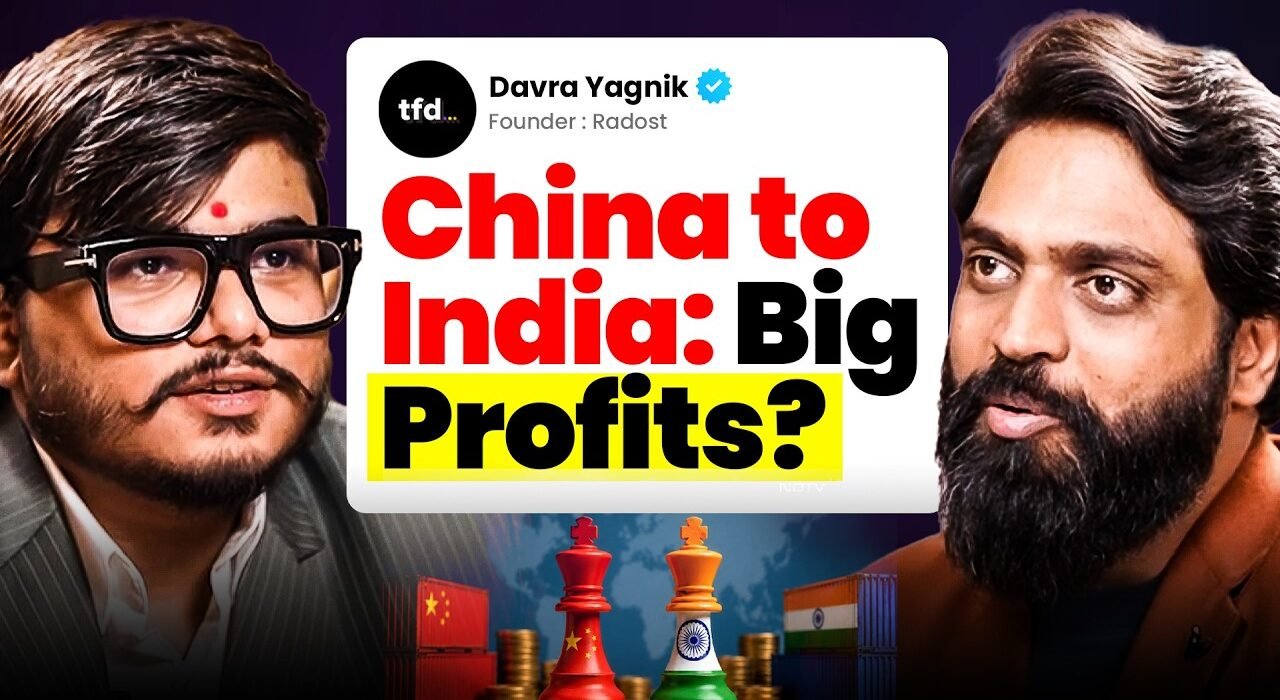
A college student starting an e-commerce side hustle during Covid is not an unusual story in India anymore. What makes the Davra Yagnik success story worth paying attention to is what came after: a ₹3.4 crore turnover, an Amazon Official Partner license, and a 19-person team that has worked on launching more than 1,000 brands. On this episode of The Founder’s Dream, host Abhishek Vyas sits down with Yagnik, founder of Raah Dost, to unpack the real mechanics of selling on Amazon and Meesho, why Chinese-made products still dominate “Made in India” listings, and why he is handing his agency’s growth over to his father this Diwali.
Davra Yagnik Success Story: From a College Side Hustle to Raah Dost
Yagnik is based in Surat and runs his day split between teaching e-commerce to final-year students at a college in the morning and managing his office and clients through the rest of the day, often till 2 AM. He didn’t start this way. His first venture was a partnership with his neighbour, started as a student with no real product knowledge.
He’s open about the early mistakes — overspending on ads, high return rates, and a lack of understanding of what a product actually needed to succeed. That home-and-kitchen brand eventually scaled to a ₹3.4 crore turnover, and along the way, he even received an income tax notice because sales weren’t being reported properly on one slice of revenue. He now runs Raah Dost, a company that helps sellers and manufacturers — including home-based businesses — list, market and scale on marketplaces like Amazon, Myntra, Nykaa and Ajio. The Raah Dost founder story is itself a case study in bootstrapped scaling, built without external funding or a dramatic pivot. Readers tracking similar founder journeys from a shop floor to a scaled brand might also find Archit Jain’s Success Story: From Gold Shop to Sarafa Bazar India useful as a companion case.
On why small, local sellers eventually need to move to marketplaces, he put it simply:
If someone starts with a small shop, how much reach can they really cover — five kilometres, ten kilometres? Even Instagram won’t get you that much coverage. That’s why trusted third-party platforms like Amazon, Myntra and Nykaa matter — buyers order from them because they already trust the platform.
Amazon vs Meesho: Which Platform Should Sellers Actually Pick?
This is the question the episode is built around, and Yagnik doesn’t hedge on his answer. For a seller chasing pure order volume without worrying about profit margins, Meesho can work. But for anyone trying to build an actual brand, he recommends starting with Amazon.
His reasoning comes down to three things: customer support, cost predictability, and trust. On Meesho, he says return charges can run anywhere from 165 to 185 (as a cost factor sellers absorb), and shipping charges aren’t fixed — they shift depending on how a product is photographed, which makes margins hard to plan around. He also described practical friction points, like Meesho sellers sometimes unable to generate shipping labels for three days straight because of courier partner errors.
If someone wants to build a brand and really scale this business long-term, they need to start with Amazon. Amazon is customer-centric to a dangerous degree — in a good way.
He contrasts this with Amazon’s seller support, where dialling into seller support and typing out a problem gets you an actual callback, something he says most other selling platforms simply don’t offer. He also pointed out that Amazon now has its largest global warehouse in Bengaluru and its largest office in India — evidence, in his view, of how seriously the company treats the Indian market.
In 99.9% of cases, your problem gets solved on Amazon. On other platforms, you can keep struggling with it for a lifetime.
Running Raah Dost: 1,000+ Brands With a 19-Person Team
Raah Dost’s scale sounds disproportionate to its size — a 19-person team credited with launching over 1,000 brands. Yagnik clarified that not all of those brands stay active clients; many come in for a specific scaling phase, get trained on things like PPC advertising budgets and keyword strategy, and then continue independently. Some, however, have stayed for three years, and he mentioned the company has worked with five Shark Tank-level brands, three of which remain long-term clients.
At its core, the Raah Dost business model runs in roughly three-month cycles: once a brand signs on, the team handles listing, keyword research (what search terms actually move a product up in results), coupons, and marketing spend decisions. He’s also confident enough in the process to back it with a formal guarantee — sellers who go through his training get a stamp-paper money-back commitment if they don’t recover their fees and generate additional profit within three months. Founders figuring out their first big revenue milestone might find overlapping lessons in How to Earn Your First 1 Cr | Lessons From Top Founders.
Yagnik also teaches at colleges, including Surat’s VV Shah Institute of Management, where he works with final-year students — a group he says he’s only about two years older than.
Chinese Products vs Made in India: What’s Actually on the Shelves
Asked directly about Chinese imports being rebranded and sold under “Make in India” labeling, Yagnik didn’t dodge it. He confirmed that most brands coming to his team for launch are still sourced from China, and that the profit margins on these products are, in his words, substantial.
He did point to genuine India-manufactured categories he’s worked with — kitchen appliances, health equipment, ceramics, and watches manufactured in Rajkot, which he says has a strong base of factories producing these goods domestically. It’s a nuanced picture: the “Made in India” label exists on marketplaces, but a large share of what’s actually listed, in his direct experience, still traces back to Chinese manufacturing.
Family Support, Not Motivation, Built This Business
The most personal part of the conversation wasn’t about Amazon’s algorithm — it was about his father. Yagnik described how his father, a diamond worker who started as a child sitting on a cushioned chair to polish stones, sacrificed consistently so his children could study: funding Yagnik’s own graduation in Logistics Management in Singapore, his brother’s education in Australia (where he now works in cybersecurity), and his sister’s wedding.
He recalled a detail that stuck with him — his parents would buy just one set of new clothes a year and stretch it across twelve months. Once he started earning, he bought his father five sets of clothes in one go, and said his father cried. He later bought his mother seven or eight sarees in a single trip. This Diwali, he’s formally retiring his father from active work and handing him oversight of parts of the business — a symbolic reversal of who supports whom. His story highlights how much family support entrepreneurs need, beyond funding or market strategy, to keep going through the early grind.
On the difference between motivation and support, his comment is one of the more quotable moments of the episode:
Mostly, nobody actually needs motivation — anyone can give that today, you watch a video and remember it for an hour, maybe a month. What people actually need is support — from parents, from a brother, from a sister.
He also linked this directly to why many students he teaches never actually start their own ventures, despite clearly wanting to:
When you have options, your chances of beating the odds drop by half. I never had options — I had to make it work. That’s why I kept going, and today I’m here, teaching students at this age too.
For readers looking at a wider range of founder paths and the trade-offs behind them, Read Top 10 Startup Stories India Every Founder Should Know rounds out several of these themes from other episodes.
What Sellers Can Take Away
- Start on a trusted third-party marketplace before investing heavily in your own website — buyers trust Amazon, Myntra or Nykaa more than an unknown new brand site.
- Factor in return charges and shipping cost variability before committing to a platform — Meesho’s costs can shift depending on product photography and listing details.
- Keyword research and listing optimisation directly affect whether your product shows up when customers search — this isn’t optional work.
- Influencer marketing works best on your own website, not as much on third-party marketplaces, according to Yagnik’s experience.
- AI tools have largely replaced the need for expensive studio photography and professional copywriting for product listings.
For founders exploring e-commerce business ideas India, Yagnik’s biggest lesson is to treat marketplace mechanics — not just the product idea — as the real business.
Davra Yagnik’s story isn’t dressed up with funding rounds or a dramatic pivot — it’s a steady build from a student side hustle to a company training sellers and teaching college classrooms, backed by a family that chose to support rather than merely cheer him on.
Watch the full conversation with host Abhishek Vyas on The Founder’s Dream YouTube channel and subscribe for new founder interviews every week.
Frequently asked questions
Who is Davra Yagnik?
Davra Yagnik is an e-commerce entrepreneur from Surat, an Amazon Official Partner, and the founder of Raah Dost, a company that has helped launch and manage over 1,000 brands on marketplaces like Amazon, Myntra, Nykaa and Ajio.
Is Amazon better than Meesho for sellers?
According to Davra Yagnik, Amazon is better for sellers who want to build a brand and work on profit margins because of its strong customer support, fast resolution and trust, while Meesho suits sellers who mainly want order volume and are willing to deal with high return charges and inconsistent shipping costs.
What is Raah Dost's business model?
Raah Dost helps sellers, manufacturers and even home-based businesses launch and scale brands on third-party marketplaces, handling listings, keyword research, marketing budgets, and training, and it has worked with brands that have gone through Shark Tank funding.
How did Davra Yagnik start his e-commerce journey?
Davra Yagnik started as a college student in a partnership with his neighbour during Covid, made early mistakes like overspending on ads, and eventually scaled a home and kitchen brand to a ₹3.4 crore turnover before starting Raah Dost.
Does Davra Yagnik teach e-commerce to students?
Yes, he teaches final-year commerce and management students at colleges in Surat, including VNSGU-linked programs and VV Shah Institute of Management, focused on practical brand-launching skills rather than theory.

1 Comment