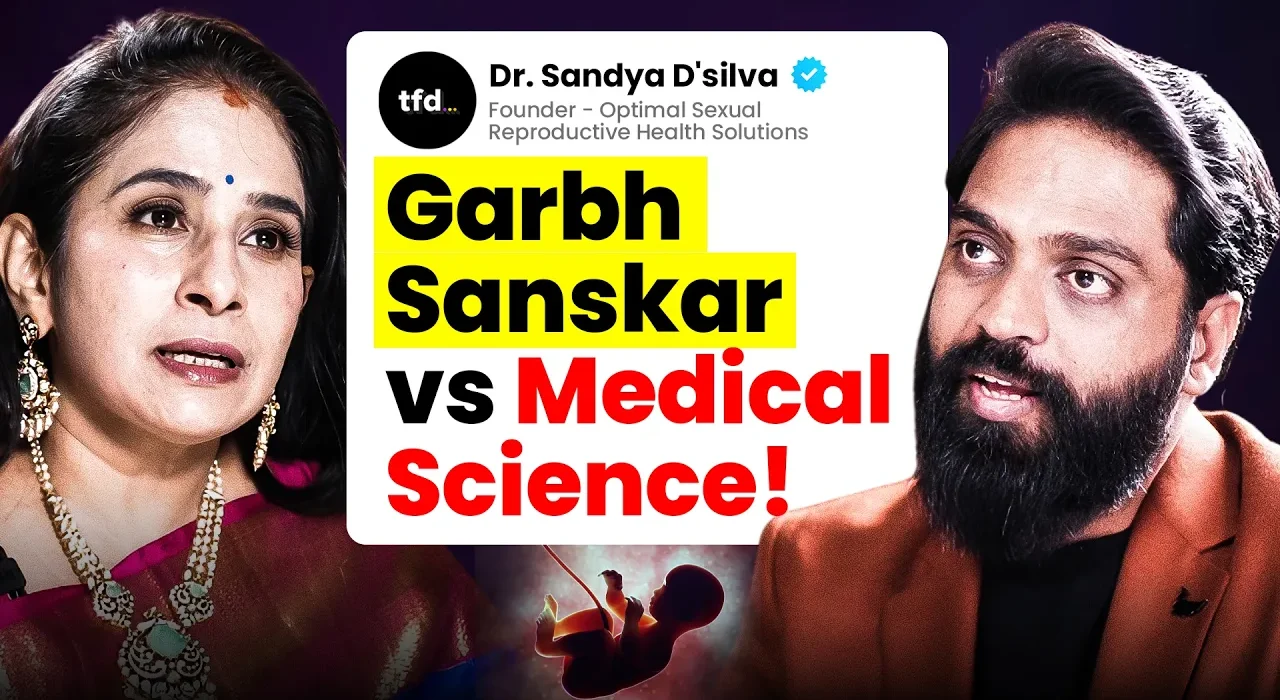
Pregnancy is often seen as a biological process—but what if it is much more than that? What if a child’s emotional, mental, and behavioral foundation begins even before birth? In a deeply insightful episode of The Founders Dream, the Sandya Dsilva Podcast explores the fascinating connection between a mother’s thoughts, emotions, and the unborn child’s development. This Sandya Dsilva Podcast challenges conventional thinking and bridges the gap between modern medical science and ancient wisdom like Garbh Sanskar.
What is Garbh Sanskar and Why Does It Matter?
One of the most powerful concepts discussed in the Sandya Dsilva Podcast is Garbh Sanskar. The Sandya Dsilva Podcast highlights that ancient Indian traditions always believed that learning begins before birth. Today, even discussions in the Hindi Business Podcast space are revisiting these ideas with a scientific lens. Garbh Sanskar refers to the practice of nurturing a child’s mental and emotional development while still in the womb through:
Positive thoughts
Music and sound
Reading and communication
Emotional stability
Can Babies Hear and Learn Inside the Womb?
A key question answered in the Sandya Dsilva Podcast is whether babies can actually hear before birth. The Sandya Dsilva Podcast explains that babies are not just passive—they are actively sensing their environment. This makes the mother’s environment more important than ever. Scientific research shows:
Babies start responding to sound in the later stages of pregnancy
They can recognize their mother’s voice
External sounds can influence their reactions
Does a Mother’s Mindset Shape the Child?
One of the most powerful insights from the Sandya Dsilva Podcast is the role of emotions. A mother’s:
Stress
Anxiety
Happiness
Calmness
can directly influence the baby’s development. The Sandya Dsilva Podcast emphasizes that hormones released during emotional states affect the baby’s brain development. This is why emotional health during pregnancy is not optional—it is critical.
Medical Science vs Traditional Wisdom: Is There a Link?
The Sandya Dsilva Podcast explores whether ancient practices have scientific backing. Interestingly:
Modern science supports prenatal sensory development
Epigenetics shows environment affects gene expression
Emotional states can impact fetal brain wiring
The Sandya Dsilva Podcast suggests that traditional knowledge may have been ahead of its time. This fusion of science and tradition is becoming a key discussion in many Hindi Business Podcast conversations.
The First 0–5 Years: The Foundation of Life
A major highlight from the Sandya Dsilva Podcast is the importance of early childhood. Key insights include:
Brain development starts in the womb
0–5 years shape personality and behavior
Subconscious patterns are formed early
The Sandya Dsilva Podcast explains that what happens during pregnancy carries forward into early childhood.
The Impact of Stress, Fear, and Negativity
The Sandya Dsilva Podcast highlights a critical issue—negative emotional environments. The Sandya Dsilva Podcast reinforces that emotional well-being is directly linked to a child’s future mental health. Effects of stress during pregnancy:
Increased risk of anxiety in children
Behavioral issues later in life
Emotional instability
Womb Memory: Myth or Reality?
One of the most intriguing topics in the Sandya Dsilva Podcast is womb memory. The Sandya Dsilva Podcast opens a new dimension of understanding human psychology. While still debated, some studies and real-life cases suggest:
Children may retain subconscious impressions from the womb
Early emotional experiences can shape behavior patterns
Genetics vs Epigenetics: Who Really Decides the Future?
The Sandya Dsilva Podcast explains a crucial concept—epigenetics. This means a mother’s lifestyle and mindset play a huge role in shaping the child’s future. While genetics provides the blueprint, environment decides:
Which genes are activated
How the brain develops
How the child responds to the world
The Role of Fathers and Family
The Sandya Dsilva Podcast highlights something often overlooked—the role of fathers. The Sandya Dsilva Podcast makes it clear that pregnancy is not just the mother’s journey—it’s a collective responsibility. Fathers contribute by:
Providing emotional support
Creating a positive environment
Building early bonding with the baby
Diet, Lifestyle & Emotional Environment
The Sandya Dsilva Podcast emphasizes that physical and emotional health go hand in hand. The Sandya Dsilva Podcast shows that small daily habits can have lifelong effects on the child. Key factors include:
Balanced nutrition
Proper sleep
Positive surroundings
Mindful habits
Emotional Bonding During 9 Months
One of the most beautiful insights from the Sandya Dsilva Podcast is the concept of bonding. This reinforces the idea that parenting begins long before birth. Talking, thinking, and emotionally connecting with the baby:
Builds trust
Enhances emotional security
Strengthens parent-child relationships
Final Thoughts: Parenting Begins Before Birth
The biggest takeaway from the Sandya Dsilva Podcast is simple yet powerful: A child’s life does not begin at birth—it begins in the womb. This conversation reshapes how we think about parenting, health, and human development. In the evolving ecosystem of Hindi Business Podcast, such discussions are not just informative—they are transformative. This Sandya Dsilva Podcast is more than a podcast—it is a guide for conscious parenting, blending science, emotion, and ancient wisdom into one powerful narrative.