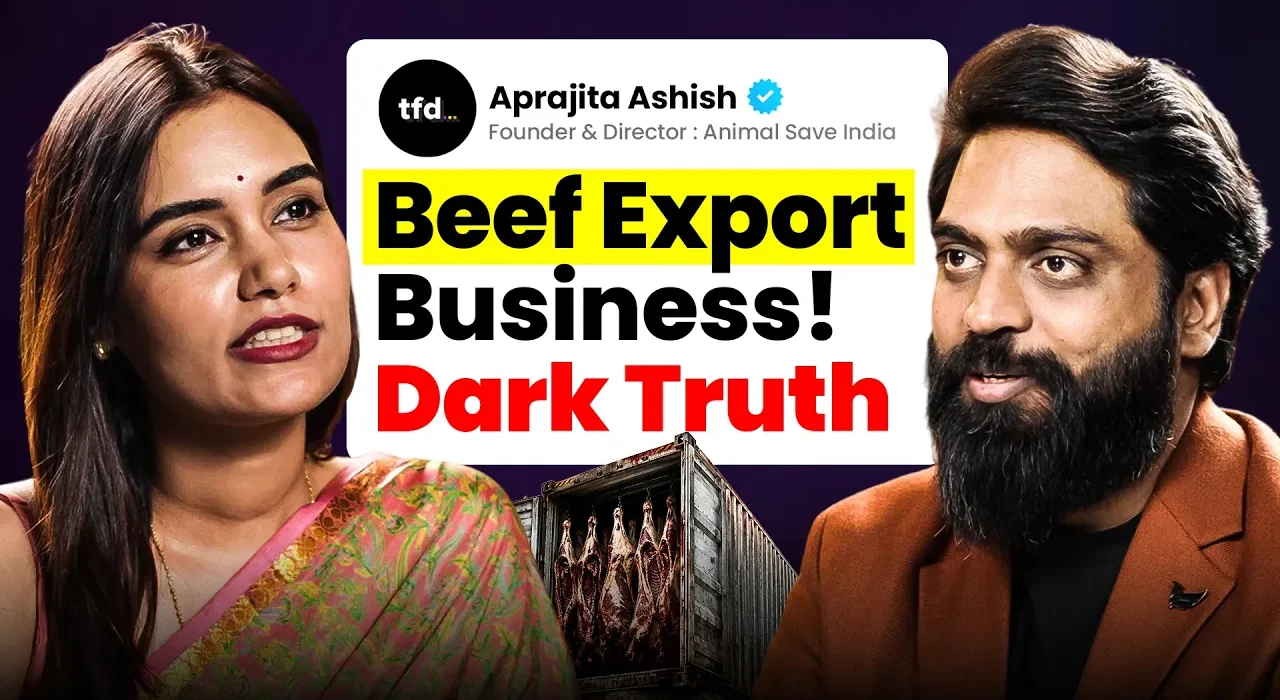
India has long been known as a country where animals are respected, cows are revered, and compassion toward living beings is deeply rooted in cultural and religious traditions. Yet, modern conversations around animal welfare, dairy farming, beef exports, and veganism have raised difficult questions that many people are now beginning to ask. Is dairy truly cruelty-free? Can India be one of the world’s largest beef exporters while also being a nation where cows are considered sacred? Is veganism simply a trend, or does it represent a fundamental shift in how humans view animals and food?
These thought-provoking questions were explored in depth during the Aprajita Ashish podcast, an eye-opening episode of The Founder’s Dream, a leading hindi business podcast hosted by Abhishek Vyas.
The Growing Global Vegan Movement
Over the past decade, veganism has transformed from a niche lifestyle into a global movement. Millions of people worldwide are choosing plant-based alternatives for ethical, environmental, and health reasons.
The Aprajita Ashish podcast explains that veganism goes beyond diet. It is a philosophy that seeks to reduce animal suffering by avoiding products derived from animals wherever possible. While many people associate veganism with food, it also influences choices related to clothing, cosmetics, entertainment, and everyday consumption. The Aprajita Ashish podcast highlights how increased awareness through social media and documentaries has exposed practices within industrial animal agriculture that many consumers were previously unaware of.
Understanding Animal Rights
One of the central themes discussed in the Aprajita Ashish podcast is animal rights. Animal rights advocates argue that animals are sentient beings capable of experiencing pain, fear, stress, and emotional bonds. Therefore, they believe animals deserve moral consideration rather than being viewed solely as resources for human use. The debate often centers around a fundamental question:
Should animals be protected from unnecessary suffering regardless of whether they are raised for food, dairy, or other purposes? The Aprajita Ashish podcast explores this perspective while also acknowledging that many people hold different views based on cultural, religious, economic, and personal beliefs.
The Dairy Industry Debate
For many Indians, dairy products are an everyday part of life. Milk, curd, ghee, butter, and paneer play a major role in traditional diets. Because dairy does not involve directly consuming meat, many people assume it is a cruelty-free choice.
However, the Aprajita Ashish podcast challenges listeners to examine the dairy industry more closely. Animal rights advocates argue that dairy production involves repeated breeding cycles, separation of calves from mothers, and eventual slaughter when animals are no longer economically productive.
Supporters of dairy farming often counter that ethical and humane dairy practices exist and that dairy has been an important part of Indian agriculture for centuries. The Aprajita Ashish podcast encourages listeners to explore these differing viewpoints and make informed decisions based on evidence and personal values.
India’s Complex Relationship with Animals
India presents a unique case when discussing animal welfare. On one hand, animals hold significant cultural and religious importance. On the other hand, India is also deeply connected to global livestock industries.
The Aprajita Ashish podcast examines the apparent contradiction many people observe when discussing animal worship alongside commercial animal agriculture.
These conversations can be emotionally charged because they touch upon religion, tradition, economics, and identity. Rather than providing simple answers, the Aprajita Ashish podcast invites listeners to think critically about how traditions evolve and how ethical considerations fit into modern society.
India’s Position in Global Beef Exports
One of the most controversial topics covered in the Aprajita Ashish podcast is India’s role in global beef exports. Many people are surprised to learn that India has been among the world’s major exporters of buffalo meat. This often leads to public confusion because cows hold sacred status for many communities across the country. The discussion in the Aprajita Ashish podcast highlights how economic realities, livestock management, international demand, and regulatory frameworks intersect with cultural beliefs.
This topic remains highly debated, with strong opinions on all sides. The value of the Aprajita Ashish podcast lies in its willingness to address difficult questions openly while encouraging respectful dialogue.
Climate Change and Animal Agriculture
Environmental concerns have become one of the biggest drivers behind the global vegan movement. According to many environmental studies, animal agriculture contributes to greenhouse gas emissions, land use, and water consumption. The Aprajita Ashish podcast discusses concerns surrounding methane emissions from livestock and the environmental footprint associated with large-scale farming operations. Supporters of plant-based diets argue that reducing animal agriculture could help lower environmental impact.
Others point out that agricultural systems are complex and that sustainable solutions require balancing food security, economics, and environmental goals. The Aprajita Ashish podcast presents these perspectives while encouraging listeners to understand the broader implications of their food choices.
Protein Myths and Plant-Based Nutrition
A common criticism of vegan diets revolves around nutrition. Many people believe it is difficult to obtain sufficient protein, calcium, and essential nutrients without consuming animal products. The Aprajita Ashish podcast addresses these concerns by discussing plant-based protein sources, nutritional planning, and common misconceptions. Foods such as lentils, beans, soy products, nuts, seeds, and whole grains can contribute significantly to protein intake.
At the same time, the Aprajita Ashish podcast emphasizes that any diet—whether vegan, vegetarian, or non-vegetarian—should be carefully balanced to support long-term health. The discussion encourages evidence-based decision-making rather than relying solely on popular myths or social media trends.
Ethical Living in the Modern World
One of the most interesting aspects of the Aprajita Ashish podcast is its focus on ethical living. Consumers today are increasingly interested in understanding where products come from, how they are produced, and what impact they have on people, animals, and the environment.
Whether someone chooses veganism or not, these questions are becoming increasingly relevant.The Aprajita Ashish podcast encourages listeners to think beyond convenience and consider the wider consequences of everyday choices.
Why Conversations Like These Matter
The veganism debate is unlikely to disappear anytime soon. Questions about animal welfare, climate change, food systems, and sustainability will continue shaping public discourse for years to come. What makes the Aprajita Ashish podcast valuable is its willingness to explore controversial topics without avoiding difficult conversations.
Listeners are exposed to perspectives they may not have encountered before, allowing them to form more informed opinions. For those who enjoy thought-provoking discussions on business, society, ethics, and emerging trends, this episode is a must-watch. As a leading hindi business podcast, The Founder’s Dream consistently brings experts, founders, and changemakers who challenge conventional thinking and encourage deeper reflection. Whether you strongly support veganism, strongly oppose it, or remain undecided, the Aprajita Ashish podcast provides a unique opportunity to hear arguments, evidence, and personal experiences firsthand.
If you enjoy meaningful conversations that go beyond headlines and social media debates, this episode of The Founder’s Dream, a popular hindi business podcast, is worth adding to your watchlist. Through discussions like the Aprajita Ashish podcast, audiences gain access to ideas that inspire critical thinking, informed decision-making, and a deeper understanding of the complex world around us.