
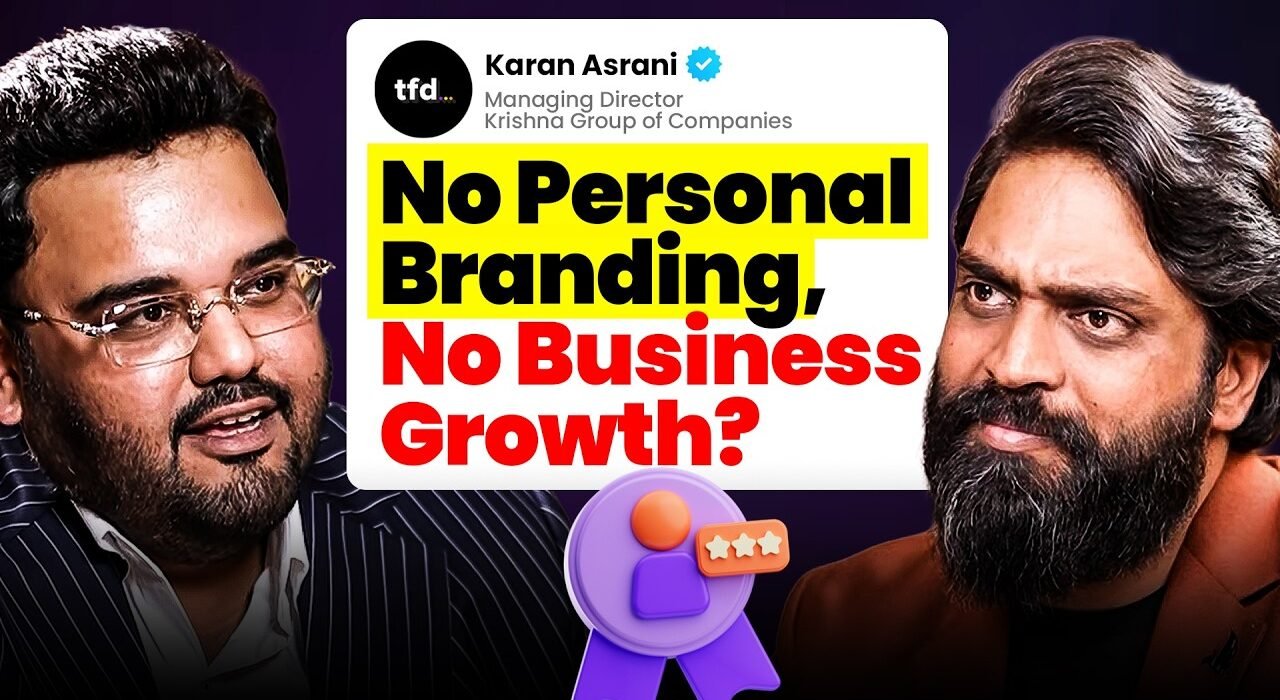
Most people assume a car showroom is a simple business: put up a shiny building, hire a few salespeople, and watch the cars drive themselves off the lot. Karan Asrani, Director & CEO of Krishna Group of Companies, spent an episode of this Indian business podcast quietly dismantling that assumption, line by line, with real numbers from thirty-plus years of running dealerships in Mumbai and Thane.
Speaking with host Abhishek Vyas on The Founder’s Dream, Asrani walked through his family’s journey from a freedom fighter grandfather’s modest salary to a group that now spans automobile dealerships, cinemas, and real estate. Along the way, he explained why EVs are about to change what a “family car” even means, why dealers make customers wait months for delivery, and why he still refuses to touch the luxury car segment despite having the capital to do so — turning his family’s journey into an entrepreneur success story India can learn from.
A Family Business Legacy Built on a Hot Cinema Hall
Asrani’s grandfather, the late Daulat Ram Asrani, was a freedom fighter who later worked for a diamond merchant in Mumbai on a salary of ₹150. The origin story of the family’s first real venture is almost accidental: he went to watch a movie, got uncomfortably hot in the hall, and decided India needed air-conditioned cinemas. With five or six partners, he built what Asrani believes was one of the first air-conditioned theatres in Maharashtra, roughly 45 years ago, and eventually grew it into four to five cinemas across Thane.
The family’s devotion to Shirdi Sai Baba led to another venture — because there were no hotels in Shirdi at the time, Asrani’s grandfather opened the town’s first one, the Sai Baba International Hotel. When he passed away, Asrani’s father and uncle were teenagers with little business experience and no cash cushion. They inherited an income-tax notice worth roughly fifty to sixty lakh rupees from the early 1970s; his father, then studying law, took up the case personally and fought it for four to five years before winning.
The 1992 Pivot That Created the Dealership
Before cars, the family ran an octroi agency business in Bombay, collecting duty on goods entering the city. In 1992, municipal authorities demolished a stretch of shops in the area, including the family’s office. Fortunately, they had purchased a shop in Mumbai a year or two earlier with their savings. Their octroi work had built strong relationships with dealership owners, and one of them made an offer that changed everything.
One of the dealers told my father, “You already help us, you already bring us customers — why don’t you just open your own showroom? You don’t need to invest in a full dealership right away, just display a vehicle and start from there.”
That single shop became the family’s first automobile showroom in 1992-93, built, in Asrani’s words, with “very lavish interiors.” He grew up spending his weekends there from around age six, watching customer conversations and imitating his father on the phone before he even understood the business. That childhood apprenticeship is now showing up in how Krishna Group runs multiple dealerships of two Indian OEM brands today.
The Hidden Economics Behind Every Car Sold
A recurring theme on this founder podcast conversation was how deceptively complex dealership economics actually are. Asrani broke down what goes into selling a single car beyond the sticker price.
We think selling a car is easy — put up a showroom, hire a salesperson. But there’s a cost for that salesperson, a cost for your showroom space, a cost of logistics, a cost of drivers, a cost of delivery ceremonies. I can’t disclose the exact numbers, but the cost is real — and in a city like Mumbai, where manpower is expensive and rents are sky-high, it adds up fast.
Then there is inventory cost — how long a car sits unsold before it’s financed, transported, and delivered. In the brands Asrani deals with today, cars rarely sit in stock; they sell almost as soon as they arrive. But he recalled brands where stock sat for 60 to 90 days, calling that a “slow death” for a dealer’s margins if a vehicle isn’t turned over within 20 to 30 days.
He also explained why customers are often told to book now and wait months for delivery — a frustration many voice on social media without understanding the mechanics behind it. Using BMW’s 5 Series as an example, he pointed out that a factory might have the capacity to build around 2,000 units, but if demand suddenly jumps to 6,000, ramping up a production line realistically takes about three months, regardless of how much money is thrown at it. Cancellations due to failed financing do happen, he said, but they account for only around four to five percent of bookings — the rest simply move to the next customer in a fully digitised, timestamped queue.
Why This Indian Business Podcast Episode Takes EVs Seriously
Asrani was direct about where electric vehicles stand in Indian households today, and where they’re headed.
Right now, more or less, an EV is your second car. But mark my words — five years from now, maybe a decade, the EV will be the first car in every Indian family.
He already sees early signs of this: out of every ten customers visiting his showrooms, two or three now treat their EV as the daily-use primary vehicle. The biggest psychological barrier is what he calls “range anxiety” — the fear of a car running out of charge mid-journey with family on board. In his own experience, he said battery failures are extremely rare events, though he has heard more complaints about this with “some Chinese EV brands” specifically.
On charging infrastructure, he cautioned against the trend of entrepreneurs buying land purely to build EV charging stations as a standalone business, calling it a likely failure. His own approach has been to treat charging as an add-on at footfall-heavy locations he already owns — he partnered with Tata Power, which installed chargers free of cost at his cinema properties in exchange for space, turning a three-hour movie visit into a charging stop for customers as well.
Customer Psychology: Salespeople as “Decision Advisors”
One of the sharper observations from this business podcast India conversation was how much customer behaviour has changed. According to Asrani, buyers today typically arrive already knowing the model, variant, color, and price they want — they’re often more informed than the salesperson. That has quietly transformed the role of a car salesperson into what he calls a “decision advisor,” someone customers consult over coffee with their family rather than someone who pitches them.
Krishna Group’s response has been to build a formal customer journey: a digital inquiry triggers a call, an offer of a test drive at the customer’s home or office, a follow-up conversation with the whole family, instant finance checks, confirmation emails naming the exact model and variant booked, and an escalation matrix with phone numbers up to the GM level if a salesperson goes unresponsive. Customers can even request a refund or postpone their purchase. Asrani is equally candid that reputation is fragile in this business — a bad delivery experience, he said, costs a dealer three or four future referrals instantly.
He also credits unfiltered feedback for keeping the business honest, deliberately sitting unannounced in customer lounges to hear complaints before anyone recognizes him as the owner.
Whoever criticizes you is actually your best friend.
Staying Out of Luxury Cars, Betting on Real Estate Instead
Despite running a profitable dealership business, Asrani has deliberately avoided the luxury car segment, calling it unusually risky. He pointed to the post-COVID financing boom — approvals now take minutes rather than days — as pulling people earning thirty to forty lakh rupees a year into Mercedes E-Class purchases they can’t comfortably sustain. His own philosophy, shaped by a Sindhi family upbringing, is to build assets before buying depreciating luxury goods, and to never let cash sit idle; profits are continuously reinvested into stock, real estate, or business expansion rather than kept as savings.
That same risk-awareness runs through how founders in very different sectors think about building durable businesses — a theme explored in this profile of Himanshu Sehrawat’s journey building Clean Craft, which is worth reading alongside Asrani’s conversation for a contrast in how two different founders approach scaling discipline. The broader entrepreneur mindset on display in both stories — patience over impulsiveness — is also central to how Himanshu Sehrawat describes his own early struggles building a brand from the ground up.
Asrani has also started deliberately stepping back from daily operations, spending limited time in his office by choice, because he wants the organisation to function independently of him rather than being dependent on his daily presence — a conscious break from how the previous generation ran the business.
What This Means for Anyone Studying a Family Business Legacy
A few practical takeaways stood out from the conversation for anyone thinking about entering or inheriting a family business:
- Track every hidden cost in a dealership — showroom space, logistics, drivers, delivery, and especially inventory holding time — because these quietly erode margins.
- Understand an OEM’s five-to-ten-year product and production roadmap before committing to a brand, since premium segments can shift loyalty quickly.
- Treat EV charging infrastructure as a value-add to existing footfall, not a standalone land-and-charger investment.
- Build transparent, trackable customer processes — escalation contacts, confirmation emails, refund options — rather than relying on goodwill.
- Reinvest profits instead of holding cash, and build real estate or other asset classes before chasing depreciating luxury purchases.
Asked what he’d never said to his father directly, Asrani kept it simple: everything he knows about watching expenses, managing stock, and using finance wisely, he learned from his father and uncle — lessons he’s now trying to pass forward as his own children eventually watch him the way he once watched his dad from a showroom corner.
Watch the full conversation with host Abhishek Vyas on The Founder’s Dream YouTube channel and subscribe for new founder interviews every week.
Frequently asked questions
Who is Karan Asrani?
Karan Asrani is a second-generation entrepreneur and the Director & CEO of Krishna Group of Companies, which runs automobile dealerships, cinemas in Thane, and real estate investments.
Will electric vehicles become the primary car in India?
Karan Asrani believes that within five to ten years, EVs will move from being a family’s second car to becoming the first car in every Indian household.
Why do car dealers ask customers to wait months for delivery?
According to Karan Asrani, OEMs have fixed production capacity, and when demand suddenly spikes beyond that capacity, ramping up a production line can take three months or longer, which creates waiting periods.
Why hasn't Krishna Group of Companies entered the luxury car segment?
Karan Asrani calls luxury car dealerships a high-risk business, pointing to how easy financing after COVID has pushed people with modest incomes into buying premium cars impulsively.
How does Krishna Group manage unsold car inventory?
The group tracks stock closely, aims to turn over vehicles within 20 to 30 days, offers discounts when demand slows, and works with OEMs who sometimes cut production to ease pressure on dealers.
1 Comment