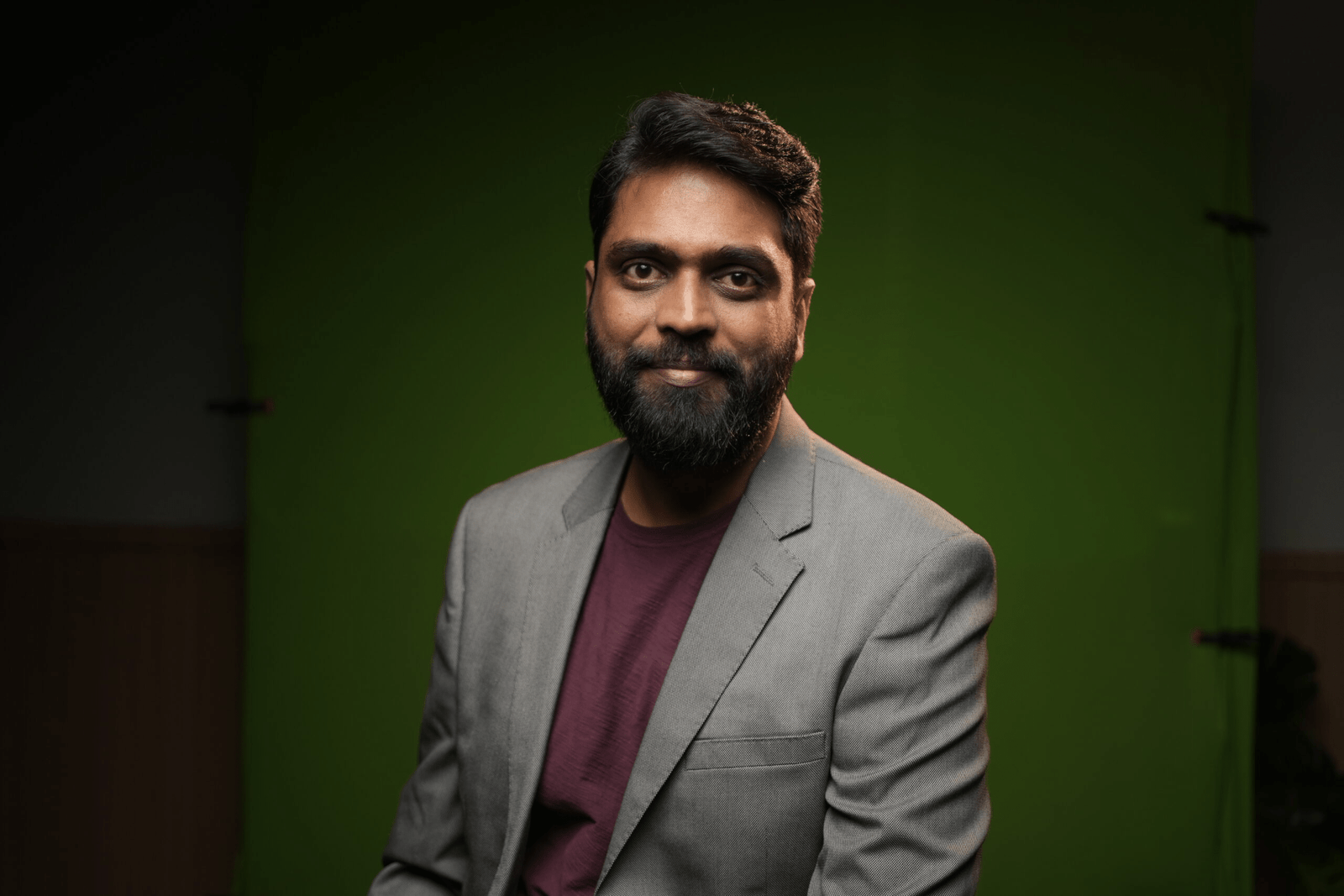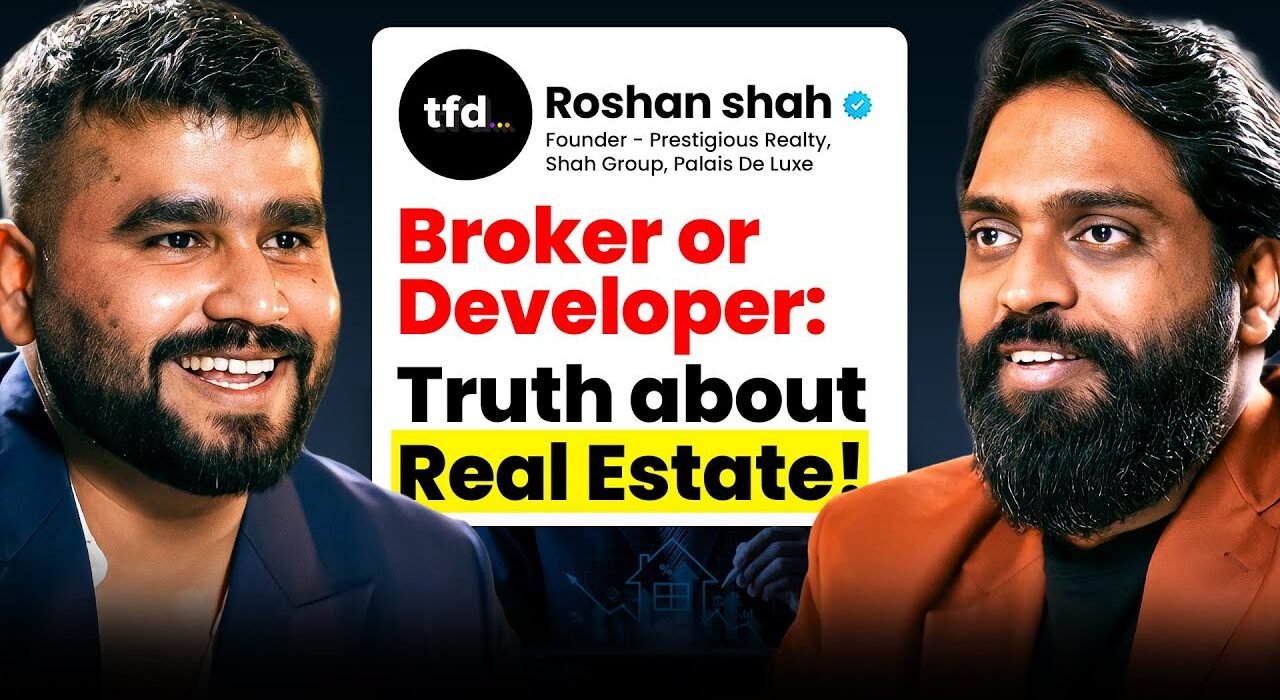
Roshan Shah grew up watching his father drive a lorry in Surat. Today he runs Prestigiousrealty, SHAH GROUP, and Palais De Luxe out of Ahmedabad. On this episode of The Founder’s Dream, host Abhishek Vyas asked him to unpack the entrepreneur mindset that moved him from a government Gujarati-medium school to real estate boardrooms — and what buyers should actually watch out for before they sign a cheque for their dream home.
Shah doesn’t dress up his past. He talks about counting pocket money in college, taking a part-time job getting people hired at Vodafone in 2015, moving through a call centre and Toyota, and finally getting pulled into real estate by a developer who liked how he spoke. What follows in the conversation is less a success montage and more a working explanation of how real estate projects actually get built, delayed, and sold in India.
The Entrepreneur Mindset Behind Breaking the Poverty Cycle
Shah is blunt about where responsibility sits. He draws a line based on age:
If you’re poor at 20, that’s not your fault — it’s your father’s. If you’re poor at 25, maybe a little of it is on you. But if you’re still poor at 30, that is entirely your own fault. Your father tried to give you his best; it’s now your responsibility that he doesn’t stay poor.
That line became his own operating principle. He says he decided early that he was born poor but refused to accept dying poor, and kept repeating to himself that he would “create history” one day — not today, not tomorrow, but eventually. He’s careful to add that none of it came from a lucky break:
Nobody just got a lucky trade and became a crorepati overnight. This is a ten-year night, not a one-day story. If you work with clarity, focus, and consistency, the whole world will eventually support you.
This is the core of the entrepreneur mindset he keeps returning to through the episode — not motivation as a slogan, but a specific belief that struggle sharpens skill in a way comfort never will. He points out that people born into money, who’ve “only shown off a car and gone for a drive,” often lack the same edge, simply because they never had to build the skill of surviving the struggle.
From Vodafone to a 10-Year Struggle in Real Estate
Shah’s shift into real estate wasn’t instant success. He started Prestigiousrealty, his consulting company, in 2018 in Ahmedabad after leaving his job — and promptly lost ₹8 lakh of his ₹14 lakh savings in the first six months, when business simply didn’t come in.
- He had no backup plan — only the option to push forward or go back to a job.
- He gave himself a mental deadline: if the remaining ₹6 lakh ran out, he’d return to employment.
- Instead, the business slowly turned around, built almost entirely on relationships rather than quick transactions.
He credits relationships, more than marketing, for sustaining the growth: a single satisfied client once bought ten flats across a project group because of trust built on one earlier deal. That’s a theme worth reading alongside other founder journeys in the Entrepreneurial Journey category, where similar patterns of trust-led growth show up across different cities.
Developer vs Broker: Why They Think Completely Differently
Asked directly by Abhishek Vyas about the difference between the two, Shah didn’t hedge:
A broker just thinks, I’ll sell this and take my commission. A developer is handling someone’s dream home — their lifetime savings are going into your project. You simply cannot compare the two mindsets.
His reasoning: a broker’s job ends once the deal closes, while a developer’s responsibility runs from possession through maintenance for the life of the project. He also pushes back on the common fear of buying from smaller builders:
A developer isn’t small or big by nature — every big developer was small once before becoming big. If you’re buying from a smaller name, go through a relationship or a trusted consultant who can guide you on whether that location and builder are worth it.
His advice for anyone hoping to become a developer themselves — especially a first generation entrepreneur with no family business background — is to start on the consulting side first, to absorb how land clearance, plan approvals, and RERA actually work, before raising capital for a project of their own.
What to Check Before Booking Any New Project
Shah lists two non-negotiables for a buyer evaluating a new launch: location first, brand or track record second. Beyond that, he flags where the real costs hide.
- Possession delays — the single biggest pain point for buyers, when a promised 3-year handover stretches to 4, disrupting rent and relocation plans.
- Hidden charges — stamp duty, GST, legal fees, and particularly OC/EC charges (around ₹1,000–1,500 per square foot) that Shah says rarely make it to the government and often form the developer’s real margin.
- Stamp duty savings — registering a property solely in a woman’s name brings stamp duty down from 6% to 5%, since the 1% registration fee is waived; joint or male-only registration stays at the full 6%.
- Land clearance time — title clearance alone can take two to three months, and by the time plan approval and RERA registration are done, nearly a year can pass before construction even begins.
On RERA specifically, he’s confident it has changed accountability: a developer who deviates from commitments can be fined after a buyer’s complaint, and in his experience in Ahmedabad and Gujarat broadly, deep project delays are far less common than in markets like Gurgaon and Delhi, where he says several developers with troubled project histories have ended up in legal trouble. He attributes the difference partly to a local business culture built on long-term relationships rather than one-off transactions.
Redefining Success: It’s Relative to Where You Started
One of Shah’s sharper points in the conversation is how he defines success itself:
Success means something different for everyone. Someone who had ₹500 and built it into ₹5 crore — that is success. Someone who turned ₹500 crore into ₹5,000 crore already had the skill and the base; they’ll make that money again regardless.
It’s a useful reframe for readers chasing someone else’s version of a milestone — net worth, scale, or headlines — instead of measuring progress against their own starting line. Readers working on their own mindset shifts may find a similar thread in the Self Growth category, where other founders write about redefining success on their own terms.
A Word of Caution on Emerging Markets
Shah is upbeat about Ahmedabad’s prospects, citing the city’s successful 2036 Olympic bid and ongoing infrastructure work — stadiums, five-star hotels, dust-free roads — as reasons investment there makes sense now. He’s equally direct about GIFT City and Dholera as India’s first planned smart city, where Tata’s construction work is visibly progressing and roads are largely complete.
But he doesn’t gloss over the risk. Asked about scams in the Dholera corridor, he confirms a widely reported fraud worth roughly ₹2,700 crore, run through multi-level marketing by two individuals from Rajasthan, and is specific about how buyers should protect themselves:
- Visit the land in person before paying anything.
- Confirm the land title directly rather than relying on a broker’s word.
- Get a registered banakhat (sale agreement) the same day money changes hands — not a verbal promise.
- Be wary of unusually cheap land from unknown sellers; established developers charge more but carry accountability.
His closing line on this is simple: if you want the Mercedes, you have to pay Mercedes money — trying to get there on a budget price usually ends in trouble.
Takeaways for Readers Chasing Their Own Entrepreneur Mindset
- Struggle isn’t a disadvantage — Shah argues it builds a skill set that inherited comfort doesn’t.
- Relationships, not transactions, are what let a founder repeat business over a decade.
- Becoming a developer needs the ability to manage architects, land, and approvals more than it needs upfront capital.
- RERA complaints are a real, usable tool for delayed possession — use them.
- Before investing in an emerging corridor like Dholera, visit in person and register the agreement immediately.
Watch the full Roshan Shah interview with host Abhishek Vyas on The Founder’s Dream YouTube channel and subscribe for new founder interviews every week.
Frequently asked questions
Who is Roshan Shah?
Roshan Shah is the founder of Prestigiousrealty, SHAH GROUP, and Palais De Luxe, who moved from a job at Vodafone into real estate consulting before becoming a developer in Ahmedabad.
What is the main difference between a broker and a developer according to Roshan Shah?
He says a broker’s only goal is to sell and collect a commission, while a developer carries lifetime responsibility for the buyer’s money, the construction quality, and the handover of the home.
How does RERA help property buyers?
Roshan Shah explains that RERA acts as the link between buyer and developer, and a developer who delays or changes commitments without reason can be fined through a RERA complaint.
What should a buyer check before booking a new real estate project?
He recommends checking the location first, then the brand or track record of the developer, and going through a trusted consultant if the builder is new or small.
Why does land clearance delay real estate projects in India?
Roshan Shah says documentation and title clearance on land alone can take two to three months, and combined with plan approval and RERA registration, a project can lose close to a year before construction even starts.