

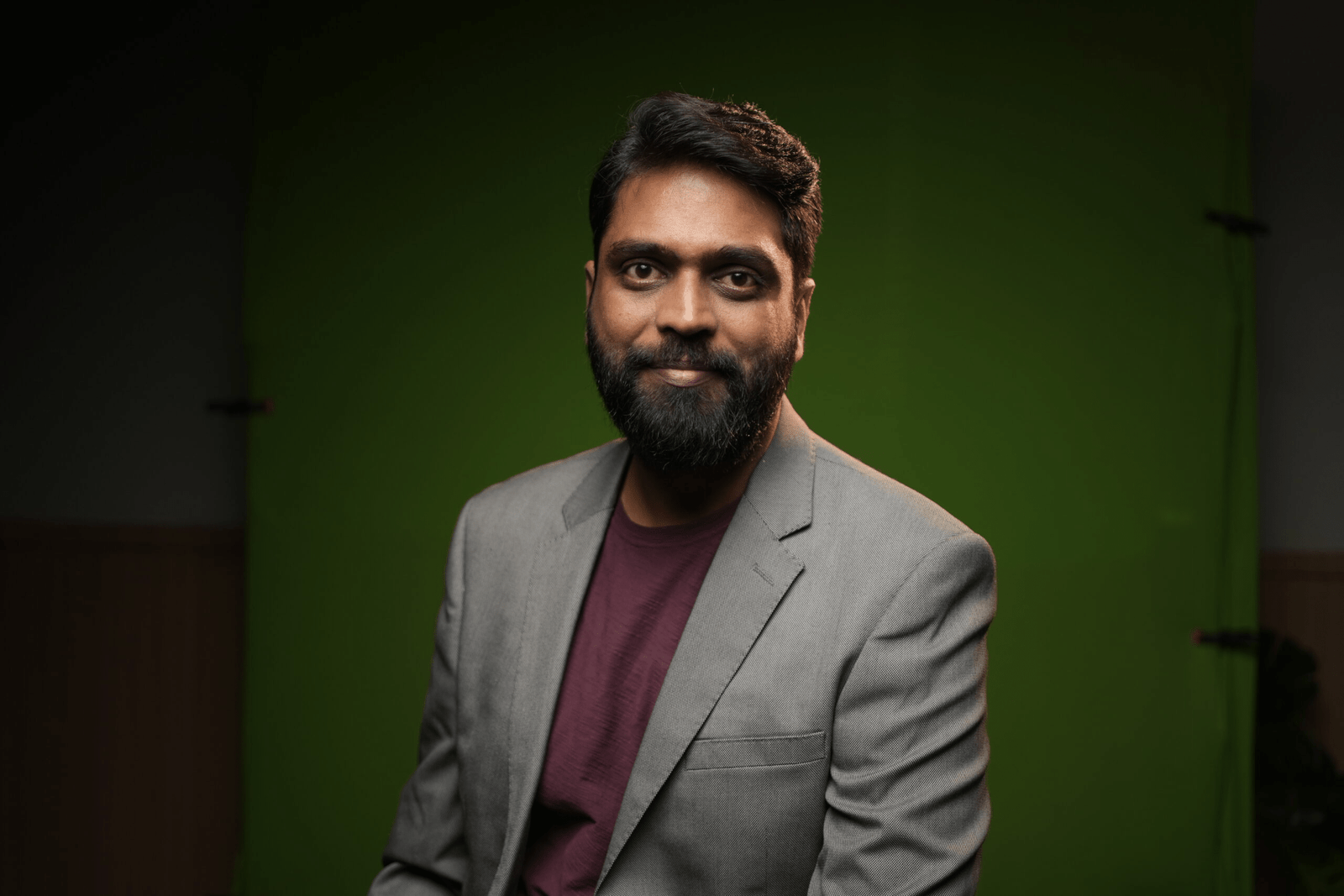
Every year, lakhs of students in India check their board exam results on a website, feel relief or panic, and move on. Few of them ever think about what happens to that platform after they log off. In this Siddharth Jalan interview on The Founder’s Dream — an indian business podcast built on honest entrepreneur stories india — host Abhishek Vyas sat down with Siddharth Jalan, Founder & CEO of Results Shiksha, to unpack the Results Shiksha founder story: how a results-checking website turned into a full admissions and counselling system used across India.
From Exam Results to a Results Shiksha Founder Story
Results Shiksha’s origin goes back to 2005, when Siddharth’s father, Mr. Rajkumar Jalan, noticed a gap in the market. There was no simple, reliable way for students to check their results — nothing like Digilocker existed yet. The idea wasn’t built as a business opportunity first; it was built to solve a real-time student problem.
Today the company is authorised by more than 20 government boards and universities to publish official results, working as a verified partner rather than an independent scraper of data. Siddharth explains the shift in thinking that shaped everything after:
We looked at this moment not as a high-volume moment but as a high-intent moment. The instant a student checks their result, the next thing they do is search for admissions, careers, and universities — we saw an opportunity to stay with that student for the remaining 364 days of the year.
That single insight — treating result day as the start of a relationship rather than the end of a transaction — is the core of the Results Shiksha founder story and explains why the company expanded from a results portal into counselling, university matchmaking, and loan support.
Why Education Marketing Had to Change
Siddharth traces a broader shift in how Indian education institutions market themselves. Earlier, visibility was the goal — newspaper ads, hoardings, print banners. Universities paid to be seen, not necessarily to be chosen by the right students.
That has changed. As he puts it:
Institutes earlier used to pay for visibility. Now they essentially want to pay for outcomes.
Technology made this possible by showing universities which campaigns worked in which geography, for which courses, and with which kind of student base. This data-driven approach to admissions mirrors a pattern seen across many entrepreneurial journeys in India moving from blanket advertising toward measurable, outcome-linked spending.
Handling the Traffic Nobody Else Plans For
Result day brings a traffic spike that most websites never see — four, five, even forty lakh students logging in within hours. Siddharth admits this used to crash servers in the early years, but the team rebuilt infrastructure to scale for worst-case peak traffic rather than average load. Results Shiksha now serves roughly 100 million page views annually and was the first company to launch state government result apps, several of which rank among the top 10 apps on the Play Store on result days.
Why North East India Needed a Different Playbook
A large part of the conversation focused on North East India, where Results Shiksha has built unusually deep reach — alongside states like Uttarakhand, West Bengal, Andhra Pradesh, and Telangana. Siddharth was direct about the biggest mistake outside universities make when they try to recruit from the region:
North East is not a single market. We don’t treat it as one geography — we treat it as seven homogeneous micro-markets, and from region to region, state to state, a lot changes.
He gives a concrete example: students from Arunachal Pradesh tend to prefer cooler climates because of where they grew up, while students from other North Eastern states have entirely different preferences. The biggest fear across the region, though, is common — adjusting to life far from home. Siddharth says the real counselling job is convincing families that location shouldn’t be the deciding factor; fit and academic direction should come first.
Historically, North East students have leaned toward medical and paramedical fields, partly because specialised courses like aeronautical or petroleum engineering require infrastructure, faculty, and demand that many universities in the region can’t yet support. Metro cities — Delhi NCR, Bangalore, Hyderabad, Pune — remain popular destinations, and founders building anything for this market would recognise the dynamics described in stories of founders adapting to new markets, where outside talent constantly arrives chasing better outcomes.
Digital Reach Alone Doesn’t Build Trust
Siddharth is clear that digital marketing and word-of-mouth are not competing strategies in North East India — they’re sequential. Digital builds reach and a lead funnel; word of mouth and local presence build the trust that actually converts a lead into an admission.
This is why Results Shiksha built a 100-plus partner network across the seven North Eastern states, backed by a branch office in Guwahati alongside its Noida headquarters. It took roughly five years to build. The logic was simple: a local person should counsel a local student, in their own language, at a pace their parents are comfortable with — because many North East families are naturally reserved and hesitate to open up to an unfamiliar counsellor.
Shiksha Mitra: Built for the North East, Works Everywhere
Results Shiksha’s flagship product, Shiksha Mitra, formalises this approach into a four-step funnel: visibility, engagement, counselling, and conversion — followed by ongoing support after enrollment. The product is customised university-by-university for North East’s seven states, removing the need for an outside institution to build its own physical office or hire local staff there.
One deliberate rule shapes the Results Shiksha business model: Results Shiksha partners with only one university per city to avoid a conflict of interest. Before signing a university, the team checks placement records and, more importantly, feedback from North East students who already studied there. If a student still wants to switch to a different college, Siddharth says the team doesn’t treat that as a lost lead — the priority is supporting the student, not protecting a single deal.
Support doesn’t end at admission. The team tracks whether a student is comfortable three, six, and nine months into their course, and stays reachable if problems come up — sometimes escalating issues directly to university management when a student or parent can’t resolve something alone.
Honesty Over Conversion
Counselling, Siddharth says, is the hardest part of the job — convincing a student and their family that a particular course or university is right for them requires real conviction, not a sales pitch. He describes the principle his counselling team is trained on:
Just because a conversion has to happen, or a student has to be converted, don’t send them in the wrong direction. You might gain revenue in that moment, but in the long run, students who pick the wrong course eventually drop out — they can’t sustain the pressure.
Counsellors go through four to five years of hands-on training, working through actual student cases and using psychometric tests to understand where a student is genuinely inclined before suggesting a course. Siddharth also addressed the commission-driven local agents who push whichever college pays the highest incentive — his answer isn’t to try to eliminate them, but to out-compete them with transparency, giving students enough information to make an informed choice on their own.
He also pushed back on the instinct many parents have to chase only government seats: not every ambitious student can win a highly competitive government seat, and that doesn’t mean they deserve a worse education. The real gap the market needs to solve, he argues, is affordable private options for students who fall between the two extremes — too ambitious to settle, but not positioned to pay premium private fees either.
What Students Abroad Actually Need to Know
On students heading to Georgia, Nepal, or Bangladesh for MBBS, Siddharth doesn’t call it a failure of the Indian system — he calls it a combination of affordability and limited seats. He notes these countries have built genuinely comfortable ecosystems for Indian students, including hostels and Indian food. But he’s equally clear that students and parents need to understand the practical side: after completing the course, Indian regulatory guidelines around eligibility and internships still have to be met before practising back home.
Asked to sum up Results Shiksha in one line, Siddharth calls it a “pure aggregator” for North East India — a platform that lets any university open up that market without building its own office or team there, while giving students and parents the direction and trust they need to make that leap. As he puts it, North East India runs from some of the highest literacy rates in the country to some of its most ambitious students, and that ambition is the real asset the region brings to Indian higher education.
Watch the full conversation with host Abhishek Vyas on The Founder’s Dream YouTube channel — the same founder podcast featured throughout this article — and subscribe for new founder interviews every week.
Frequently asked questions
What does Results Shiksha do?
Results Shiksha is an official aggregator for board exam results across more than 20 government boards and universities, and it uses that high-intent moment to guide students through career counselling, university admissions, and loan processes.
Who founded Results Shiksha?
Results Shiksha was founded by Siddharth Jalan, building on an idea his father Mr. Rajkumar Jalan first observed in 2005, when no simple platform existed for students to check their results.
What is Shiksha Mitra?
Shiksha Mitra is Results Shiksha’s flagship product built specifically for North East India, covering visibility, engagement, counselling, conversion, and post-admission support for universities and students.
How does Results Shiksha choose which universities to partner with?
The team partners with one university per city and evaluates placement records and feedback from previous North East students before onboarding a university, to avoid conflicts of interest.
Why do North East students hesitate to study outside their region?
Siddharth Jalan says the biggest fear is adjustment — moving far from home and losing the mental comfort and safety of a familiar environment, which is why local-language counselling and trust-building matter so much.
1 Comment