
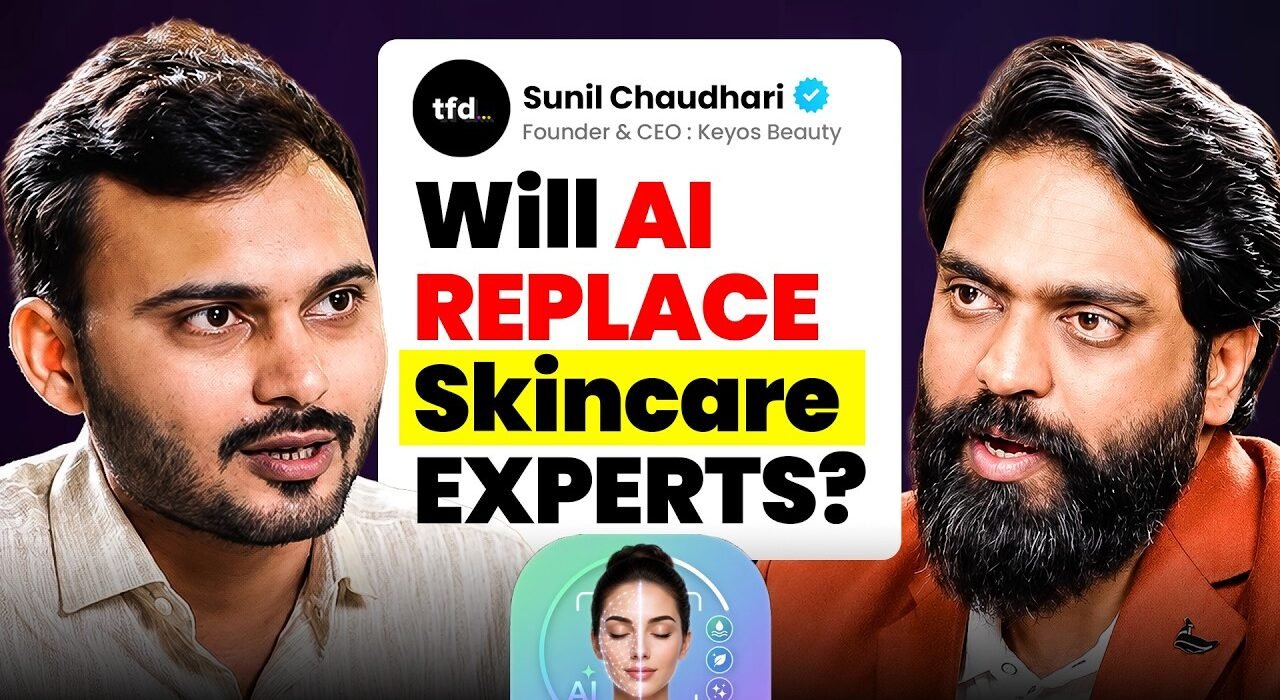
Most people assume a ₹5,000 skincare product must work better than a ₹500 one. This Sunil Chaudhari interview on The Founder’s Dream podcast opens with host Abhishek Vyas putting that exact question to Sunil Chaudhari, founder of Koss Beauty, and the answer unpacks pricing, AI skin analysis, and the Koss Beauty business model that’s built on salons rather than Instagram ads.
Sunil spent ten years in the modelling and beauty industry before starting Koss Beauty, working with models across Indian states who struggled with makeup-related skin allergies. That experience shaped a company built around dermatologists and science rather than trends — and it’s worth understanding before you buy your next serum.
What Actually Separates a ₹500 Cream From a ₹5,000 One
Sunil is upfront that price alone tells you nothing about quality. He put it plainly:
A cheap product isn’t automatically wrong just because it’s cheap, and an expensive one isn’t automatically right just because it’s expensive. The biggest cost in building any brand actually goes into R&D — research, trials, and then finally putting it in front of customers.
Packaging, brand consistency, and even celebrity endorsements add to the final price tag, but none of that is a reliable signal of whether the ingredients actually suit your skin. His advice: stop chasing price points and start identifying your actual skin problem before buying anything.
Inside the Koss Beauty Business Model
What makes the Koss Beauty business model distinct is the deliberate choice to go heavy on offline, B2B salon distribution instead of chasing online D2C growth. Over 80% of the business runs through salons, with 250+ SKUs in the salon series alone, covering shampoo treatments, hair color, and in-salon machinery.
Koss Beauty currently runs 12 franchises along with its distribution network, and Sunil says the company deliberately avoided a purely passive franchise setup:
We’re not working on a model where someone just hands over money and walks away. The franchise owner has to be involved, and so do we — we run the business together.
Franchise partners need roughly 1,000 square feet of space, local market presence, and someone to manage cash transactions — the company handles sales staff, distribution, and marketing support. Sunil says investors can expect a minimum 30% ROI annually, with Koss Beauty guaranteeing the full invested amount back within three years. The company’s near-term goal is to get into salons across India within a year and open 250+ stores within two years, combining B2B and D2C.
The ingredients behind these products are sourced internationally — from Italy and Germany — and then implemented using Korean skincare science, though Sunil is careful to clarify this isn’t a copy-paste job:
We’re not claiming to be a 100% Korean brand. We only take ingredients that Korean science has already proven. But a brand made for Korea is made for Korean skin — Indian skincare needs Indian skin analysis before you build anything.
Can AI Really Replace a Dermatologist?
Koss Beauty uses AI-powered skin analysis machines across its stores, and Sunil claims roughly 99% of what these machines detect matches dermatologist diagnoses in side-by-side comparisons the company has run. He says more than 2 lakh customers have used the machines to track their skin over repeat visits, watching how their skin changed after following a recommended routine.
The real value, according to Sunil, isn’t that the machine replaces a doctor — it’s what it catches that the human eye often misses:
The machine shows you 20-25 small issues on your face that you’ve probably never even heard the names of, and it traces them back to the root cause. A doctor won’t run that kind of analysis — they’ll just say ‘you have acne, use this.’
He also pushes back on the idea that AI makes dermatologists irrelevant. Tools like ChatGPT can point you toward the right ingredient category for a problem like acne, but the actual product — with its 25-plus ingredients — still has to be built by doctors, scientists, and a factory, not generated by a chatbot.
The Truth About 10-Step Routines and Trending Ingredients
Sunil is openly critical of the 8-step, 10-step, even 20-step skincare kits being sold under the Korean skincare label. In his view, most people only need four things: a serum, a night gel, sunscreen, and a face wash.
Stacking extra steps doesn’t just waste money — he says it compounds your chemical exposure:
Every product has at least 25 ingredients. If you’re using 10 products, that’s 250 chemicals going on your face at once.
He singles out niacinamide as the ingredient everyone’s using without understanding:
Niacinamide only does one thing — brightening. It doesn’t make your skin fair.
Retinol gets similar treatment: it’s meant to address signs of aging, should only be used once a day, and specifically at night — never during the day, because sun exposure and retinol work against each other. Sunil also dismisses “100% natural, chemical-free” marketing claims outright, pointing out that even water is technically a chemical, and no product can be built without chemistry done properly alongside dermatological science.
Sunscreen and Anti-Aging: When to Actually Start
Asked whether sunscreen needs daily use or just sun exposure, Sunil was direct — UV rays reach you indoors too, so sunscreen should be part of your morning routine regardless of whether you’re stepping out, partly because it also locks in the rest of your skincare routine. He recommends it for both men and women, including, half-jokingly, for camera crews who sit under studio lights all day.
On anti-aging, his guidance is age-specific: start after 35, because that’s typically when visible stress-related changes begin appearing on the skin. Starting earlier isn’t necessary, and starting a decade later means playing catch-up.
Why Models Shaped the Koss Beauty Founder Story
The Koss Beauty founder story traces back to Sunil’s time working closely with roughly 25,000 models across India, where makeup-induced allergies were a constant, unresolved problem. He noticed models losing nearly half their working days each month to breakouts caused by local, unbranded makeup products used by makeup artists on set. Understanding how Sunil Chaudhari built Koss Beauty starts right here — with a market gap no existing brand was actually solving.
That gap — no real solution, just repeat damage — pushed Sunil toward building products meant to be used before and after makeup application for instant relief, then eventually a broader derma-first skincare line for everyday Indian consumers, not just models:
We’re not building a cosmetic brand — we’re building a derma brand, so people actually get a solution from a doctor, not something they have to keep repurchasing forever.
That “problem-solution” philosophy is also why Koss Beauty avoids copying competitors: Sunil says the company doesn’t chase trending ingredients just because other brands launched them — every product goes through roughly two years of ingredient sourcing, lab testing, and trials with dermatologists before it reaches the market. One product he highlights is an azelaic 10% serum, which he claims uses patented technology no other brand in India currently has licensed, targeting acne at the root rather than just masking it.
Lessons for Founders Building in Crowded Categories
Sunil’s closing advice to aspiring founders is less about skincare and more about the entrepreneur mindset he applied to building Koss Beauty itself — research an industry thoroughly before entering it, and don’t jump in just because founding a startup is trendy right now.
- Pick an industry you understand at least 70%, not one you’re guessing your way through.
- Don’t follow ingredient or product trends just because competitors launched them first.
- Take risks, but make them calculated — as he put it, “if it’s a calculated risk, the business works.”
- Build for a long-term customer relationship, not repeat dependency on a single product.
These are the same instincts explored across other entrepreneurial journey stories on the podcast — founders who built slow, research-heavy businesses instead of chasing quick trend-based wins.
Watch the full conversation with host Abhishek Vyas on The Founder’s Dream YouTube channel and subscribe for new founder interviews every week.
Frequently asked questions
What is the Koss Beauty business model?
Koss Beauty runs on a franchise and B2B salon distribution model rather than relying mainly on online D2C sales, with over 250 SKUs sold mostly salon-to-salon and a growing network of franchise stores across India.
Does an expensive skincare product always work better than a cheap one?
No. Sunil Chaudhari explains that price differences mostly reflect R&D, trials, packaging and marketing costs, not a guarantee of better results, and a well-matched cheaper product can work just as well as an expensive one.
Can AI really analyse your skin?
According to Sunil Chaudhari, AI skin analysis machines used in Koss Beauty stores match dermatologist assessments about 99% of the time and can flag issues like hydration levels and pore health that are harder to spot with the human eye.
Do you really need a 10-step skincare routine?
No. Sunil Chaudhari says a basic routine of serum, night gel, sunscreen and face wash is enough for most people, and stacking 8-10 products often means layering over 200 chemicals on the skin without real benefit.
At what age should you start using anti-aging products?
Sunil Chaudhari recommends starting an anti-aging routine after the age of 35, since that is when visible stress-related changes typically begin showing on the skin.

1 Comment