
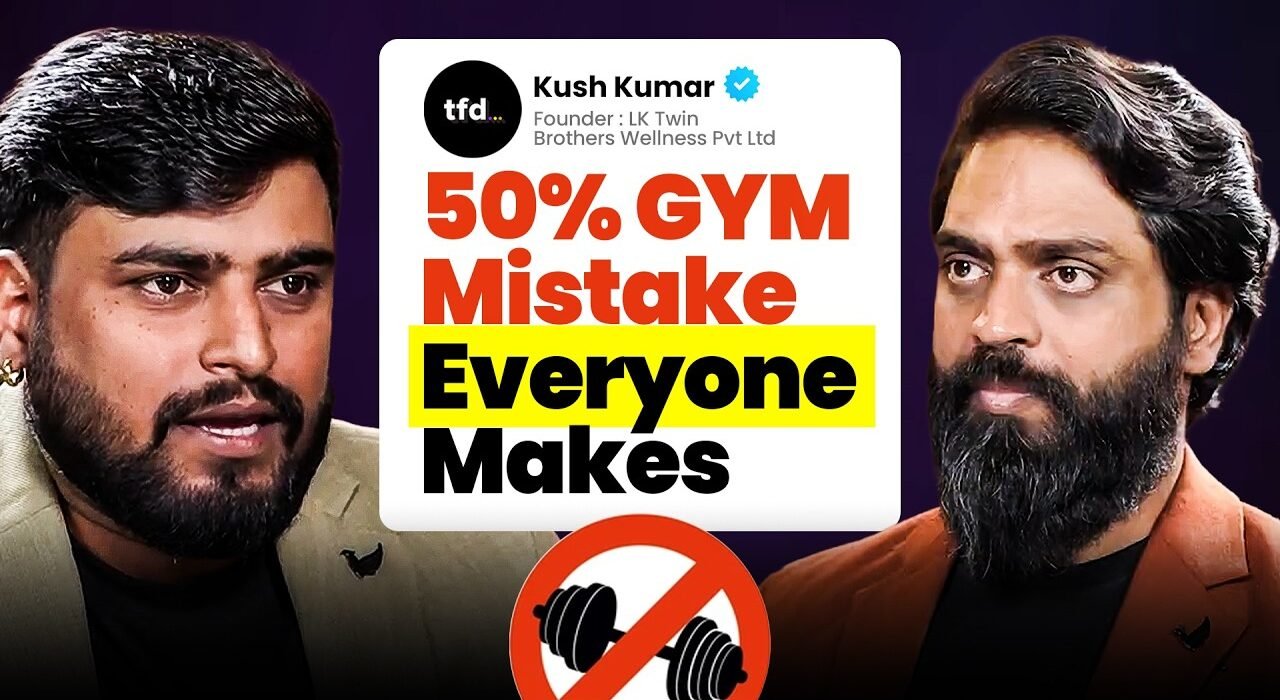
A masseur’s job is still seen as “someone who presses other people’s hands and feet” in large parts of India. That line of thinking is exactly what Kush Kumar, co-founder of Twin Brothers Therapy & Wellness, has spent over a decade pushing back against. On this episode of The Founder’s Dream, host Abhishek Vyas sits down with him to unpack what has become a genuine Kush Kumar success story — a wrestler-turned-entrepreneur who built a certified recovery business from a bicycle, a scholarship cheque, and a refusal to accept society’s verdict on his profession.
The Kush Kumar Success Story Starts on the Wrestling Mat
Kush and his twin brother were competitive wrestlers before they were therapists. Every Sunday, the two pahalwans would massage each other so they could train harder on Monday. A neighbour training at the same akhada noticed and asked for help with his own recovery — and that one request became the business’s first client.
What followed was two years of cycling to clients’ homes, offering recovery sessions with no office, no signage, and no formal plan. Referrals built slowly, one wrestler and one gym-goer at a time, until a national-level wrestling scholarship of ₹36,000 gave the brothers their first real capital.
We decided — how long can we keep doing home visits? We needed a proper centre where people could come to us and know us.
In 2018, that decision became Jharkhand’s first certified massage therapy centre, set up in Ranchi.
Building Twin Brothers Therapy & Wellness From the Ground Up
The first two years were brutal. The family’s finances had already taken a hit after their father’s heart attack and bypass surgery, so the ₹36,000 scholarship money barely covered the centre’s setup, leaving almost nothing for rent and survival.
Kush describes a punishing personal schedule to keep the business alive: delivering newspapers at 3:30 am, his brother driving for Ola through the day, both working the centre in between, and Kush finishing as a bouncer at a bar until 11 pm. For an entire year, that was the routine.
That one year was very good for us — it taught us a lot, because that situation taught us that if your mindset is right, nothing can stop you from moving forward.
Gyms where they went to advertise often made them wait for hours, assuming they were just “massage wallahs.” Slowly, as clients got real results, referrals grew — and in 2020, clients themselves started calling the brothers “Twin Brothers Therapy,” a name the founders adopted officially. By 2025 the venture was registered as LK Twin Brothers Wellness Private Limited.
Massage Therapy vs Massage Parlours: Why the Stigma Exists
A recurring theme in the conversation is why the word “massage” instantly triggers assumptions about “extra services.” Kush traces this directly to media and films that portrayed massage as a luxury vice rather than physical care.
The biggest wrong message came from media and movies — they showed it as a luxury lifestyle, that people get it done with girls just for shock value. That got promoted, and people’s mindset changed slowly. If you show a lie a hundred times, it starts looking like the truth.
He separates genuine inquiries from the rest within seconds on the phone. Someone asking “how long is the session” wants therapy; someone immediately asking “where is the therapist from” or pushing for extra service reveals their real intent almost instantly. Out of roughly 30–40 calls a month, he estimates only about 60% are genuine recovery seekers — the rest are testing for something else entirely.
At Twin Brothers Therapy & Wellness, the policy is strictly male-to-male and female-to-female sessions, a deliberate choice suited to Ranchi’s tier-two mindset, even though Kush is clear there’s no real skill difference between a well-trained male or female therapist — only client comfort dictates the pairing.
The Five Pillars of Health — and Why Recovery Is the Missing One
Kush frames physical wellbeing around five pillars: diet, workout, hydration, stress management, and recovery. Miss one, he says, and the whole structure wobbles — no amount of expensive therapy fixes a diet that’s working against you.
- Diet — the body’s raw material for protein, minerals, and good fats; no therapy session compensates for a bad diet.
- Workout — essential because sedentary desk jobs cause muscle shortening and poor posture correction over time.
- Hydration — roughly 3–4 litres a day for an 80 kg adult, since the body is largely water.
- Stress management — necessary for mental clarity and sustained performance at work.
- Recovery — sleep, warm-ups, cool-downs, and manual therapy sessions that let muscles actually rebuild.
He’s blunt about where most gym-goers go wrong, especially younger lifters chasing heavier numbers than their training partners.
Workout is high, recovery is zero, sir. That’s the biggest mistake of today’s generation with their own bodies — ignoring recovery and not maintaining lifestyle.
He connects this to a more technical point about muscle fibre types — fast-twitch fibres under high-intensity lifting build up lactic acid and hydrogen ions in the joints quickly, which is why untrained heavy lifting shows up first as shoulder and lower-back pain. His advice is simple: proper stretching, guided training, at least one ice bath a week, and regular therapy sessions rather than ego-lifting against a gym buddy’s numbers.
Why People Spend on MRIs but Hesitate on a ₹1,500 Session
One of the sharper observations in the episode is about Indian healthcare behaviour. People are often willing to spend five figures on an MRI or surgery once a problem becomes severe, but hesitate over a one or two-thousand rupee recovery session that could have prevented it.
In India, people are not living a healthcare life — they’re living a sick-care life. We’ll only go to the doctor once we fall sick. Before that, nothing matters, even if the body is being destroyed.
His cost comparison is direct: ignore a chronic lower-back or neck issue long enough, and it escalates from a diagnostic MRI to a ₹5–10 lakh surgery plus months of bed rest — versus one monthly therapy session that could have caught the problem early. This mindset shift, from reactive to preventive care, sits at the centre of his pitch to clients, and it’s a theme that runs through other entrepreneurial journey stories on recovery-focused wellness businesses in India.
Lessons From 25,000+ Clients and Earning His Father’s Approval
Scaling past home visits, Kush and his brother invested heavily in upskilling — a cupping therapy course, Ayurveda training in Kerala focused on marma points, and a course with the Sports Authority of India that eventually led to an invitation back as guest faculty. Along the way, they worked with Olympic-level athletes in the Hockey India League, including a Belgian Olympic gold medallist and an Australian Olympic medallist, observing their daily recovery routines up close.
The hardest part of the journey, though, wasn’t clients — it was his father. Neighbours kept telling him his sons had chosen a profession with no future, no respect, “pressing other people’s limbs.” It took nearly two years of visible proof — local newspaper coverage, growing client numbers, word spreading through the same community that once mocked them — before his father came around.
We told him — Papa, when you had your heart attack, nobody from society came to help. So don’t listen to what society says. Look at what we’re doing now.
Kush extends that lesson to every parent listening: founders rarely get a clean, confident start, and the two or three years of discomfort a parent tolerates often precede the turning point where the same community starts asking how the son “reached so far.” That theme of self-belief outlasting outside judgment runs through many of the self growth lessons shared by other founders on this show too.
Today, clients travel from towns 100–200 km away for a single session — one shopkeeper reportedly shut his shop for a day and travelled 150 km just for a therapy appointment, something Kush still calls one of his proudest moments.
Advice for Anyone Wanting to Start a Wellness Business
Asked what he’d tell someone wanting to open their own therapy centre, Kush’s answer as a wellness entrepreneur wasn’t about funding or location — it was about posture, literally and figuratively.
Don’t enter this field thinking you’re “just a masseur.” Live with your head held high. You’re earning an honest living doing something that genuinely helps people — that gives you every right to walk tall in this profession.
- Trust your own skill before expecting others to trust it.
- Put in effort, mindset, and money — in that order, if money isn’t available yet.
- Results travel faster than advertising; Kush says around 90% of his client base came purely through word of mouth, including international clients.
- Formal certification and continuous upskilling build the credibility that stigma alone can’t take away.
It’s a grounded, unglamorous version of the Kush Kumar success story — one built on bicycles, bar shifts, and a decade of proving a point to a father, a neighbourhood, and an entire industry still fighting for basic respect.
Watch the full conversation with host Abhishek Vyas on The Founder’s Dream YouTube channel and subscribe for new founder interviews every week.
Frequently asked questions
What is Twin Brothers Therapy & Wellness?
It is a certified massage therapy and recovery centre founded by Kush Kumar and his brother in Ranchi, offering sports massage, cupping therapy, sound healing, ice baths and steam baths for physical recovery.
How many clients has Kush Kumar treated?
Kush Kumar says his team has worked with more than 25,000 clients over 12 years, building the business primarily through word-of-mouth referrals.
What is the difference between massage therapy and a massage parlour?
Kush Kumar explains that massage therapy is a certified, result-based recovery service for muscle and posture problems, while the ‘extra service’ model associated with massage parlours has nothing to do with professional therapy.
What are the five pillars of health Kush Kumar talks about?
He lists diet, workout, hydration, stress management and recovery as the five pillars, saying all five must work together for any real improvement in health.
Why do gym-goers get injured despite taking protein and pre-workout?
Kush Kumar says the real problem is ignoring recovery and ego-lifting beyond one’s capacity, which causes joint pain, stiff necks and muscle fibre damage over time.
1 Comment