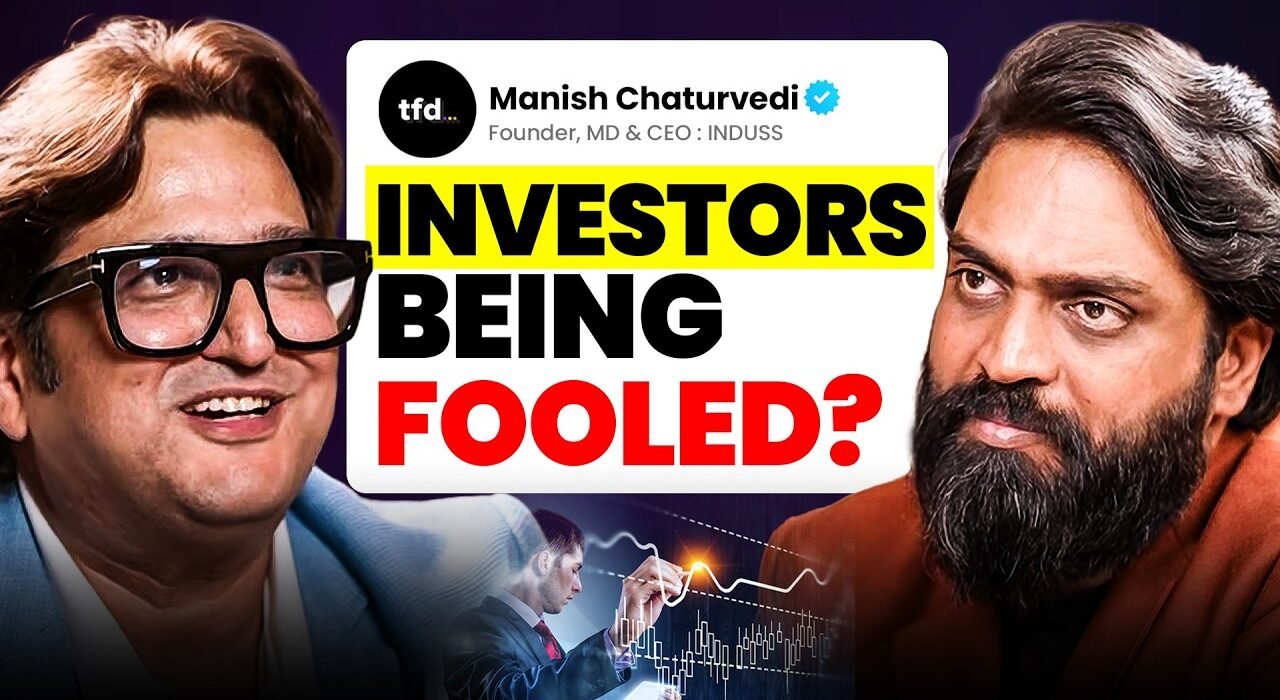
Every founder chasing a big number wants to know the same thing: is this valuation real, or is it a story? On a recent episode of The Founder’s Dream, an indian business podcast built around candid founder conversations, host Abhishek Vyas put that question directly to Manish Chaturvedi, Founder & CEO of Indus Strategy Advisors, a capital market strategist who has been part of transactions worth close to $10 billion over two decades. What followed was a practical, no-nonsense look at startup funding india — how valuations are really built, why compliance matters more than founders think, and why one dishonest forecasting habit quietly kills investor trust.
Startup Funding India: Why Cash Flow Alone Doesn’t Set the Price
Chaturvedi opened with a distinction most founders miss: valuation is not the same thing as cash flow. Debt investors care almost entirely about cash flow because, as he put it, they have no patience for excuses about delayed repayment. Equity investors look at something broader.
Valuation is a combination of various things — it’s not only cash flow. There’s a narrative part to it too. Cash flow is a science. Valuation is an art.
That “art,” he explained, means understanding both the macro and the micro of an industry — where the real capital is flowing, not just where the noise is. He used AI as the example: everyone is talking about it, but per-capita investment in AI in India is nowhere close to the US, where spending runs into hundreds of billions a year against India’s much smaller commitment. Reading that gap correctly, he said, is what separates a grounded valuation from a hyped one.
The Hockey-Stick Lie Founders Tell Investors
Asked what the single biggest white lie in an investor pitch is, Chaturvedi didn’t hesitate.
It’s a hockey-stick forecast — when a founder says their numbers will just keep climbing, year on year, in a straight line. But life’s line isn’t straight either. Look at a heart monitor — it zigzags. A straight line is dead.
His point wasn’t that ambition is bad — it’s that forecasts which pretend uncertainty doesn’t exist are dishonest by design. A credible pitch, in his view, factors in the dips as much as the climbs. Founders who are serious about how founders lose money in funding deals often trace it back to exactly this — a projection built to impress rather than to hold up under scrutiny months later.
Compliance Isn’t Optional — It’s the Backbone
Speed is the currency most startups chase, and Chaturvedi warned that it often comes at the cost of basic regulatory discipline. He referenced one of India’s early unicorns in the education sector that ran into serious trouble specifically because of compliance failures, without naming it directly.
Compliance is the backbone. Compliance also builds the part of credibility.
His advice to early-stage founders is to figure out early who owns risk and compliance internally — whether that’s a dedicated Chief Risk Officer, a Chief Compliance Officer, or simply an outsourced CFO service in the early days. He was clear that the need for compliance doesn’t start with a title or a funding round; it starts the day a business idea is given a legal form, whether that’s an LLP, a One Person Company, or a Private Limited structure. Decisions as basic as TDS filing and GST registration, he said, are part of that same discipline — something he compared to breathing in and breathing out every single day of running a company.
Interestingly, he also pushed back on the assumption that a Chartered Accountant automatically makes a good entrepreneur. As a CA himself, he was blunt about it.
There’s no correlation between being a Chartered Accountant and being a good businessman. CA gives you technical knowledge, but running a business needs business acumen and entrepreneurship skill — that’s a completely different thing.
Transaction Advisory vs. Stewardship
He also drew a clear line between two roles that often get confused in the advisory world. A transaction advisor, he said, is someone who simply executes what a client asks for. Stewardship is different — it means questioning the “why” before jumping to “how.”
Stewardship says: explain the full story to me first, and then I’ll tell you what should be done, how it should be done, and when it should be done.
Equity or Debt — The Real Question in Startup Funding India
When Abhishek Vyas asked how a founder should decide between raising equity or taking on debt, Chaturvedi said the two aren’t really an either-or choice — every healthy balance sheet needs both in some mix.
- Debt is cheaper but carries legal risk if the balance sheet can’t support repayment.
- Equity is costlier because founders are giving up a share of future profit, but it absorbs risk the business itself can’t yet guarantee.
- Long-term infrastructure projects often run on a mix like 80% debt and 20% equity, because cash flows there are far more predictable.
- Newer ventures in AI or tech, where cash flow visibility is still uncertain, typically need to lean on equity or venture debt first.
He also pointed to structured instruments like Compulsorily Convertible Preference Shares (CCPS) as a practical way to bridge valuation disagreements — building in upside and downside clauses tied to performance milestones, so neither side has to simply guess at the right number upfront.
Building a Capital Story That Investors Actually Trust
A business can be profitable and still struggle to raise money if, in Chaturvedi’s words, its “capital story” is weak. His advice was to treat investor relationships the same way a founder treats customers or employees — by understanding what the other side actually wants, not just pushing numbers.
You should first be happy that you’re having a good problem — the business is performing. Now you need to meet the right people, do proper investor relationship work, proper marketing and branding. It’s not something that happens by pressing a button.
He framed this as core to understanding how to grow business sustainably rather than chasing a valuation number in isolation — founders who want a deeper playbook on this can also look at how other guests on The Founder’s Dream have approached scaling with limited capital.
Betting on NCDEX and the India Growth Story
Chaturvedi shared one of his most notable calls — backing NCDEX and NERL, two government-backed commodity market infrastructure institutions, at a time when sentiment around them had turned cold due to policy-driven trading bans that hurt their turnover. He reasoned that a country with as large an agricultural base as India couldn’t permanently go without a strong agri-commodity exchange, and that institutions built for price discovery and risk management would eventually matter again.
I thought, even if this goes to zero, that’s fine — but the agri story of this country can’t stay behind forever. That’s the call an investor sometimes has to take.
He connects this directly to a broader bullish view on investment in startups in india and institutional capital, noting that domestic mutual fund money — fed by rising SIP flows — has been cushioning recent market corrections in a way that pure dependence on foreign institutional money never could.
Advice for Founders: Passion Over the Spreadsheet
Asked what the hardest part of 15 years of building Indus Strategy Advisors has been, Chaturvedi didn’t point to markets or numbers — he pointed to people.
Managing people is the hardest thing. Human capital is the hardest thing. You’re in a system where you have to deal with human beings, and when you give loyalty and don’t get it back from a trusted partner or close associate, that’s a very hard moment.
His closing advice leaned on a simple entrepreneur mindset: chase the work, not the outcome. He referenced the Bhagavad Gita’s idea of focusing on effort without obsessing over results, and said money has always followed as a by-product of passion, hard work, and consistency — never the other way round. For wealthy families he’s advised over two decades, he noticed the same two principles repeating: protect your capital first, then let compounding do the rest. Readers who enjoyed this founder’s practical, bootstrapped approach to building something from scratch may also want to read about the mindset behind building a business around electric bicycles, another conversation from the same show on staying patient while scaling.
This episode is a reminder that in startup funding india, the fundamentals — honest forecasting, compliance, and a clear-eyed read of who your investor really is — matter more than any single valuation headline.
Watch the full conversation with host Abhishek Vyas on The Founder’s Dream YouTube channel, a founder podcast built on exactly these kinds of unfiltered conversations, and subscribe for new founder interviews every week.
Frequently asked questions
What is the biggest lie founders tell investors, according to Manish Chaturvedi?
He calls it the hockey-stick lie — a forecast that shows revenue growing in a perfect straight line year after year, which he says is dishonest because no real business or life trajectory moves in a straight line.
Does a startup need a Chief Compliance Officer from day one?
Manish Chaturvedi says compliance needs start from the moment a business idea is given a legal structure, though a dedicated Chief Compliance Officer can come a little later as the company grows, often through outsourced or shared CFO services.
Is cash flow enough to decide a startup's valuation?
No — Manish explains that cash flow is a science but valuation is an art, meaning it also factors in industry narrative, macro trends, and risk, especially for equity investors rather than debt investors.
How should a founder choose between equity and debt funding?
He suggests following equity where cash flow visibility is uncertain, such as in early AI or tech ventures, and shifting to debt as cash flows become predictable, since every balance sheet needs an optimal mix of both.
Does being a Chartered Accountant make someone a good entrepreneur?
Manish Chaturvedi, himself a CA, says there is no correlation — technical accounting knowledge is different from business acumen and entrepreneurship skill.